
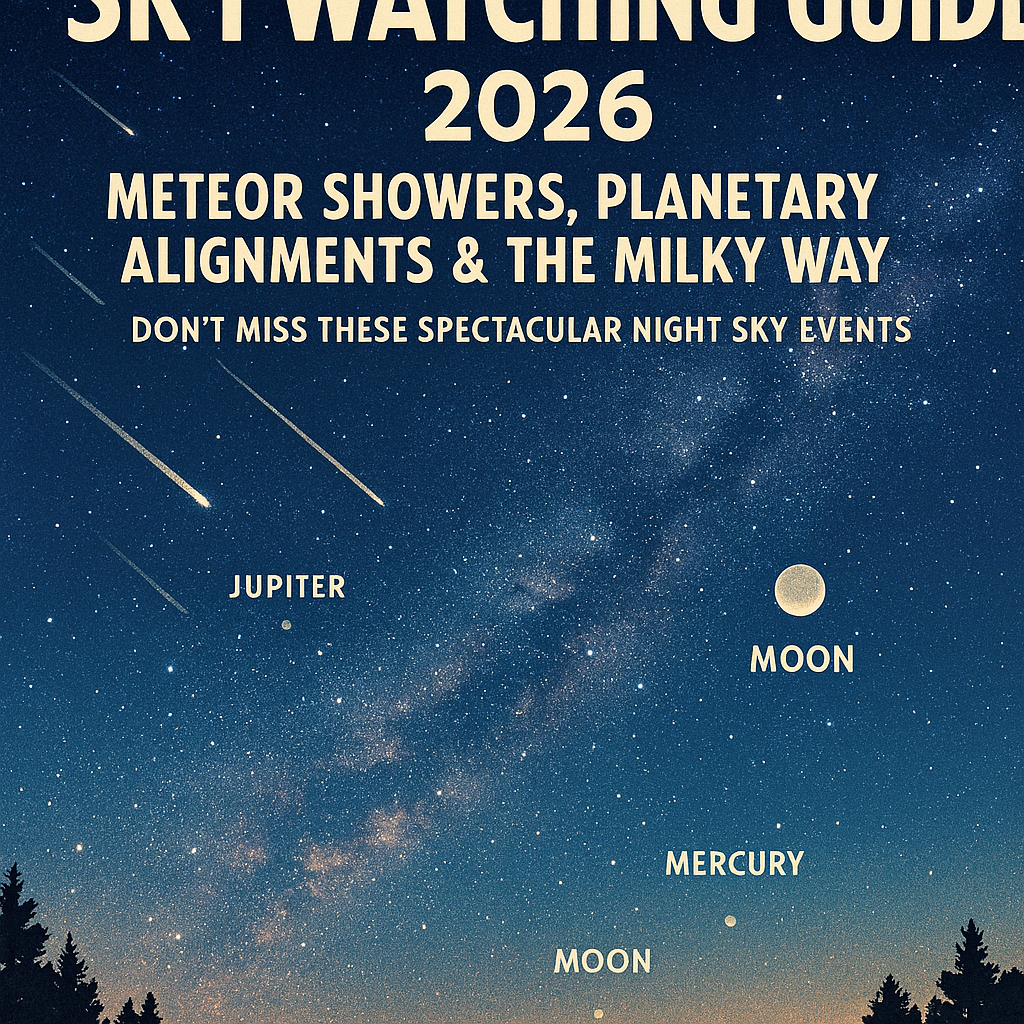
July 2026 promises to be an exciting month for astronomy enthusiasts, photographers, and anyone who enjoys looking up at the night sky. From dazzling meteor showers and beautiful planetary alignments to stunning views of the Milky Way, the month offers several celestial events that can be enjoyed without expensive telescopes.
Whether you’re an experienced stargazer or a beginner, July provides some of the best opportunities of the year to witness the beauty of the universe. Clear skies, darker nights, and favorable weather in many regions make this an ideal time to explore the wonders above us.
Why July Is Special for Skywatching
During July, Earth continues its journey around the Sun while several planets become visible before sunrise or after sunset. The Milky Way is also at its brightest during this time, especially in locations with minimal light pollution.
In addition, meteor activity increases as Earth passes through streams of debris left behind by comets. These tiny particles burn up in Earth’s atmosphere, creating the spectacular streaks of light commonly known as shooting stars.
Amazing Celestial Events to Watch
🌠 Meteor Showers
One of the biggest attractions this month is the opportunity to witness meteor showers. Under dark skies, observers may spot several meteors every hour as they streak across the sky.
The best viewing experience comes after midnight when the sky is darker and the radiant point rises higher above the horizon.
🪐 Planetary Alignments
Several bright planets will be visible during July, creating beautiful alignments before sunrise and after sunset.
Depending on your location and local weather conditions, you may be able to observe planets such as Saturn, Mars, Jupiter, and Venus appearing together in the early morning sky.
These alignments provide excellent opportunities for astronomy photography and public skywatching events.
🌌 The Milky Way at Its Best
July is one of the best months to view the Milky Way.
Away from city lights, the bright central band of our galaxy stretches across the night sky, revealing millions of distant stars, dust clouds, and nebulae.
Photographers often travel to national parks, hill stations, deserts, and remote villages to capture breathtaking images of the Milky Way during this season.
Perfect Time for Beginners
Unlike rare eclipses or once-in-a-lifetime astronomical events, many of July’s sky highlights can be enjoyed without specialized equipment.
A comfortable chair, clear weather, and patience are often all that’s needed to enjoy the night sky.
Challenges for Skywatchers
Although July offers spectacular celestial events, several factors may reduce visibility.
Monsoon Clouds
For much of India, the southwest monsoon brings cloudy skies and rainfall during July.
Even the brightest meteor showers or planetary alignments may become impossible to observe if thick cloud cover persists throughout the night.
Light Pollution
Large cities produce significant artificial lighting that washes out faint stars and reduces visibility of the Milky Way.
Urban observers often need to travel to darker rural locations to experience truly spectacular night skies.
Tips for Better Skywatching
To enjoy the best possible experience, choose locations away from city lights where the sky is naturally darker.
Allow your eyes around 20–30 minutes to adjust to the darkness before observing.
Avoid using bright mobile phone screens, as they reduce night vision.
Binoculars can enhance views of star clusters and brighter celestial objects, although many events can be enjoyed with the naked eye.
Always check local weather forecasts before planning a night of skywatching.
Conclusion
The July Skywatching Guide 2026 offers something for everyone—from bright planets and meteor showers to magnificent views of the Milky Way.
While monsoon clouds and light pollution may create challenges in some regions, patience and careful planning can reward skywatchers with unforgettable experiences.
Whether you’re observing from your backyard or traveling to a remote destination, July reminds us that some of nature’s most extraordinary spectacles happen after sunset.
So grab a blanket, find a dark location, look toward the heavens, and enjoy one of the most beautiful months of the year for exploring the night sky.
Disclaimer: Visibility of celestial events depends on weather, cloud cover, and local observing conditions. Check official astronomy resources and local weather forecasts before planning your skywatching session.
Learn more about our site on contactarchive2in.com
Contact us on our email id contactarchive2in@gmail.com
Leave a Reply
You must be logged in to post a comment.