
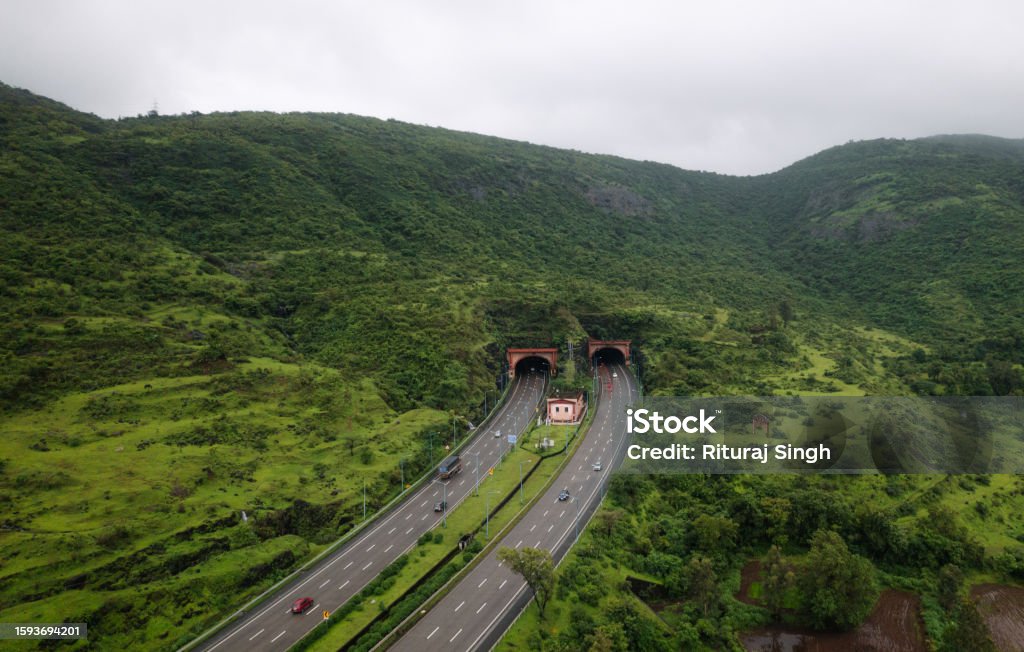
On Monday morning, amid heavy rainfall, a major landslide struck the Missing Link section of the Mumbai-Pune Expressway, as mud and rocks came crashing onto the road near the Tunnel 2 exit. MSRDC immediately shut the Pune-to-Mumbai carriageway and began traffic diversion for safety. According to officials, the incident was caused by the geography of the Sahyadri hills combined with this year’s extreme rainfall, not by any construction shortfall. Debris clearance work is underway on a war footing, and commuters have been advised to avoid unnecessary travel until conditions return to normal.
A major landslide on the newly inaugurated Missing Link section of the Mumbai-Pune Expressway has triggered a fresh political and public safety row, with the Maharashtra State Road Development Corporation (MSRDC) maintaining that extreme weather, and not construction quality, is behind the incident
What Happened
Heavy overnight rainfall on Monday triggered a landslide near the Tunnel 2 exit on the Pune to mumbai carriageway of the Khopoli Kusgaon Missing Link, forcing authorities to shut the stretch from around 4 am. Officials said debris, mud and rocks slid onto the road amid what was described as extremely heavy rainfall in the Western Ghats region. MSRDC confirmed the closure in an official statement and said the situation was being monitored in coordination with highway mumbai traffic police.
Restoration teams worked through the day to clear an estimated 100 tonnes of debris, and by afternoon, partial traffic movement had resumed on some lanes, even as officials warned of the risk of secondary landslides given the continuing rain.
Authority’s Stand: Natural Calamity, Not Construction Failure
MSRDC officials and the state government have attributed the landslide to the geography and intensity of this monsoon, describing it as an act of nature rather than a lapse in engineering. The Missing Link cuts through the Sahyadri range, an area made up of volcanic basalt rock with natural fractures and weak clay layers, making slopes near tunnel entrances especially vulnerable during sustained heavy rain
Officials pointed out that the landslide occurred outside the tunnel structure itself, near the slope of the tunnel portal, suggesting the tunnel’s core engineering remained unaffected. Engineers have been asked to assess whether related pothole-like defects on the road surface are limited to the pavement layer or point to deeper issues with drainage or workmanship, though authorities have so far said there’s no indication of a threat to the expressway’s structural integrity.
Opposition Pushes Back
The explanation has not gone down well with opposition leaders. Shiv Sena (UBT), Congress and NCP (SP) leaders have accused the state government of corruption and negligence, questioning how a project inaugurated barely two months ago, on May 1, 2026, could suffer a landslide and pavement defects during the very first monsoon. Leaders have demanded a high-level inquiry and accountability from contractors and officials involved in the project.
The Chief Minister has previously compared early snags like potholes to a “monsoon testing” phase that new infrastructure typically goes through, a comparison critics say downplays legitimate safety concerns.
Wider Impact
The landslide adds to a difficult few days for Mumbai and Pune, with relentless rain also causing waterlogging, train suspensions, and other landslides across the region, including fatalities reported in Pune district. The state disaster management authority has sounded a red alert for continued heavy rain over the next two days.
What’s Next
With MSRDC and engineering teams continuing to inspect the site, the coming days are expected to bring clearer answers on whether the road surface issues are cosmetic or structural. Until then, commuters are being advised to avoid non-essential travel on the mumbai-Pune route and to rely only on official traffic updates.
Learn more about our site archive2in.com
Contact us on contactarchive2ingmail.com
Leave a Reply
You must be logged in to post a comment.