
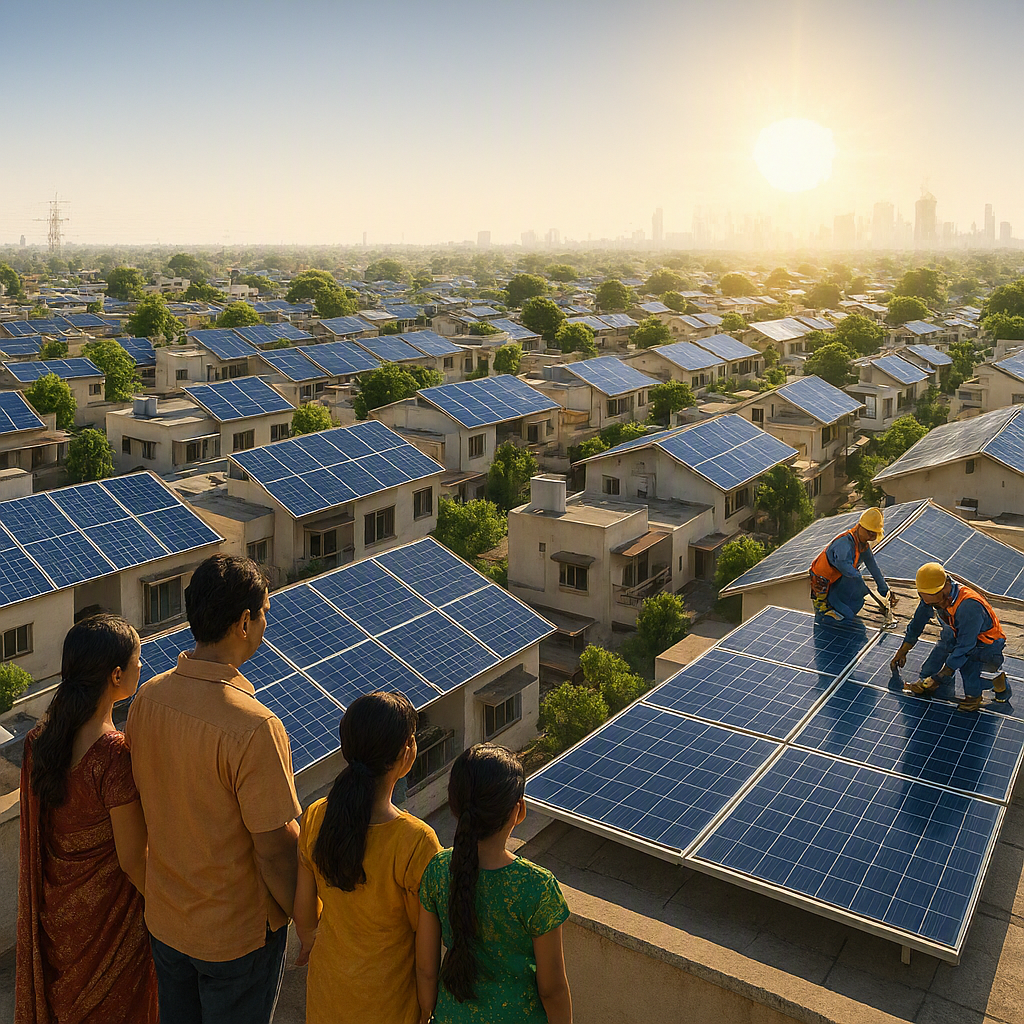
India’s transition toward clean energy received a significant boost after the World Bank Group announced an $890 million financing package to support the country’s rooftop solar initiative. The investment is expected to accelerate the adoption of solar energy, improve electricity access, reduce carbon emissions, and help millions of households generate their own clean power.
The funding aligns with India’s ambitious renewable energy goals and is expected to strengthen the government’s efforts to make rooftop solar systems more affordable and accessible.
What Is the World Bank’s $890 Million Solar Project?
The World Bank Group has committed $890 million to support the expansion of rooftop solar installations across India. The financing is aimed at helping households, financial institutions, and government agencies increase the adoption of distributed solar power.
The world bank initiative supports India’s clean energy transition by encouraging more homes to generate electricity from solar panels installed on rooftops rather than relying entirely on conventional power sources.
Why Rooftop Solar Matters
Unlike large solar farms, rooftop solar systems generate electricity where it is consumed. This reduces transmission losses, lowers electricity bills, and decreases dependence on fossil fuels.
Some of the key benefits include:
- Lower monthly electricity costs.
- Reduced carbon emissions.
- Increased energy independence.
- Better use of unused rooftop space.
- Greater resilience during power shortages when paired with battery storage.
How Will the Funding Be Used?
The financing is expected to support several areas, including:
- Expanding access to rooftop solar systems.
- Improving financing options for homeowners.
- Encouraging participation by world banks and financial institutions.
- Strengthening implementation under government solar programs.
- Supporting technical assistance and project management.
The goal is to make rooftop solar more accessible to households that may otherwise struggle with the upfront installation cost.
Benefits for Indian Households
The investment could make rooftop solar more attractive for families by improving access to financing and expanding government-supported initiatives.
Potential benefits include:
- Lower electricity expenses over time.
- Increased property value.
- Reduced dependence on rising energy prices.
- Opportunity to contribute to cleaner air and lower greenhouse gas emissions.
The exact financial benefits will vary depending on electricity usage, local regulations, available subsidies, and the size of the solar system installed.
Environmental Impact
India is among the world’s fastest-growing energy markets. Expanding renewable energy helps reduce dependence on coal and supports efforts to lower greenhouse gas emissions.
Greater adoption of rooftop solar can also:
- Reduce air pollution.
- Support climate goals.
- Improve energy security.
- Encourage sustainable urban development.
Economic Opportunities
Large renewable energy investments often create employment across multiple sectors, including:
- Solar panel manufacturing.
- Installation services.
- Equipment maintenance.
- Electrical engineering.
- Financing and project management.
As rooftop solar adoption grows, demand for skilled workers in the renewable energy sector is also expected to increase.
Challenges Ahead
Although rooftop solar has significant potential, several challenges remain:
- High upfront installation costs.
- Limited awareness among consumers.
- Financing barriers for some households.
- Technical and regulatory differences across states.
- Rooftop suitability and maintenance requirements.
Addressing these challenges will be important for achieving widespread adoption.
India’s Renewable Energy Vision
India has set ambitious renewable energy targets and continues to expand investments in solar, wind, hydroelectric, and green hydrogen projects. Rooftop solar is expected to play an important role by allowing households to participate directly in the country’s clean energy transition.
Government incentives, world banks, technological improvements, and international financing are likely to encourage further growth in this sector over the coming years.
Conclusion
The World Bank Group’s $890 million commitment represents a significant step toward expanding rooftop solar across India. If implemented effectively, the initiative could help more households access clean energy, reduce electricity costs, support job creation, and contribute to India’s long-term sustainability goals.
For homeowners considering rooftop solar, it is important to review local regulations, installation costs, available subsidies, and financing options before making a decision. As renewable energy continues to grow, rooftop solar is expected to become an increasingly important part of India’s energy future.
Disclaimer
This article is for informational purposes only and is based on publicly available information at the time of writing. Government policies, subsidies, financing programs, and project details may change. Readers should verify the latest information through official government agencies and the World Bank before making financial or installation decisions related to rooftop solar.
learn more about our site on contactarchive2in.com
Contact us on our email id contactarchive2in@gmail.com
Leave a Reply
You must be logged in to post a comment.