
Introduction
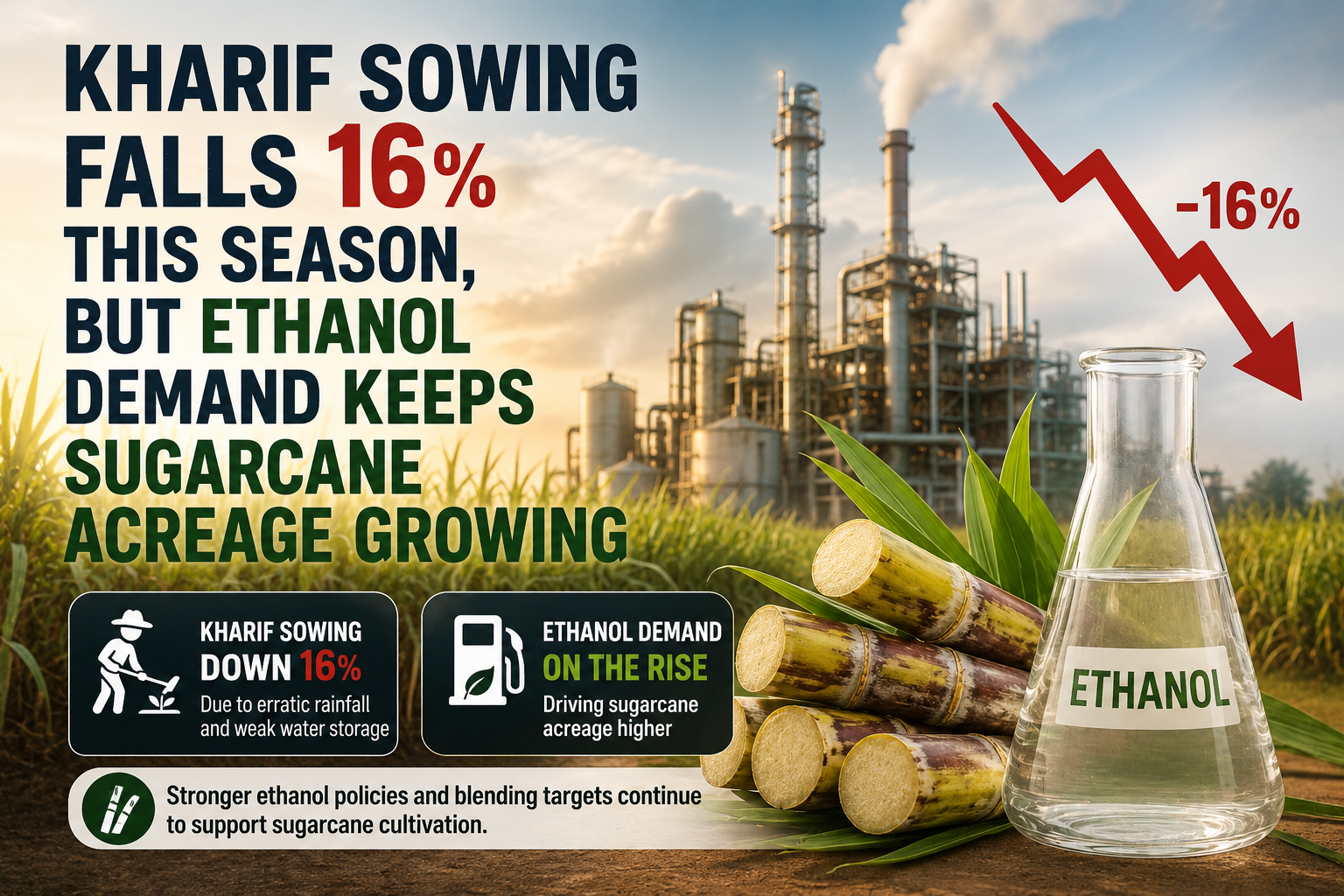
India’s Kharif sowing season is running well behind last year’s pace, with total cropped area down as much as 16% as of mid-July 2026, largely due to a delayed and uneven monsoon. Crops like oilseeds, cotton, and coarse cereals have taken the biggest hit. But there’s one clear exception to this trend: sugarcane acreage is actually higher than last year — and the reason has less to do with rainfall and more to do with India’s ethanol blending programme.
Here’s a complete breakdown of what’s happening with this year’s Kharif sowing, and why sugarcane is bucking the downward trend.
Kharif Acreage: The Overall Picture
According to the latest data from the Ministry of Agriculture, the gap between this year’s and last year’s sowing area narrowed to around 16% during the week ending July 10, 2026 an improvement from a 21% shortfall just five days earlier, as the monsoon picked up pace.
Even with this improvement, the season remains well behind normal levels. Key numbers from early-to-mid July 2026:
- Rice (paddy): Down roughly 9–13% compared to the same period last year
- Pulses: Down close to 22%, though still marginally above the five-year normal average for this time of year
- Oilseeds: One of the worst-hit categories, down around 21%
- Cotton: Down roughly 15–23%, depending on the reporting week
- Coarse cereals (Shri Anna / millets): Down about 16%, with bajra and maize sowing both trailing last year’s levels
Officials have attributed the shortfall mainly to the delayed onset and uneven spread of the southwest monsoon, which has affected sowing windows across several states.
The Exception: Sugarcane Acreage Is Rising
While almost every major Kharif crop is trailing last year’s numbers, sugarcane has moved in the opposite direction. Acreage under sugarcane has increased marginally compared to the same period last year, alongside a similar small rise in jute and mesta cultivation.
This isn’t a coincidence tied to rainfall sugarcane is a relatively water intensive, long duration kharif crop, and its planting decisions are made well ahead of the main monsoon-driven sowing window. The real driver behind the increase is economic incentive, not weather.
Why Ethanol Demand Is Boosting Sugarcane Acreage
India’s Ethanol Blending Programme (EBP) has become one of the biggest forces shaping cropping patterns in recent years. The government’s roadmap aims to raise ethanol blending in petrol to 20% under the E20 programme, with average blending rates already having crossed the 19% mark, and a longer-term target of 27% blending by 2030.
Sugarcane is one of the programme’s core feedstocks, alongside maize and surplus rice. Several policy measures have made sugarcane cultivation more attractive for farmers:
- The Fair and Remunerative Price (FRP) system guarantees farmers a minimum price for sugarcane, regardless of market fluctuations.
- The government has authorised the use of all sugarcane-derived materials cane juice, syrup, B-heavy molasses, and C-heavy molasses for ethanol production, widening the market for cane growers.
- Assured procurement under the ethanol programme gives farmers a predictable buyer, reducing the price risk associated with the open sugar market.
Together, these incentives mean that even in a year when erratic rainfall is pushing farmers away from water-sensitive and input-heavy kharif crops, sugarcane remains a financially safer bet thanks largely to policy support rather than favourable growing conditions.
Maize has seen an even sharper rise for the same underlying reason, with acreage climbing by roughly 9–10% this season as ethanol demand competes with food crops for farmland.
The Bigger Concern: Competition With Food kharif Crops
Agricultural economists have flagged a potential downside to this trend. As sugarcane and maize acreage expand to meet ethanol demand, they increasingly compete for the same land that would otherwise go toward pulses, oilseeds, and other food kharif crops categories where India already depends heavily on imports.
This is especially visible this season: while sugarcane and maize acreage have grown, pulses and oilseeds acreage have fallen sharply, partly due to the weak monsoon, but also because farmers are shifting toward crops with more assured returns under the ethanol push.
There are also concerns about water stress, since sugarcane is a highly water-intensive crop grown in several regions that are already facing groundwater depletion.
Key Takeaways
- India’s overall Kharif sowing area was down around 16% as of mid-July 2026, largely due to a delayed monsoon.
- Oilseeds, pulses, cotton, and coarse cereals have all seen double-digit declines in acreage this season.
- Sugarcane acreage has increased, bucking the overall trend, driven by India’s ethanol blending programme rather than favourable rainfall.
- Government incentives — including guaranteed pricing and expanded use of cane by-products for ethanol — are making sugarcane a safer economic choice for farmers.
- The shift raises concerns about reduced land availability for food crops like pulses and oilseeds, along with rising pressure on water resources.
This is a developing agricultural season, and sowing figures typically continue to shift through July and August as the monsoon progresses.
Learn more about our site archive2in.com
Contact us on contactarchive2in@gmail.com
Read out our latest article on Special status category list ….
Leave a Reply
You must be logged in to post a comment.