
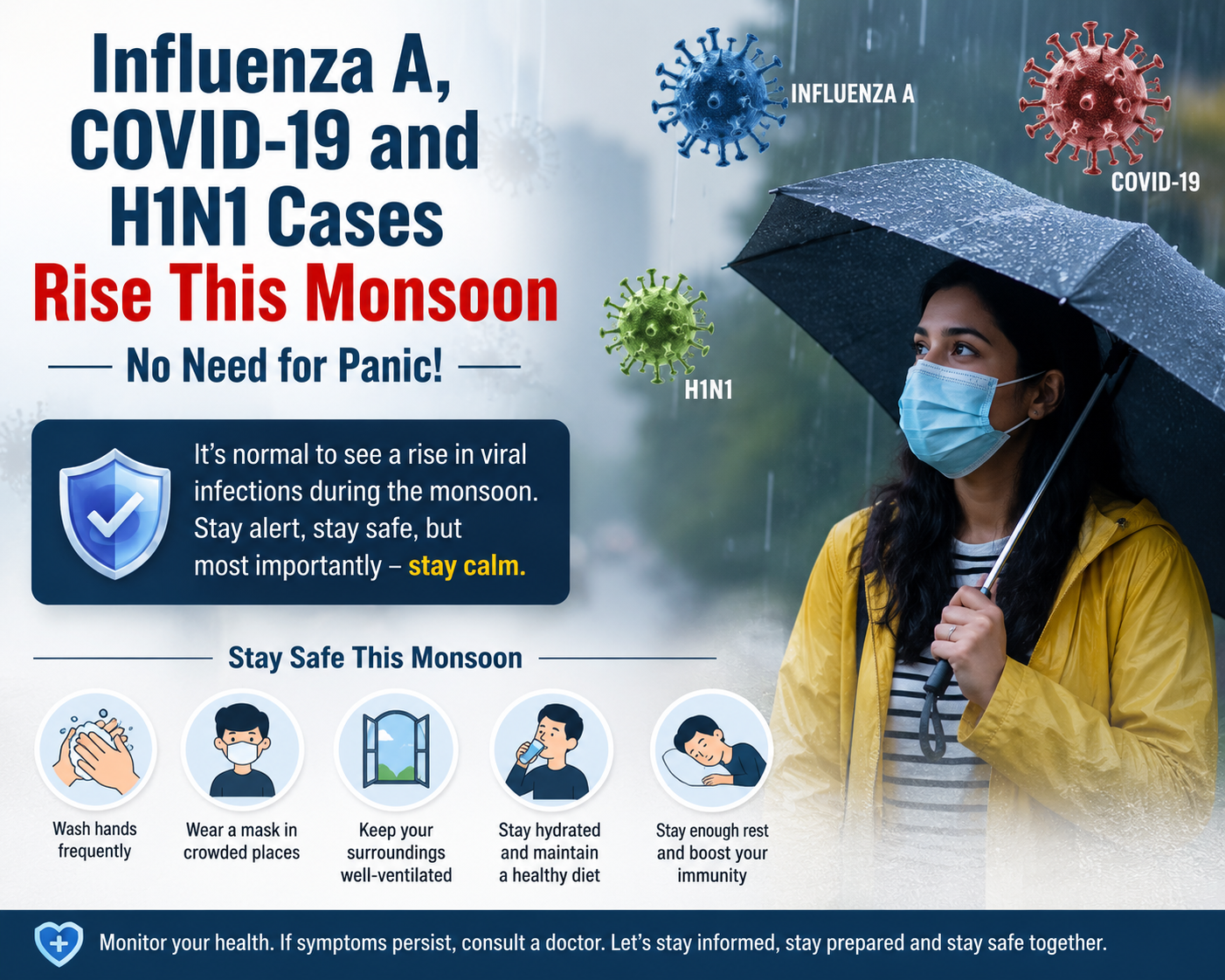
As the monsoon rains sweep across Indian cities this year, hospitals and clinics are reporting something familiar yet concerning: a simultaneous rise in Influenza A, COVID-19, and H1N1 (swine flu) cases. Doctors say the trend isn’t unusual for this time of year, but it does call for awareness, timely testing, and basic precautions rather than fear.
Why Are Respiratory Viruses Spiking This Monsoon?
Every monsoon season, India typically sees an increase in respiratory illnesses. Humidity, waterlogging, temperature fluctuations, and poor ventilation create ideal conditions for viruses to spread. This year is no exception several cities are witnessing overlapping outbreaks of multiple respiratory viruses at once.
In Mumbai, for instance, doctors have observed a steady rise in Covid-19, H1N1, other Influenza A strains, and even RSV cases even before the monsoon fully set in. Physicians in the city noted that Covid and influenza Acases quietly resurfaced after H1N1 had dominated clinics for nearly a month, meaning multiple viruses are now circulating at the same time.
Meanwhile, in Bengaluru, the pattern looks slightly different. Local health reports indicate that Influenza A particularly the H1N1 and H3N2 strains currently accounts for a larger share of respiratory infections than COVID 19, while the circulating JN.1 coronavirus variant is largely producing mild, Omicron-like symptoms.
This mixed picture different viruses dominating in different cities is exactly why doctors are urging people to stay alert rather than assume it’s “just a cold.”
Who Is Most at Risk?
While most healthy adults recover from these infections with rest and basic care, certain groups face a higher risk of complications:
- Infants and young children
- School-going children in crowded classrooms
- Elderly individuals
- Pregnant women
- People with pre-existing lung, heart, or metabolic conditions
- Those with weakened immunity
Health experts note that Bengaluru has historically seen seasonal spikes in respiratory illness during the monsoon, especially among these vulnerable groups.
Symptoms to Watch Out For
Influenza A, H1N1, and COVID 19 share several overlapping symptoms, which is part of why doctors say testing is important rather than self-diagnosing:
- Fever and chills
- Sore throat and cough
- Body aches and fatigue
- Runny or blocked nose
- Headache
- In some cases, breathlessness or chest discomfort
Because these symptoms look so similar across viruses, doctors recommend getting tested if symptoms persist beyond 2–3 days or worsen, rather than assuming it’s a routine seasonal cold.
“No Need for Panic, But There Is a Need for Responsibility”
This is the core message doctors are repeating this season. The influenza A rise in cases doesn’t mean a repeat of pandemic-level disruption most infections remain mild to moderate. However, it does mean individuals need to take basic responsibility for their own health and the health of those around them:
- Don’t ignore persistent symptoms. A fever that lasts more than 2–3 days deserves medical attention, not self-medication.
- Isolate when unwell. Avoid work, school, or crowded places if you have fever, cough, or cold symptoms.
- Wear a mask in high-risk settings. Hospitals, crowded public transport, and closed indoor spaces are common transmission points.
- Practice hand hygiene. Regular handwashing and sanitizing reduces the spread of respiratory droplets.
- Stay hydrated and rested. Supporting your immune system helps your body fight off infections faster.
- Get vaccinated if eligible. Seasonal flu shots and COVID-19 boosters (where recommended) remain effective tools, especially for high-risk groups.
- Consult a doctor before taking antivirals. Self medicating with antiviral drugs without a diagnosis can do more harm than good.
Should You Be Worried?
Doctors are clear on one point: panic is not the answer, but complacency isn’t either. The overlapping circulation of Influenza A, H1N1, and COVID-19 this monsoon is a reminder that respiratory viruses haven’t gone away they’ve simply become part of the seasonal landscape. Recognizing symptoms early, seeking timely medical advice, and following basic hygiene precautions can go a long way in preventing complications, especially for vulnerable groups.
Key Takeaways
- Multiple respiratory viruses Influenza A, H1N1, and COVID 19 are circulating simultaneously this monsoon in several Indian cities.
- Symptoms overlap significantly, so testing matters more than guessing.
- Most cases remain mild, but vulnerable groups need extra caution.
- Simple precautions masking in crowded spaces, hand hygiene, isolation when sick, and timely medical consultation remain the most effective defense.
- The message from doctors is simple: stay alert, not alarmed.
Learn more about our site archive2in.com
Contact us on contactarchive2in@gmail.com
Read out our latest article kharif crops…
Leave a Reply
You must be logged in to post a comment.