
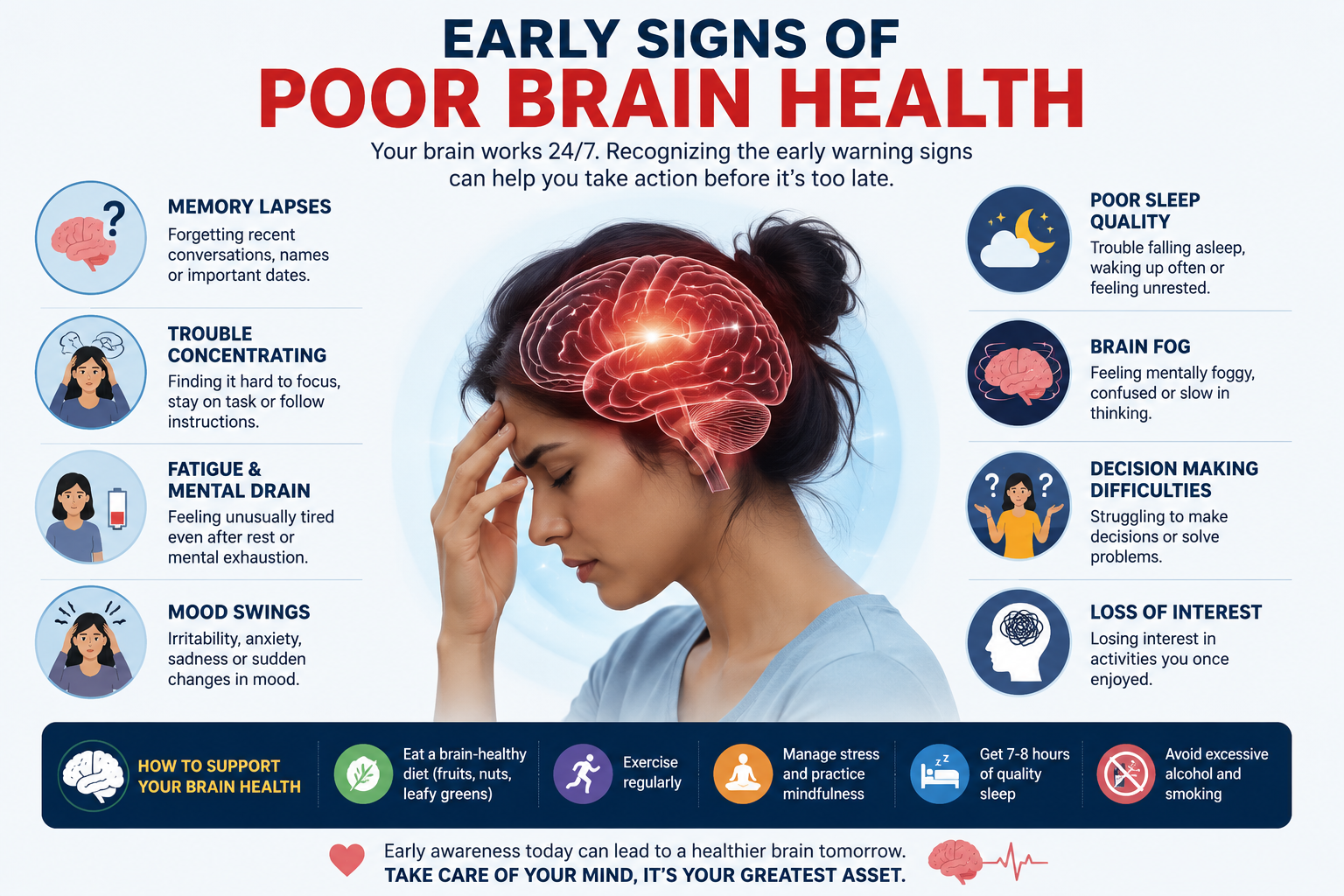
World Brain Day is a good reminder that brain health isn’t something we only think about after a diagnosis. Long before serious conditions show up, the brain often sends small, easy-to-miss signals through daily behavior. Recognizing these early signs of poor brain health can help you take action sooner through lifestyle changes, medical checkups, or simply paying closer attention to how your mind is functioning.
Here are five everyday changes that experts say shouldn’t be brushed off as “just getting older” or “just a busy week.”
Common Brain-Related Diseases You Should Know About
Along with the early warning signs, it helps to know what conditions these signals can eventually point toward. Here are some of the most common brain-related diseases:
- Alzheimer’s Disease – The most common form of dementia, marked by progressive memory loss, confusion, and difficulty with daily tasks.
- Parkinson’s Disease – Affects movement and coordination, often starting with tremors, stiffness, and slower motor responses.
- Stroke – Occurs when blood flow to part of the brain is cut off, which can cause sudden weakness, speech difficulty, or vision loss. It’s a medical emergency.
- Epilepsy – A neurological disorder causing recurring seizures due to abnormal electrical activity in the brain.
- Brain Tumors – Abnormal growths that can be benign or malignant, sometimes causing headaches, vision changes, or seizures depending on location.
- Multiple Sclerosis (MS) – An autoimmune condition where the immune system attacks the protective covering of nerves, affecting movement, vision, and coordination.
- Meningitis – Inflammation of the membranes surrounding the brain and spinal cord, usually caused by infection, requiring urgent treatment.
- Chronic Migraine – More than just a bad headache; frequent migraines can affect concentration, sleep, and daily functioning if left unmanaged.
1. Frequently Losing Your Train of Thought
Everyone forgets things occasionally. But if you regularly walk into a room and forget why, lose track of conversations mid-sentence, or struggle to follow instructions you’d normally handle easily, it may be worth noting. Occasional forgetfulness is normal; a consistent pattern of it is not.
What it may indicate: Reduced attention span, chronic stress, sleep deprivation, or in some cases, early cognitive decline.
What helps: Prioritizing quality sleep, cutting back on multitasking, and reducing constant digital distractions.
2. Struggling With Words You Used to Know
Suddenly blanking on common words, replacing them with vague terms like “that thing,” or taking noticeably longer to finish a sentence can be a subtle red flag. This is different from an occasional tip of the tongue moment it’s a pattern that becomes more frequent over time.
What it may indicate: Mental fatigue, but also a potential early marker of memory-related conditions if it worsens over months.
What helps: Mentally stimulating activities like reading, puzzles, and learning a new skill, which support cognitive reserve.
3. Withdrawing From Social Interaction
A gradual pullback from friends, family gatherings, or activities you once enjoyed isn’t always just personality or mood. Since social interaction requires memory, language processing, and emotional regulation working together, a decline in any of these areas can make socializing feel exhausting.
What it may indicate: Depression, anxiety, or early neurological changes that make social engagement harder to sustain.
What helps: Staying socially active even in small ways a short call, a weekly walk with a friend since social engagement is strongly linked to long term brain health.
4. Increasing Difficulty Making Decisions
If everyday choices what to cook, which route to take, how to respond to a simple email start to feel overwhelming or take unusually long, it could point to changes in the brain’s executive function, the system responsible for planning and decision-making.
What it may indicate: Chronic stress, burnout, or reduced processing speed, which can sometimes be early indicators of cognitive decline.
What helps: Breaking decisions into smaller steps, reducing daily decision overload, and managing stress through regular exercise or mindfulness.
5. Disrupted Sleep Patterns
Struggling to fall asleep, waking up frequently, or feeling unrested despite a full night’s sleep can be more than just poor sleep hygiene. Sleep is when the brain clears out waste products and consolidates memories, so ongoing disruption can directly affect cognitive performance.
What it may indicate: Sleep disorders, stress, or in some cases, an early marker of neurodegenerative changes, since disrupted sleep and brain health are closely linked in research.
What helps: A consistent sleep schedule, limiting screens before bed, and addressing underlying issues like sleep apnea if suspected.
When Should You Be Concerned?
A single occurrence of any of these signs is rarely a cause for alarm everyone has off days. What matters is frequency, progression, and impact on daily life. If these changes are becoming more noticeable, more frequent, or are affecting your work, relationships, or independence, it’s worth speaking with a doctor or neurologist rather than waiting it out.
Final Thoughts
This World Brain Day, the takeaway isn’t to panic over the occasional forgotten word or restless night. It’s to pay attention to patterns. Small, consistent changes in memory, language, mood, decision-making, or sleep are often the brain’s way of asking for support and catching them early gives you far more room to act.
If you’re noticing several of these signs together, or they’re getting worse over time, don’t self-diagnose based on an article. A conversation with a healthcare professional is the safest next ste
Learn more about our site https://archive2in.com
Contact us on our email id contactarchive2in@gmail.com
Read out our latest articles on our BLOG section
Leave a Reply
You must be logged in to post a comment.