
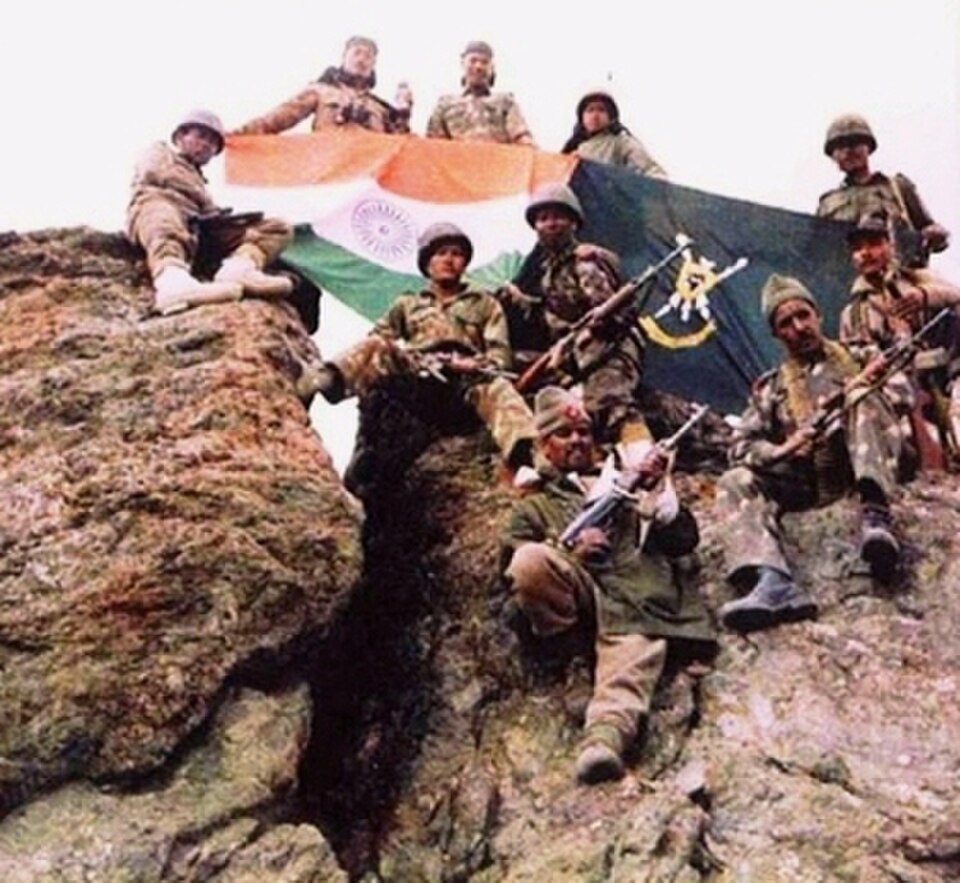
A Memory That Returns Every Year
I still remember the evening our teacher first told us the story of the Kargil War in school. The classroom went silent boys of 18 or 19, barely a few years older than us, fighting and dying on snow-covered peaks. That was the day I first understood how easy it looks to raise a flag, and how hard it is to keep it flying high.
Every year, 26 July arrives. News channels run tributes, social media fills up with patriotism and then everything goes back to normal. This time, instead of just celebrating, I thought it was worth pausing to ask what we actually learned.
Why Is Kargil Diwas Celebrated?
Every year on 26 July, India observes Kargil Vijay Diwas. This day is dedicated to the brave soldiers who, in 1999, fought in the icy and treacherous terrain of Ladakh to push back Pakistani infiltrators. It’s not just a day of victory its is a symbol of sacrifice, discipline, and patriotism.
But 27 years later, it’s worth asking: have we actually learned the right lessons from this war, or have we only remembered how to celebrate it?
Kargil War 1999: A Brief Background
Every winter, the Indian Army would vacate its high-altitude posts in Kargil due to extreme weather. Taking advantage of this, Pakistani soldiers and infiltrators quietly crossed the Line of Control (LoC) and occupied strategic peaks on the Indian side. When this infiltration was discovered in May 1999, India launched Operation Vijay.
- The war was fought at altitudes of 16,000 to 18,000 feet
- The Indian Army had to fight the enemy’s height advantage as well as brutal weather
- Peaks like Tiger Hill and Tololing were recaptured
- More than 527 Indian soldiers laid down their lives
On 18 July 1999, India officially declared the success of Operation Vijay, and 26 July is formally recognized as the day the war ended this is the date now observed as Kargil Vijay Diwas.
The War Was Won So Why Is the Lesson Still Incomplete?
The Kargil War also served as a wake-up call for India. The Kargil Review Committee, formed after the war, pointed out several serious gaps:
1. Intelligence Failure
The infiltration had happened months earlier, but it only came to light when local shepherds alerted the army. Think about it an ordinary shepherd spotted what our entire intelligence system missed. Every time I read that line, it still stings. It remains one of the biggest intelligence failures, one that many believe still hasn’t been fully corrected.
2. Gaps in Border Surveillance
The practice of vacating posts in winter, combined with inconsistent surveillance along the border, raised questions that remain relevant even today.
3. Slow Pace of Military Modernization
After Kargil, there was talk of accelerating defense procurement and modernization but several reports suggest this process is still moving too slowly.
4. Political and Strategic Coordination
Kargil exposed the need for better coordination between the Army, Air Force, and political leadership a lesson that keeps repeating itself in every border standoff since.
What Would Real Tribute Look Like?
Lighting candles and posting on social media on Kargil Diwas matters but real tribute would mean:
- Continuously strengthening border security and intelligence systems
- Supporting soldiers’ families throughout the year, not just on 26 July
- Seriously implementing recommendations like those of the Kargil Review Committee in policy-making
- Teaching the next generation about this war not just as a source of pride, but as a lesson
Conclusion
Kargil Vijay Diwas is a celebration of the Indian Army’s courage and sacrifice and that honor is fully deserved. But Kargil Diwas will only be truly meaningful when we remember not just the victory, but also the gaps that made that victory so costly.
For me, every 26 July isn’t just a date on the calendar it’s the memory of that classroom, of names that may now be just a line in a history book, but because of whom we can proudly fly our flag today without fear. Maybe that’s the real way to honor them not just remembering, but changing. Jai Hind, Jai Bharatiya Sen
Learn more about our site archive2in.com
Contact us on contactarchive2in@gmail.com
Read out our latest articles on our BLOGs section
Leave a Reply
You must be logged in to post a comment.