
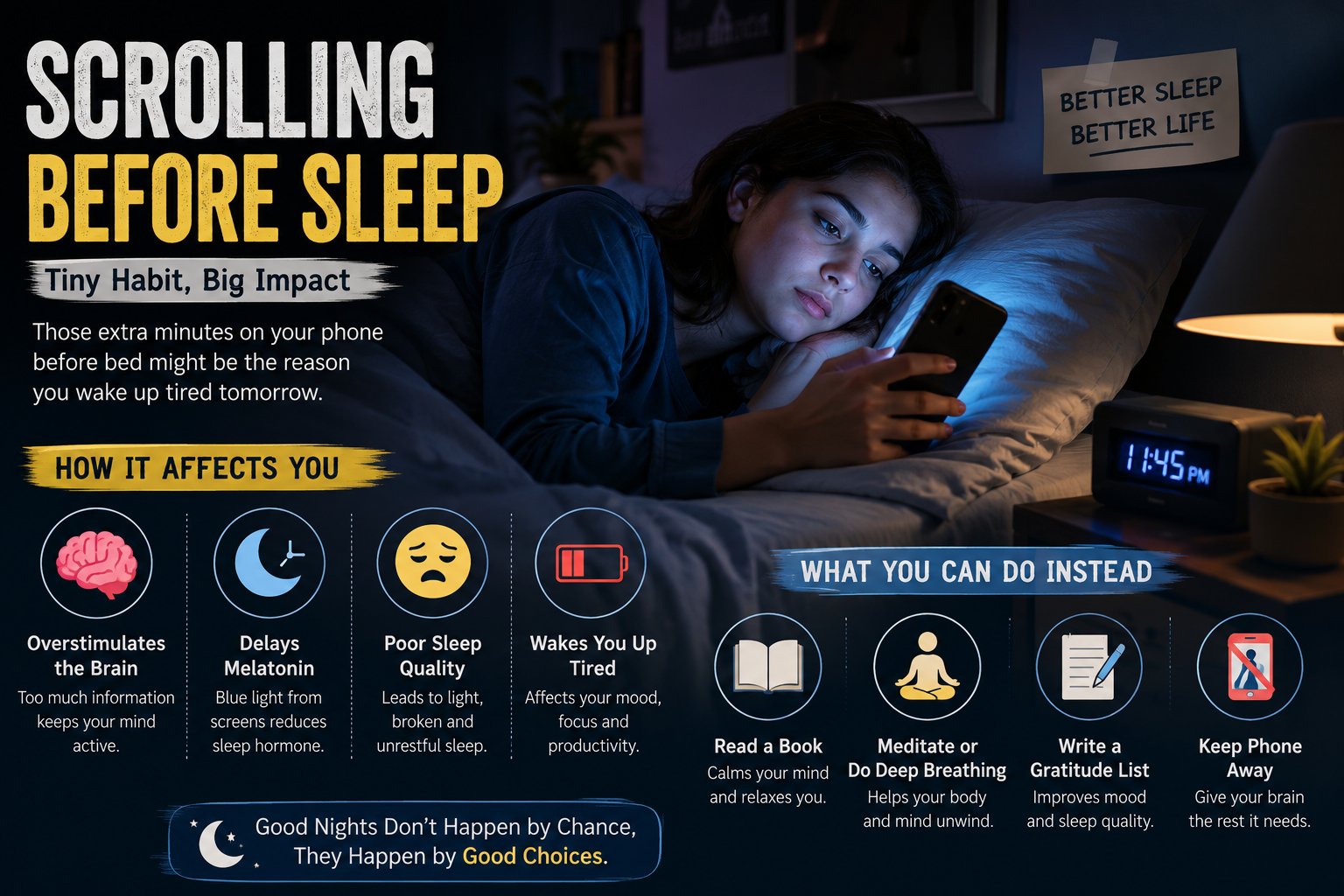
For most people, the last thing they see before closing their eyes isn’t the ceiling it’s a phone screen. Reels, notifications, one more chat reply, one more headline. It feels harmless, even relaxing. But according to sleep experts and neurologists, this nightly habit is quietly working against your brain, disrupting the biological processes that are supposed to wind you down for rest.
Here’s what actually happens inside your brain when you scroll before sleep, and what you can do instead.
How Bedtime Scrolling Disrupts Your Brain’s Sleep Signals
1. Blue Light Confuses Your Internal Clock
Phone and tablet screens emit blue light, a wavelength your brain associates with daytime. When your eyes are exposed to this light in the evening, it suppresses the production of melatonin the hormone responsible for making you feel sleepy. The result: it takes longer to fall asleep, even if you’re physically exhausted.
2. Your Brain Stays “Switched On”
It isn’t just the light it’s the content. Scrolling through social media, messages, or news keeps your brain cognitively and emotionally engaged at a time it should be slowing down. Notifications, dramatic posts, or stressful headlines can activate the brain’s stress response, keeping it alert instead of calm.
3. Cortisol Gets a Late-Night Boost
Along with suppressing melatonin, prolonged screen stimulation can raise cortisol, the body’s primary stress hormone. Elevated cortisol at night works directly against the relaxation your body needs to transition into deep sleep, and can contribute to that “tired but wired” feeling many people report at bedtime.
4. The Dopamine Loop Keeps You Scrolling Longer Than Planned
Social media platforms are designed around infinite scroll and personalized algorithms that deliver small, unpredictable dopamine hits. This is why “just five more minutes” on your phone often turns into forty-five. Over time, this reward loop can make unplugging at night feel genuinely harder, not just inconvenient.
5. It Cuts Into Deep Sleep, Not Just Sleep Onset
The damage isn’t limited to falling asleep later. Research has linked heavy nighttime screen use to reduced deep sleep, increased risk of insomnia, and grogginess the following morning even when total time in bed stays the same.
Why This Matters Beyond Feeling Tired
Poor sleep quality doesn’t just affect how rested you feel. Over time, disrupted sleep patterns have been associated with:
- Reduced focus and slower cognitive processing during the day
- Increased irritability and lower mood
- Higher long-term stress and anxiety levels
- Greater difficulty regulating emotions
In short, what feels like a small, harmless bedtime habit can compound into daytime consequences that affect work, relationships, and overall mental well-being.
How to Break the Scrolling-Before-Sleep Habit
The good news: this is a highly reversible habit. Small, consistent changes make a real difference.
1. Set a digital curfew. Stop scrolling 30–60 minutes before your intended bedtime. Use this window for a screen-free wind-down activity instead.
2. Keep your phone out of arm’s reach. Charging your phone across the room — not on your nightstand — removes the temptation of “just checking” one more time.
3. Use night mode or blue-light filters. If you must use a screen in the evening, reduce blue light exposure through built-in night settings.
4. Replace scrolling with a low-stimulation ritual. Reading a physical book, light stretching, or journaling signals to your brain that it’s time to slow down, without the dopamine spike of social media.
5. Turn off non-essential notifications. A vibrating phone at 1 a.m. can fragment sleep even if you don’t consciously wake up to check it.
6. Be patient with yourself. Like any habit tied to a reward loop, breaking it takes repetition. Missing a night doesn’t undo progress — consistency over time is what matters.
The Bottom Line
Scrolling before bed feels like downtime, but neurologically, it’s the opposite — it delays melatonin release, activates stress hormones, and keeps your brain engaged when it should be powering down. The habit is common, but it isn’t harmless, and small changes to your evening routine can meaningfully improve both sleep quality and how you feel the next day.
Learn more about our site archive2in.com
Contact us on contactarchive2in@gmail.com
Read out our latest articles on our BLOG section
Leave a Reply
You must be logged in to post a comment.