
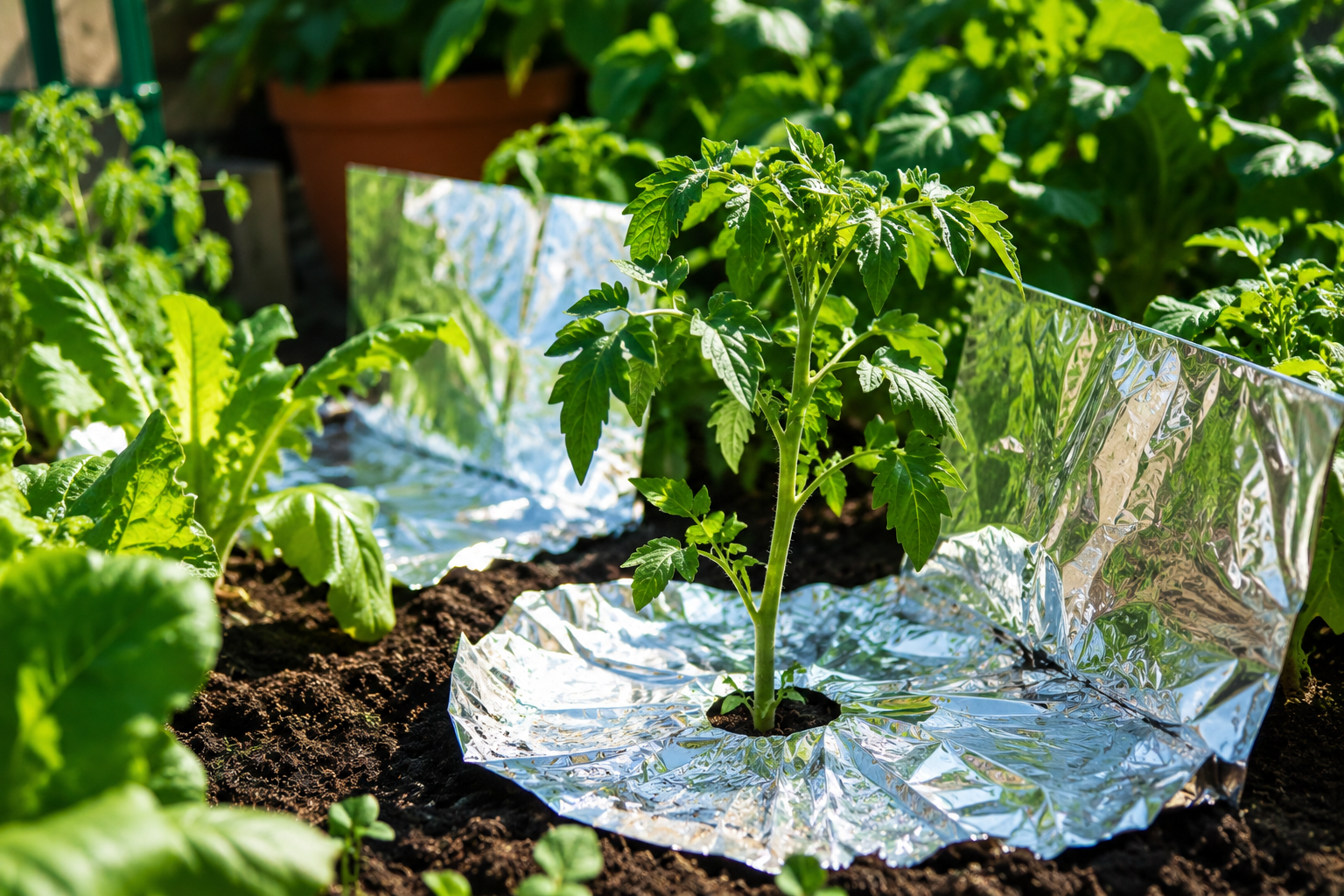
Aluminium foil is usually associated with cooking, baking and storing leftovers. But the inexpensive kitchen staple has found another use outside the home — in gardens.
Gardeners are experimenting with aluminium foil as a simple way to redirect sunlight, protect young plants and discourage some pests. While foil is not a replacement for proper pest management or good gardening practices, its reflective surface can make it useful in certain situations. Research and guidance on reflective mulches also support the idea that reflective materials can increase light levels around plants and influence the behaviour of some insects.
Here are six ways gardeners may use aluminium foil around plants.
1. Reflecting more light toward plants
One of the main reasons gardeners use aluminium foil is its ability to reflect light.
If a plant is growing in a location where some leaves receive considerably less light than others, a carefully positioned reflective surface can redirect some available sunlight toward the plant.
This does not create additional sunlight or make the plant photosynthesise magically faster. Instead, it changes where existing light goes.
Research examining reflective groundcovers has found that aluminium foil can reflect substantial amounts of visible light, depending on its orientation and condition.
Gardeners can therefore use foil as a temporary reflector near seedlings or plants in partially shaded areas.
2. Helping young seedlings receive more light
Small seedlings can benefit from having adequate light during their early growth.
A piece of foil attached to cardboard can be positioned beside a container or seed tray to reflect light toward the plants. This can be particularly useful when a window provides light predominantly from one direction.
However, foil should be positioned carefully. The objective is to redirect light rather than expose plants to excessive heat or intense reflected sunlight.
For larger-scale growing, commercially designed reflective materials are generally more practical than kitchen foil.
3. Creating a reflective barrier against some insects
Reflective materials can also influence insect behaviour.
Studies have found that reflective surfaces can discourage certain flying pests from landing on plants. Research published in the Journal of Economic Entomology, for example, found that reflective mulch significantly reduced catches of winged aphids in field experiments.
More recent research has also examined how reflective foils influence the landing behaviour of whiteflies, which are common pests of vegetable and ornamental crops.
This doesn’t mean aluminium foil will eliminate aphids, whiteflies or other pests. Rather, reflective surfaces can be one part of a broader pest-management strategy.
4. Protecting vegetables from certain garden visitors
Some gardeners also use strips or small pieces of reflective foil around vegetable beds because flashes of reflected light and movement can make the area less comfortable for certain birds.
Foil strips or lightweight reflective objects can move in the breeze, producing changing flashes that may discourage birds from repeatedly landing near vulnerable plants.
However, effectiveness can vary depending on the pest, garden layout and how quickly animals become accustomed to the deterrent.
For serious pest problems, gardeners should not rely on foil alone.
5. Reflective mulch around plants
Another possible use is placing reflective material around the soil surface.
Reflective mulch can bounce light upward toward the lower parts of plants while also influencing the environment around the crop. According to the University of California Integrated Pest Management Program, reflective mulches can conserve soil moisture and potentially improve crop growth through increased reflected light and changes in soil conditions.
However, UC IPM notes that aluminium foil is delicate and relatively expensive for large-scale use, making commercial reflective mulch materials more practical for bigger growing areas.
6. A cheap experiment for home gardeners
Perhaps the biggest attraction of aluminium foil is its simplicity.
Instead of buying specialised reflective gardening equipment, a home gardener can experiment with a small piece of foil and observe whether it makes a difference.
For example, foil can be secured to a piece of cardboard and placed beside a potted plant. Gardeners can then monitor the plant’s light exposure and growth rather than assuming that the technique will work equally well everywhere.
The important thing is not to cover the entire garden with foil. Use it selectively, keep it secure and monitor the plant for signs of heat or light stress.
Does aluminium foil really work?
The answer is yes, but with limitations.
Reflective surfaces can redirect light and have been shown to influence the behaviour of certain insects. But aluminium foil isn’t a miracle gardening solution and won’t eliminate every pest.
Its best use is as an inexpensive supplementary tool — particularly for small gardens, seedlings and experiments where a little additional reflected light or a temporary visual deterrent could be useful.
So, the next time you have a clean leftover piece of aluminium foil, don’t necessarily throw it away. With the right placement, that ordinary kitchen item may have a second life in the garden.
Disclaimer
This article is intended for general informational purposes only. Aluminium foil is not a guaranteed pest-control method and should not replace established gardening, pest-management or plant-care practices. Results can vary depending on plant species, climate, sunlight and pest type. Avoid positioning reflective material where it could cause excessive heat or intense light exposure to plants. Always monitor plants after introducing reflective materials.
Learn more about our site on contactarchive2in.com
Contact us on our email id contactarchive2in@gmail.com
Leave a Reply
You must be logged in to post a comment.