
Introduction
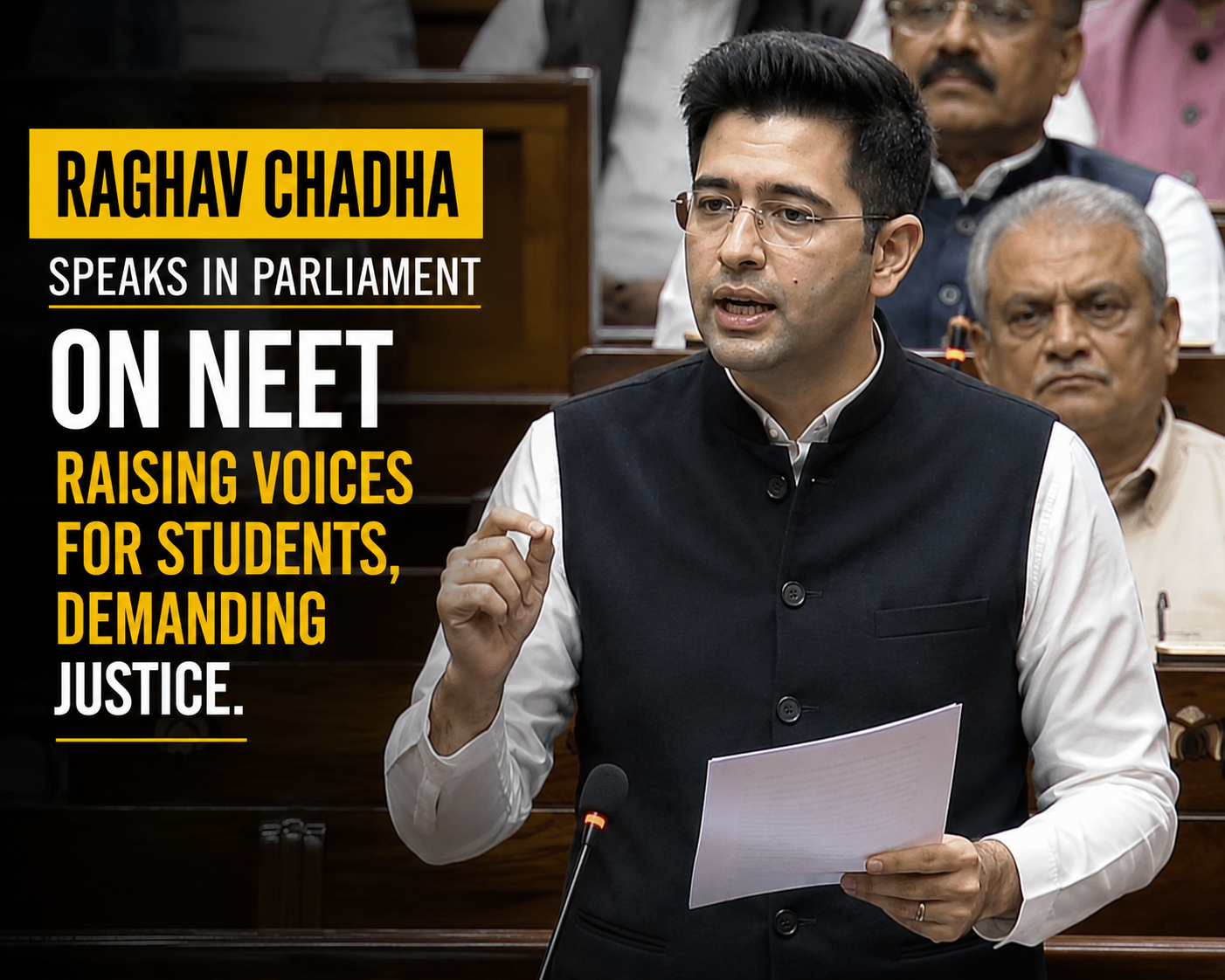
For weeks, Rajya Sabha MP Raghav Chadha faced criticism for staying quiet on the NEET paper leak controversy that has gripped the nation and outraged millions of students and parents. Known for being one of the most vocal voices on public issues, his silence stood out until he finally addressed it directly in Parliament this week, explaining exactly why he chose not to speak up earlier.
“I Didn’t Want Headlines, I Wanted Solutions”
Speaking during the Rajya Sabha debate on the Public Examinations (Amendment) Bill, 2026, Raghav Chadha explained that his approach to public issues has changed since he moved from the Opposition benches to the treasury benches. He noted that when he was in the Opposition, raising questions was his primary tool, but now that he sits on the treasury benches, delivering solutions has become his responsibility.
Raghav chadha went further, stating that he did not want to make media soundbites or “mark attendance” in front of television cameras just to be seen reacting. Instead, he said he had made a personal promise to himself: he would only speak on the NEET paper leak issue in Parliament once a real solution was underway and the system was genuinely being fixed.
Why He Chose This Moment to Speak
Raghav Chadha remarks came on the day the Rajya Sabha passed the Public Examinations (Amendment) Bill, 2026 a landmark piece of legislation that establishes India’s first-ever formal anti-paper-leak framework. According to Chadha, this was the moment he had been waiting for, since it represented an actual institutional fix rather than just political noise around the issue.
He emphasized that structural reform, not rhetoric, was what the situation demanded, arguing that the crisis needed long-term systemic changes to restore public trust in India’s examination system.
Acknowledging Students’ Anger
Despite defending his silence, Raghav Chadha was careful to validate the frustration of the millions of students affected by the leak. He acknowledged that their anger and anxiety were completely justified, pointing to the scale of the issue highlighting that around 22 lakh students spend months preparing intensely for the demanding three-hour NEET exam, only to have their effort undermined by leaks circulated through phones and messaging apps.
He described the damage caused by paper leaks as going far beyond a single exam, affecting students’ hard work, dreams, and trust in the system as a whole.
What the New Anti-Paper Leak Law Means
With the passage of the Public Examinations (Amendment) Bill, 2026, India now has its first dedicated legal framework specifically targeting examination fraud and paper leaks. The legislation comes after years of recurring controversies across major national exams, and is being positioned by the government as a major step toward restoring credibility in the country’s testing systems.
Raghav Chadha urged all political parties to rise above partisan lines and support the legislation, cautioning against viewing the paper leak crisis purely through a political lens.
The Bigger Picture
The NEET paper leak controversy has been one of the most polarizing issues in Indian politics over the past two years, with opposition leaders repeatedly demanding parliamentary debate and accountability from the government. Chadha’s decision to stay silent through much of this period had drawn criticism from several quarters, making his eventual explanation and the timing of it a significant moment in the ongoing conversation around examination integrity in India.
Raghav chadha comments mark one of the clearest instances yet of a sitting MP explaining the shift in political responsibility that comes with moving from opposition to governance, and how that shift shapes when and how a leader chooses to speak.
Learn more about our site on contactarchive2in.com
Contact us on our email id contactarchive2in@gmail.com
Read out our latest articles on our Blog section
Leave a Reply
You must be logged in to post a comment.