
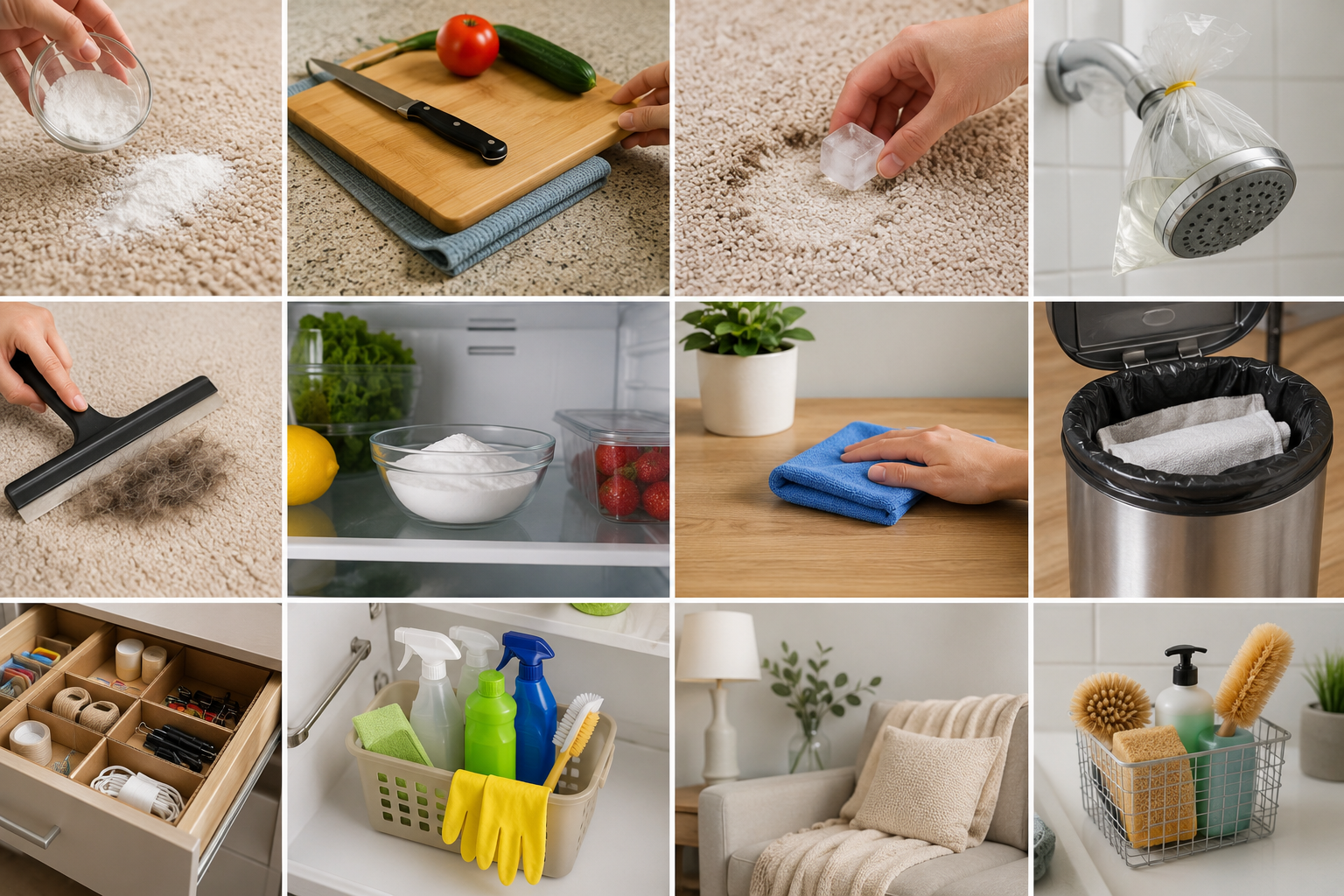
You don’t always need expensive cleaning products, specialised equipment or complicated routines to make your home easier to manage. Sometimes, a few simple household items and small changes can solve surprisingly common problems.
From removing unpleasant smells to keeping a chopping board steady, these practical home hacks can save time, reduce waste and make everyday chores a little easier.
Here are 10 simple tricks worth trying at home.
1. Use baking soda to freshen carpets
Carpets can gradually develop unpleasant odours, especially in homes with pets or heavy foot traffic.
A simple option is to sprinkle a light layer of baking soda over a dry carpet, leave it for some time and then vacuum thoroughly. Baking soda can help neutralise odours rather than simply covering them with fragrance.
However, always check your carpet manufacturer’s cleaning recommendations first and avoid using DIY home treatments on delicate materials without testing them in an inconspicuous area.
2. Keep chopping boards from sliding
A chopping board that moves around while you’re preparing food can be both frustrating and unsafe.
One easy solution is to place a slightly damp kitchen towel underneath the board. The added friction can help keep it in place on a smooth countertop.
Make sure the towel is clean and not excessively wet, and replace it if it becomes saturated.
3. Try ice cubes for carpet dents
Heavy furniture can leave noticeable dents in carpets after it has been moved.
One commonly used trick is to place an ice cube over the dent and allow it to melt naturally. The moisture can help the compressed carpet fibres relax.
Afterwards, gently lift the fibres using a spoon or soft brush and allow the area to dry completely.
Because carpets vary significantly in material and construction, test the method on an inconspicuous section first.
4. Clean mineral deposits from showerheads
If water flow from a showerhead has become weaker, mineral deposits may be partly responsible, particularly in areas with hard water.
White vinegar is commonly used at home to help dissolve mineral buildup. Depending on the showerhead, you can soak the removable part in vinegar and water before rinsing it thoroughly.
For fixtures made from materials that may react with acidic cleaners, check the manufacturer’s instructions before using vinegar.
5. Remove pet hair with a rubber squeegee
Vacuum cleaners are useful, but stubborn pet hair can sometimes remain embedded in carpets, rugs and upholstery.
A rubber squeegee can help gather loose hair into small piles, making it easier to remove before vacuuming.
This can be especially useful on fabric surfaces where hair tends to cling.
Always test a small area first to ensure the tool does not damage or pull the fabric.
6. Keep your refrigerator smelling fresher
Food smells can linger inside refrigerators, particularly when strong-smelling foods are stored for several days.
A small open container of baking soda can help absorb some unwanted odours. The USDA recommends keeping refrigerators at 40°F (4°C) or below and following proper food-storage practices to maintain food safety. USDA Food Safety and Inspection Service
Remember that baking soda doesn’t replace regular refrigerator cleaning. Spills and spoiled food should still be removed promptly.
7. Use microfiber cloths for dusting
A microfiber cloth can be a useful addition to your cleaning routine because its fine fibres can pick up dust and debris from many household surfaces.
For everyday dusting, lightly dampening the cloth can help prevent dust from simply being pushed from one surface to another.
Wash reusable microfiber cloths according to the manufacturer’s instructions and avoid using fabric softener if the product’s care instructions advise against it.
8. Protect your bin from leaks
Leaking rubbish bags can create an unpleasant mess at the bottom of a household bin.
One simple preventive step is to place an absorbent layer, such as folded newspaper or an old towel that you are comfortable washing, beneath the bag.
This won’t stop a leak, but it can absorb some liquid and give you additional protection while you’re changing the bag.
For food waste, however, the best solution is still to use a properly sized, durable liner and empty the bin regularly.
9. Turn cardboard into drawer organisers
You don’t necessarily need to buy expensive organisers for every drawer.
Small cardboard boxes or sturdy packaging can be cut and arranged into compartments for items such as cables, stationery, cosmetics, tools or kitchen accessories.
It’s a simple way to reuse packaging while keeping small objects separated and easier to find.
10. Keep frequently used cleaning supplies together
One of the easiest home improvements doesn’t involve a cleaning product at all: organise the products you use most often.
Keeping everyday cleaning supplies together in a designated, safe location can reduce the time spent looking for them and make routine cleaning easier to maintain.
For safety, keep cleaning chemicals in their original containers, follow label instructions and store them away from children and pets. Never mix cleaning products unless the label specifically says it is safe to do so.
Small tricks can make a big difference
The best home hacks don’t have to be complicated. A damp towel under a chopping board, baking soda for odours, a microfiber cloth for dust or a simple cardboard organiser can make everyday tasks easier without requiring a major investment.
The key is to choose hacks that are safe, practical and suited to your particular home and materials. Not every viral cleaning trick works for every surface, so checking manufacturer instructions and testing unfamiliar methods on a small area first is always a smart approach.
Ultimately, the most useful home hack may simply be finding a faster, safer way to handle a task you already do regularly.
Disclaimer
This article is for general informational purposes only. Home materials and cleaning products can react differently depending on their composition and condition. Always read manufacturer instructions, test unfamiliar cleaning methods on an inconspicuous area and use appropriate ventilation and protective equipment when required. Never mix household cleaning chemicals unless the product instructions explicitly confirm that doing so is safe.
Learn more about our site on contactarchive2in.com
Contact us on our email id contactarchive2in@gmail.com
Leave a Reply
You must be logged in to post a comment.