
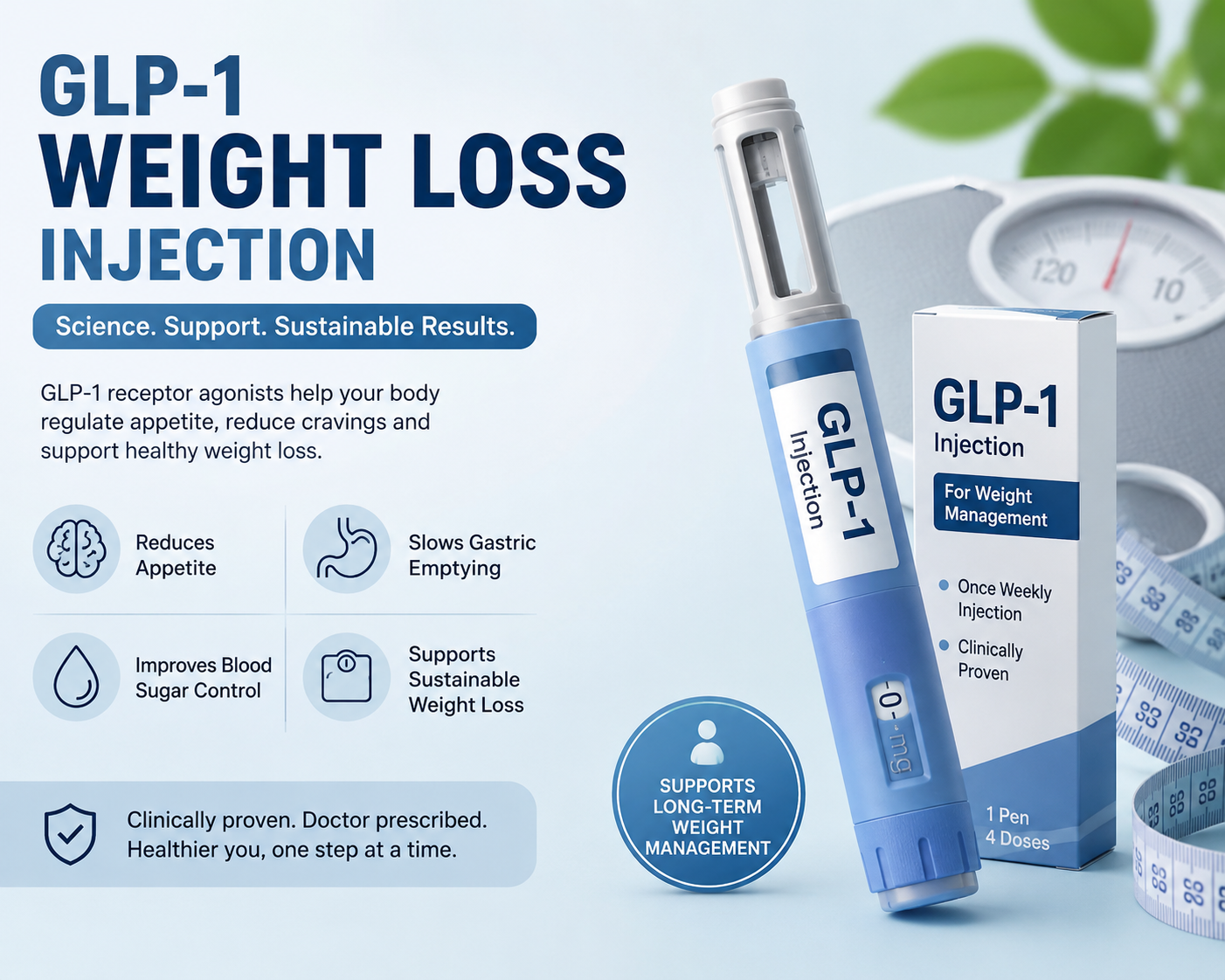
If you’re considering Ozempic, Wegovy, Mounjaro, Saxenda, or any other GLP-1 injection for weight loss management, it’s worth knowing that counterfeit versions of these pens are circulating widely, and many look convincing enough to fool a first glance. This guide breaks down exactly what counterfeiters get wrong, why this problem has grown so quickly, and the specific checks that can protect you no chemistry degree or magnifying glass required.
Why Counterfeit GLP-1 Pens Have Become a Real Problem
The demand for GLP-1 weight loss drugs has exploded over the last couple of years, and wherever there’s a shortage and a waitlist, there’s someone ready to exploit it. Regulators have taken notice:
- The FDA launched an investigation into counterfeit Ozempic found in the U.S. drug supply chain, alongside its European counterpart, the EMA.
- The World Health Organization (WHO) issued a global alert after falsified semaglutide batches turned up in Brazil, the UK, Northern Ireland, and the US and has been tracking a steady rise in counterfeit reports since 2022.
- In the UK, patient safety groups have expanded campaigns like “Vet It Before You Get It” originally built for cosmetic injectables to now cover GLP-1 weight loss medicines too.
- Cybersecurity researchers have taken down hundreds of websites selling fake versions of these drugs.
This isn’t a one-off scare story. It’s an ongoing, global pattern which means the checks below aren’t optional extras. They’re basic due diligence, the same way you’d check a lock before renting an apartment.
The Real Risk: This Isn’t Just About Wasting Money
A counterfeit handbag is a disappointment. A counterfeit injectable is a health hazard.
GLP-1 medications directly affect blood sugar and sudden weight loss and low metabolism. A pen that contains the wrong substance, the wrong concentration, or nothing at all, can cause:
- Dangerous blood sugar swings
- Allergic or toxic reactions to unknown substances
- Injection-site infections from unsterile products
- Complete lack of the therapeutic effect you’re actually paying for
And beyond the physical risk, shady sellers often collect your address, payment details, and even insurance information in the process turning a health decision into a data-privacy risk too.
7 Ways to Spot a Fake GLP-1 Pen Before You Inject
1. Check the Packaging Like a Detective
Look closely at the box and label. Genuine manufacturers don’t misspell their own brand names or use blurry, low-resolution printing. If the font looks slightly “off,” the logo is a shade wrong, or words are misspelled, that’s an immediate red flag.
2. Inspect the Seal
Authentic pens arrive in tamper-resistant, sealed packaging. If a box looks like it’s been opened, resealed, or relabeled or looks different from a pen you’ve received before from a trusted pharmacy stop and don’t use it.
3. Match the Lot Number and Expiry Date
Every legitimate pen carries a lot (batch) number and expiry date that should be professionally printed, consistent across the box, pen, and leaflet, and traceable back to the manufacturer. If the number is missing, smudged, or doesn’t match up when you check it, don’t proceed.
4. Look at the Needle Details of GLP-1
This one is often overlooked. On genuine Ozempic pens, the needle tab says “NovoFine Plus” counterfeit needles have been found with just “NovoFine” printed instead, missing the “Plus.” Small detail, big tell.
5. Examine the Liquid Itself
The solution inside a genuine pen should be clear and colourless. Any cloudiness, discoloration, or visible particles means the pen should not be used, no matter how convincing the packaging looked.
This is actually the check that trips people up the least, once they know to do it, but the one almost nobody thinks to do on their own. A friend of mine once caught a bad batch this way the box and pen looked completely normal, but the liquid had a faint yellow tinge instead of being clear. That one glance was enough to stop her before she injected it. It’s a good reminder that a 5-second visual check can matter more than an expensive-looking box.
6. Confirm the Language and Labeling
Medications legally sold in your country should have instructions and warnings in the appropriate local language. Missing, incomplete, or incorrectly translated inserts are a warning sign of an unregulated product.
7. Question the Source Before the Product
This is the check that prevents all the others from ever being necessary. Brand-name GLP-1 pens should only come from a licensed pharmacy with a valid prescription. If you’re buying from a social media DM, a classified ad, or a website with no verifiable pharmacy license, the packaging quality almost doesn’t matter the source itself is the biggest red flag.
A Simple Personal Rule I’d Suggest
Before you even get to inspecting a pen, ask yourself three questions:
- Did a licensed doctor actually prescribe this to me?
- Am I buying from a pharmacy I can verify is legitimate — by phone, license number, or in person?
- Is the price too good to be true compared to what my local pharmacy charges?
If any of these answers make you uneasy, trust that feeling. The checks on packaging and lot numbers are your second line of defense your gut instinct about the source is your first, and honestly, your best one.
What to Do If You Suspect You Have a Counterfeit Pen
- Stop using it immediately. Don’t inject “just this once” to see if it’s fine.
- Don’t throw it away yet. Keep the pen and packaging as evidence.
- Contact your pharmacist or doctor and describe exactly what you noticed.
- Report it to your national drug regulator (FDA in the US, MHRA in the UK, CDSCO in India) so others are protected too.
- Reconsider your source for any future purchases — a single bad batch is a sign to stop buying from that channel entirely, not a one-time bad batch.
The Bottom Line
GLP-1 weight loss injections can be genuinely life-changing when they’re the real thing, prescribed and sourced correctly. But the same demand that makes these drugs so sought-after has also created a thriving black market for fakes that look convincing at first glance.
The good news: spotting a counterfeit doesn’t require special expertise. It requires slowing down for two minutes to check packaging, lot numbers, needle details, and most importantly where the pen came from in the first place.
Your health is worth those two minutes
Learn more about our site https://archive2in.com
Contact us on Conatctarchive2in@gmail.com
Read out this article on based on GLP-1 IS BASED ON GLP-1 MEDICATIONS
Leave a Reply
You must be logged in to post a comment.