
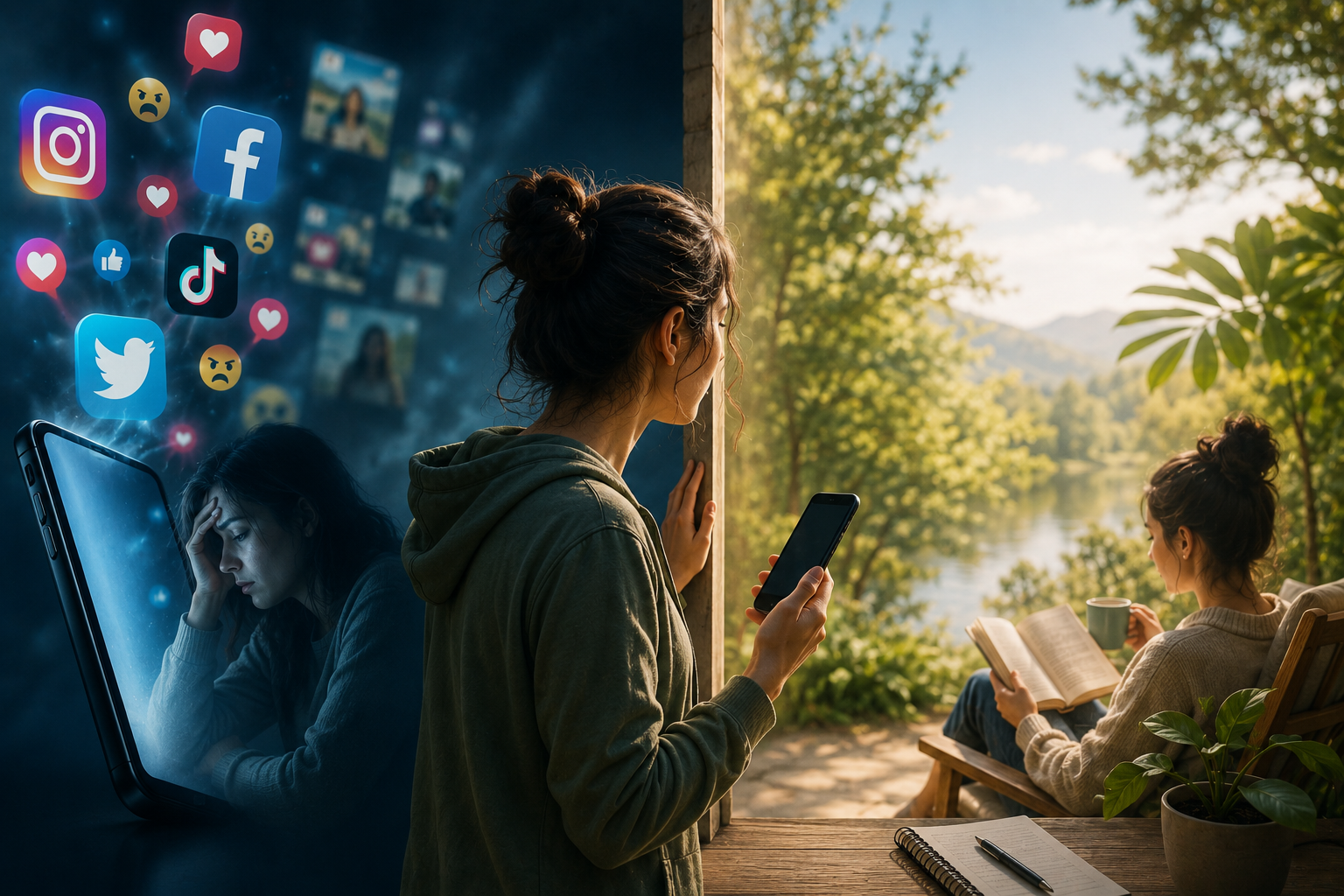
For years, social media has been an essential part of everyday life. Instagram, Facebook, TikTok, X and other platforms help people stay connected, discover news, follow creators and entertain themselves.
But in 2026, an interesting trend is emerging: some users are choosing to delete or step away from social-media apps altogether.
This doesn’t necessarily mean people have stopped using the internet. Instead, many are becoming more selective about where they spend their time online. Concerns about privacy, addictive scrolling, misinformation, mental wellbeing and AI-generated content are encouraging some users to rethink their relationship with social media.
Here are some of the biggest reasons behind the shift.
1. People are tired of endless scrolling
One of the biggest complaints about social media is that it can be difficult to stop scrolling.
Recommendation algorithms are designed to keep users engaged by continuously presenting new content. A person may open an app intending to spend five minutes online and end up scrolling for much longer.
For some users, deleting the app is easier than trying to control the habit every time they pick up their phone.
This has contributed to the wider digital-detox movement, where people intentionally reduce their screen time or take temporary breaks from social platforms.
2. Mental wellbeing is becoming a bigger concern
Social media can provide entertainment and connection, but excessive or negative online experiences can also affect wellbeing.
Constant comparisons with other people’s carefully selected photos, lifestyles and achievements can make some users feel inadequate. Online arguments, cyberbullying and exposure to upsetting content can add to the problem.
The U.S. Surgeon General has highlighted concerns about social media and youth mental health, while also noting that the relationship is complex and that social media can provide benefits as well as risks. U.S. Surgeon General — Social Media and Youth Mental Health
As awareness grows, some people are choosing to reduce their exposure rather than constantly manage these negative experiences.
3. Privacy concerns are pushing people away
Social-media platforms collect substantial amounts of information about their users, including interactions, preferences and activity.
For privacy-conscious users, the question is no longer simply “What am I posting?” but also “What does the platform know about me?”
The issue becomes even more complicated as artificial intelligence becomes increasingly integrated into social platforms.
Some people are responding by deleting accounts, restricting permissions or moving conversations to services they believe provide greater control over personal information.
4. AI-generated content is changing social media
Artificial intelligence has made it easier to create realistic images, videos, voices and written content.
That creates exciting possibilities for creativity, but it also makes it increasingly difficult to know what is authentic.
Users may encounter AI-generated photographs, synthetic influencers, manipulated videos or automatically produced posts without immediately recognising them as artificial.
For some people, the increasing volume of synthetic content reduces the appeal of social media. They may feel that feeds are becoming less personal and less trustworthy.
5. Misinformation is another major concern
Social platforms can spread information extremely quickly. That’s useful when genuine breaking news emerges, but it also means rumours and misleading claims can spread before they are properly verified.
The problem becomes particularly important during elections, disasters, health emergencies and major international events.
Some users are therefore choosing to get news directly from established news organisations, official government sources or specialist publications instead of relying on algorithmically curated feeds.
6. People want their attention back
Another reason behind social-media breaks is surprisingly simple: people want more time.
A few minutes of scrolling several times a day can gradually become a substantial portion of someone’s free time.
Deleting an app removes one of the easiest distractions from the phone.
Instead, people may use that time for exercise, reading, hobbies, studying, family conversations or simply being offline.
The goal isn’t necessarily to reject technology. It is about deciding which digital activities deserve attention.
7. Smaller online communities can feel more personal
Some people aren’t leaving online communities entirely. They’re simply moving away from huge public platforms.
Private messaging groups, smaller online communities, newsletters, forums and interest-based platforms can provide a more focused experience.
Instead of following hundreds or thousands of accounts, users can communicate with a smaller group of people who share specific interests.
This can make online interaction feel less like performing for an audience and more like having an actual conversation.
Is everyone leaving social media?
No.
Social media remains extremely popular, and millions of people continue to use these platforms every day for entertainment, communication, business and professional networking.
The trend is better understood as selective usage rather than a complete digital exodus.
Someone might delete Instagram but continue using WhatsApp. Another person may stop using TikTok while keeping YouTube. Others may simply remove apps from their phones and access them occasionally through a browser.
In other words, people aren’t necessarily abandoning social media — they are increasingly questioning how much of it they want in their lives.
The rise of intentional internet use
The biggest change may be the move from automatic consumption to intentional consumption.
Instead of opening an app whenever there is a spare moment, users are increasingly asking whether the content actually provides value.
That could mean turning off notifications, limiting screen time, unfollowing unnecessary accounts or deleting particularly distracting apps.
For some people, the answer may ultimately be a complete social-media break.
For others, a few simple boundaries may be enough.
Either way, the message is clear: in 2026, more people are beginning to treat their attention as something worth protecting.
Disclaimer
This article is intended for general informational purposes only. Social-media usage patterns and individual experiences vary considerably. Deleting or reducing social-media apps is a personal decision and should not be considered a substitute for professional mental-health support where needed. Claims about social media and wellbeing are based on evolving research, and the effects can differ according to age, platform, usage patterns and individual circumstances.
learn more about our site on contactarchive2in.com
Contact us on email id contactarchive2in@gmail.com
Leave a Reply
You must be logged in to post a comment.