
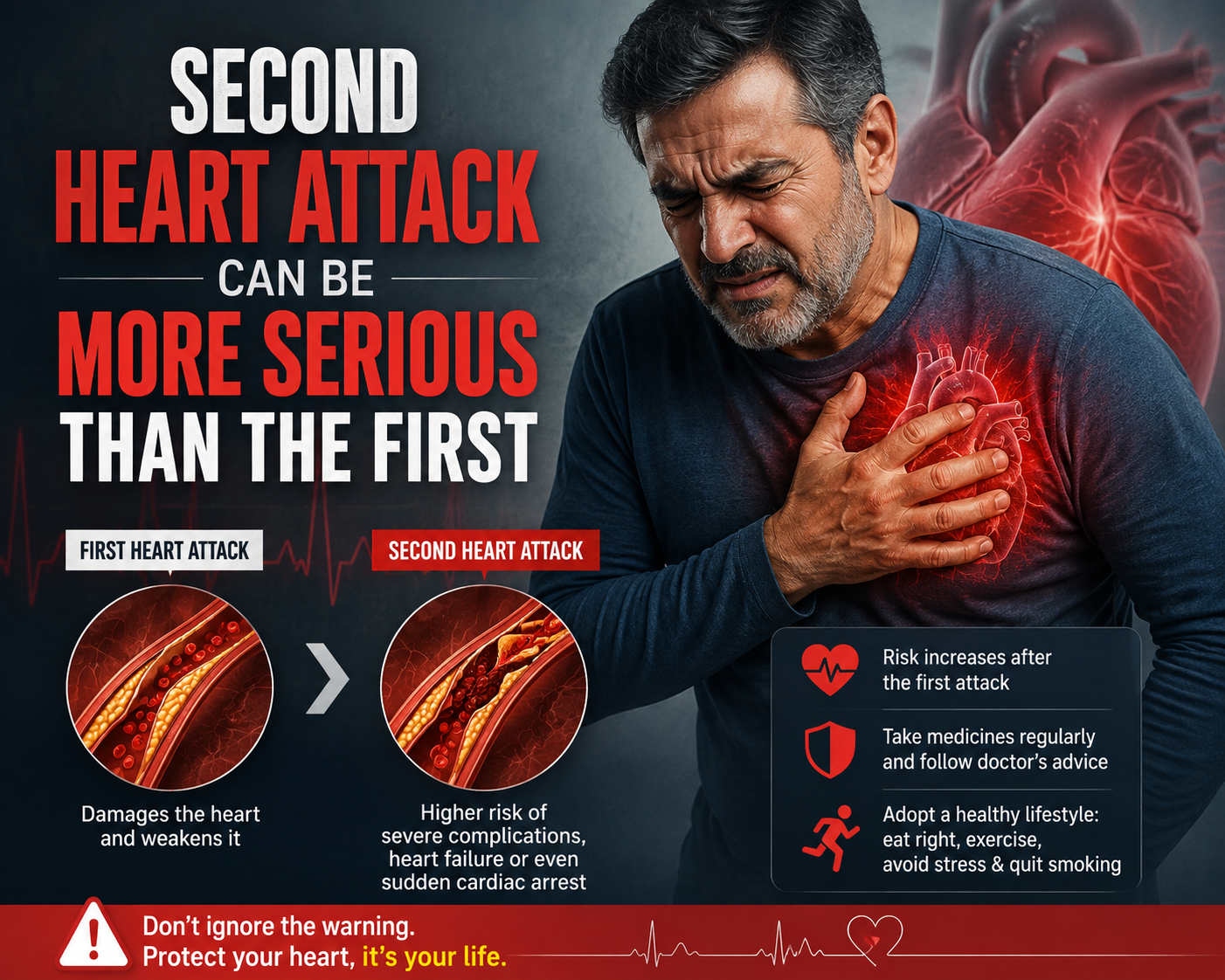
Surviving a heart attack once does not mean the danger is over. In fact, cardiologists caution that a second heart attack can often be more serious, more sudden, and more life-threatening than the first one. Heart specialists say that patients who have already suffered one cardiac event carry a higher risk of complications, weaker heart muscle function, and reduced recovery capacity the second time around which is why recognizing early warning signs becomes even more critical.
If you or a loved one has a history of heart disease, understanding these six warning signs of a second heart attack could genuinely save a life.
Why a Second Heart Attack Is More Dangerous
After a first heart attack, the heart muscle is often already weakened due to reduced blood supply and scar tissue formation. This means the heart has less reserve capacity to cope with another blockage. Cardiologists explain that a second cardiac event can trigger complications such as heart failure, arrhythmia, or cardiogenic shock much faster than a first attack would in a healthy heart. This is why post-heart-attack patients are usually advised strict lifestyle monitoring, regular checkups, and immediate action at the first sign of trouble.
6 Warning Signs of a Second Heart Attack
1. Unusual Chest Discomfort
Not every second heart attack presents as the classic crushing chest pain shown in movies. It may feel like tightness, pressure, heaviness, or a burning sensation in the chest that comes and goes. Any recurring chest discomfort in a heart patient should be treated as an emergency, not ignored as acidity or fatigue.
2. Shortness of Breath Without Exertion
Feeling breathless while resting, lying down, or doing minimal activity can indicate that the heart is struggling to pump blood effectively. This symptom often appears before or alongside chest pain and should never be brushed aside.
3. Pain Spreading to Arm, Jaw, or Back
Radiating pain especially in the left arm, jaw, neck, or upper back is a classic warning sign that is frequently underestimated during a second cardiac event, particularly in women, who may experience more subtle symptoms.
4. Sudden Cold Sweats and Nausea
Breaking into a cold sweat along with nausea or vomiting, without any obvious cause like food poisoning or flu, can be the body’s response to reduced blood flow to the heart. This combination is a red flag that demands urgent medical attention.
5. Extreme Fatigue or Weakness
Unexplained, overwhelming tiredness even after adequate rest can signal that the heart is not pumping efficiently. Patients often describe it as feeling suddenly drained for no apparent reason, sometimes days before the actual event.
6. Irregular Heartbeat or Palpitations
A racing, fluttering, or irregular heartbeat can indicate an electrical disturbance in the heart, which is common after a previous heart attack has left scar tissue. This should be checked immediately rather than dismissed as anxiety or stress.
What Cardiologists Recommend
Heart specialists consistently emphasize that survivors of a first heart attack must not become complacent. Regular follow-ups, adherence to prescribed medication, monitoring blood pressure and cholesterol, quitting smoking, managing diabetes, and maintaining a heart-healthy diet and exercise routine are essential to reducing the risk of a repeat event. Equally important is educating family members about these warning signs so that emergency care can be sought without delay.
When to Seek Emergency Help
If you or someone with a history of heart disease experiences any combination of these symptoms especially chest discomfort with breathlessness, sweating, or radiating pain call emergency services immediately. Do not wait to see if symptoms pass on their own. Time is muscle when it comes to heart attacks, and faster treatment significantly improves survival and recovery outcomes.
Final Thoughts
A second heart attack is a serious medical risk that should never be underestimated. Awareness of these six warning signs, combined with proactive heart care and regular cardiologist consultations, can make the difference between a close call and a tragedy. If you have already survived one heart attack, treat every new or unusual symptom as urgent your heart deserves that vigilance.
Learn more about our site archive2in.com
Contact us on our email id contactarchive2in@gmail.com
Read out our latest article on our BLOG section
Leave a Reply
You must be logged in to post a comment.