
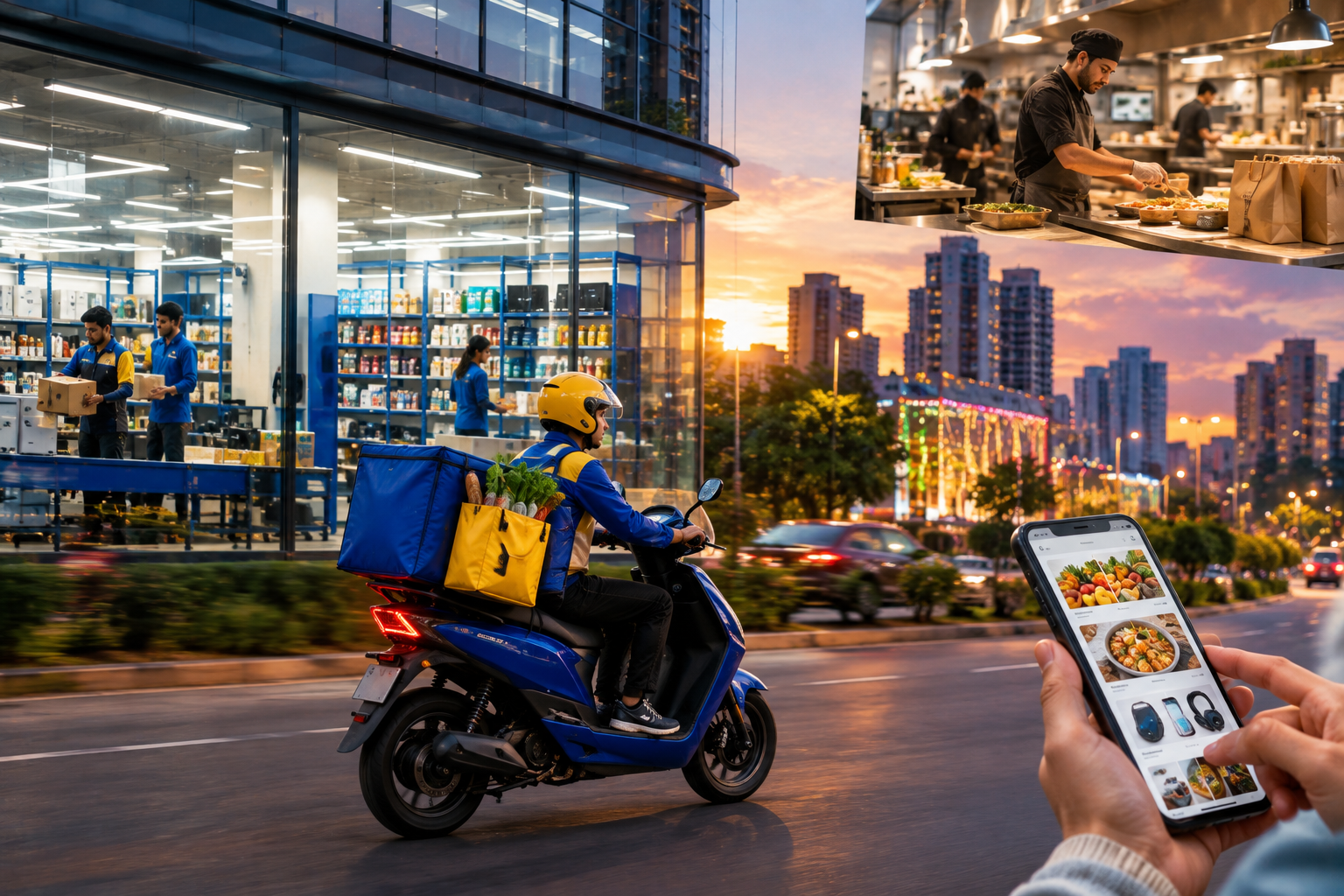
Flipkart is stepping up its battle for India’s rapidly expanding quick-commerce market with two major moves: a standalone app for Flipkart Minutes and a pilot for its own food-delivery service, Eat In.
The moves come just weeks before Flipkart’s flagship Big Billion Days (BBD) festive sale, signalling that the Walmart-backed e-commerce company wants faster delivery and everyday consumption categories to play a much larger role in its growth strategy.
Minutes gets its own app
Flipkart Minutes has so far operated primarily as a section within the main Flipkart application. The company has now begun testing a separate Minutes app on the Google Play Store with a limited group of users.
A wider rollout is expected ahead of the Big Billion Days sale in October.
The standalone app represents more than a change in how customers access the service. It reflects Flipkart’s attempt to establish Minutes as a distinct quick-commerce brand at a time when consumers increasingly use dedicated apps for groceries, household essentials, electronics and other products they want delivered rapidly.
The company has been rapidly expanding Minutes. In June, said the service had crossed 1,000 micro-fulfilment centres across more than 130 cities and 8,000-plus pincodes, less than two years after its launch. Flipkart also said orders had increased fivefold year-on-year.
Why quick commerce matters to Flipkart
India’s quick-commerce market has become one of the most fiercely contested segments of online retail.
Blinkit, Zepto and Swiggy Instamart have built strong positions in rapid grocery and essentials delivery, while Amazon has also expanded its Amazon Now offering. They response has been to use its existing e-commerce infrastructure and large customer base to push Minutes beyond traditional grocery.
The platform has increasingly added categories such as mobile phones, electronics, fresh produce, beauty and personal care.
Recent industry analysis suggests that Minutes is gaining meaningful traction. UBS channel checks reported that 40-45% of Flipkart customers in areas where Minutes operates also use the service. Its average order value has also become competitive with major rivals, particularly when mobile-phone purchases are included.
Enter food delivery
Flipkart is not stopping at quick commerce.
The company is also testing Eat In, its food-delivery service, in Bengaluru. The pilot is initially being conducted with Flipkart employees, with a wider employee rollout expected before a potential consumer launch in the city.
The move puts Flipkart closer to another highly competitive Indian internet market dominated by established platforms such as Swiggy and Zomato.
Food delivery could potentially complement Minutes by giving another high-frequency use case. Consumers who open an app for groceries or household essentials could also become customers for restaurant meals and other food orders.
However, entering food delivery is a significantly different challenge from selling products through quick commerce. Restaurant partnerships, delivery density, commissions, customer acquisition and delivery economics all become critical.
Big Billion Days could be an important test
The timing of the Minutes app rollout is particularly significant.
Big Billion Days is one of India’s largest online shopping events, traditionally generating huge spikes in traffic and orders for Flipkart. The company has previously used Minutes during the festive period to deliver selected products quickly, including electronics, groceries, beauty products and other essentials.
A standalone app could help Flipkart separate its rapid-delivery proposition from its traditional marketplace and make it easier for customers to think of Minutes as an everyday shopping destination.
That could be especially important as quick-commerce platforms increasingly move beyond emergency grocery purchases and compete for a broader share of consumers’ shopping budgets.
Flipkart’s larger strategy
The latest moves suggest Flipkart is trying to build an ecosystem around speed, convenience and frequent purchases, rather than relying only on occasional large e-commerce transactions.
Minutes can target immediate needs. Eat In can target meals. The traditional Flipkart marketplace can continue handling everything from mobiles and electronics to fashion and larger planned purchases.
The challenge will be making all these businesses economically sustainable.
Quick commerce requires dense fulfilment networks, inventory close to customers and expensive last-mile operations. Food delivery brings its own cost pressures and intense competition.
For Flipkart, therefore, the standalone Minutes app and Eat In pilot are not simply new products. They are part of a broader attempt to keep consumers within its ecosystem as India’s shopping habits shift towards faster and more frequent online purchases.
With the Big Billion Days sale approaching, the coming months could provide an important test of whether Flipkart can turn its enormous e-commerce customer base into a serious force in India’s instant-commerce and food-delivery markets.
Disclaimer: This article is based on media reports and company disclosures available at the time of writing. Details of Flipkart‘s Eat In pilot, rollout plans and the standalone Minutes app may change as the company expands or modifies the services.
Learn more about our site on contactarchive2in.com
Contact us on our email id contactarchive2in@gmail.com
Leave a Reply
You must be logged in to post a comment.