
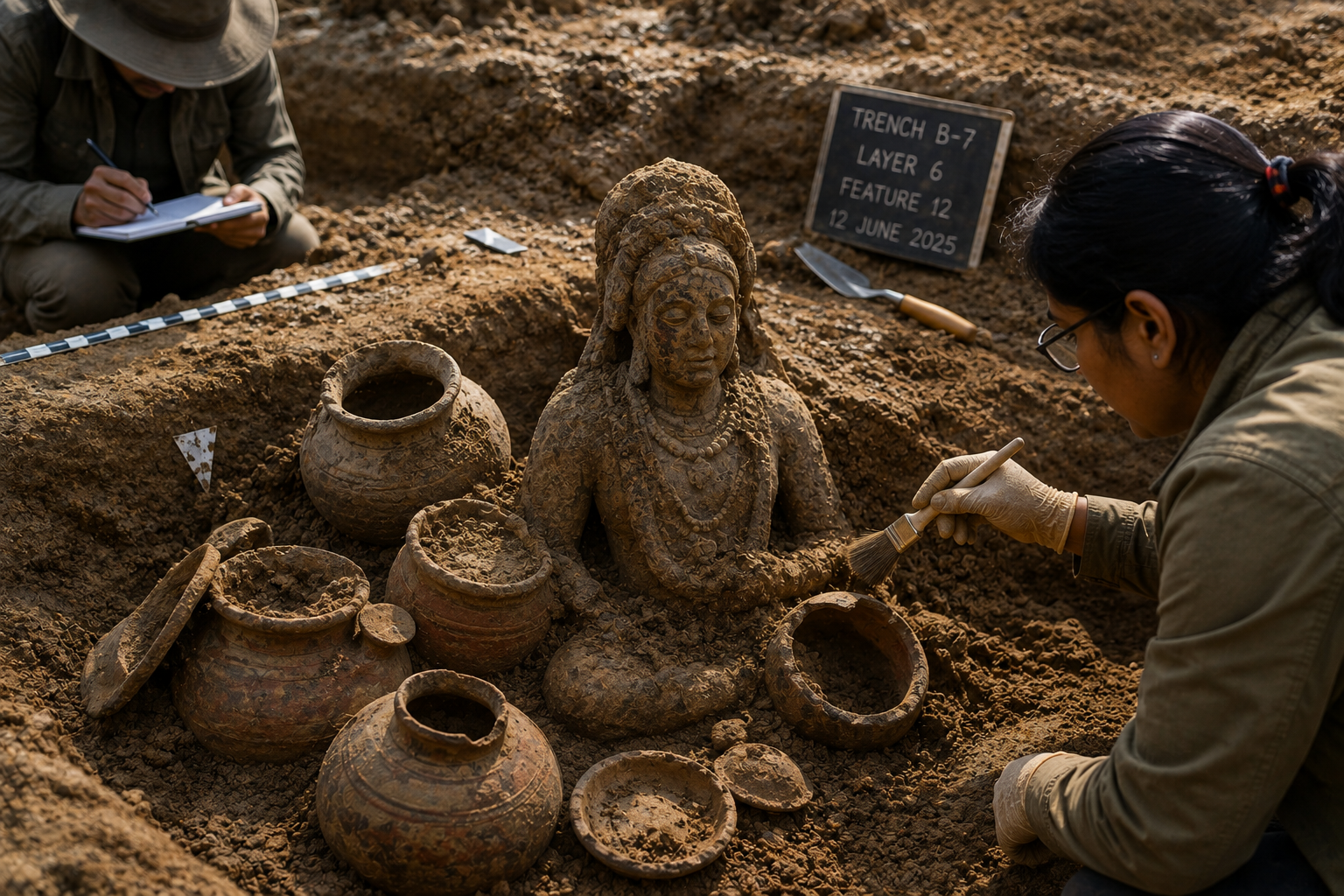
Archaeologists digging beneath Berlin’s oldest public square have uncovered a remarkable trove of medieval religious artifacts including a rare 600-year-old saint statue and nearly 200 tiny figurines that once held fragments of human bone, offering a rare window into the deep religious devotion of the late Middle Ages.
Where the Discovery Was Made
The find comes from the Molkenmarkt, literally “whey market,” a site widely regarded as the oldest square in Berlin and located in the historic Alt-Berlin quarter of the city’s Mitte district. Molkenmarkt formed as a crossroads of trade routes as early as the 12th century, even before Berlin itself was first formally documented in 1244, making it one of the true birthplaces of the city.
The Berlin State Office for Monument Preservation has been excavating the area since 2019, ahead of a major redevelopment project that will eventually turn the site into a mixed-use neighbourhood with hundreds of new homes. Archaeologists describe it as Germany’s largest urban excavation, and the dig has already brought roughly 600,000 artifacts to the surface — everything from a 13th-century plank road and medieval leather shoes to early electric-lighting equipment and unexploded World War II ordnance.
The Berlin Samurai Sword Connection
The saint statue and reliquaries aren’t the only surprise Molkenmarkt has produced. In 2022, archaeologists excavating a bombed-out cellar on the site’s Stralauer Strasse uncovered a corroded short sword that was initially mistaken for a World War II parade sabre. Restoration work later revealed it to be a genuine 17th-century Japanese wakizashi, a blade historically reserved for samurai and dignitaries. Researchers believe it may have arrived in Berlin as a diplomatic gift during one of Japan’s 19th-century missions to Europe, since Molkenmarkt sits close to the former Berlin Palace where such delegations were received. The find underlined just how much unexpected history can surface from a single city block.
A Rare Statue of Saint Catherine
Among the standout finds is a nearly intact clay statuette of Saint Catherine of Alexandria, standing roughly 11 centimetres (about 4 inches) tall and dating to the mid-15th century — making it some 600 years old. According to Christian tradition, Catherine was a princess and scholar who converted many to Christianity before being tortured on a wheel and executed under the Roman emperor Maxentius in the early 4th century. The statuette depicts her wearing a crown and holding a sword and a wheel, symbols tied to her martyrdom.
Archaeologists also recovered a headless statuette of the Virgin Mary cradling the infant Jesus, believed to date from around the same period.
188 Tiny Figurines That Held Saints’ Bones
The most extensive part of the discovery is a collection of 188 small ceramic figurines, each roughly 8 centimetres (about 3 inches) tall, dating to the mid-14th century. All depict female figures, some wearing crowns, and each contains a circular inlay in the chest area — a compartment designed to hold physical relics. In several of these figurines, fragments of human bone were still preserved inside.
During the late Middle Ages, it was common practice among Christians to keep and venerate the physical remains of saints or people considered holy, believing these relics carried spiritual power. Experts say the sheer number and preservation of the figurines make this an exceptional archaeological find.
“Both figures of saints are extremely rare in the archaeological context of the Berlin area — and beyond — and offer a special insight into the bourgeois piety of the late Middle Ages,” said Sebastian Heber, head of the Department of Archaeological Monuments at the Berlin State Office for Monument Preservation.
Eberhard Völker, the scientific project leader for the Molkenmarkt excavation, called the discovery unparalleled, noting that the scale of the find and the surviving bone inlays reveal just how deeply devotion was woven into everyday medieval life.
Why Medieval Christians Kept Bone Relics
The practice behind these figurines reflects a widespread late-medieval Christian custom: preserving small fragments of a saint’s body or belongings as objects of veneration, believed to carry spiritual protection or blessing. Wealthier households in cities like Berlin often owned personal reliquaries for private devotion, rather than relying solely on relics displayed in churches. The scale of the Molkenmarkt find — nearly 200 figurines from a single excavation — suggests that this kind of private, everyday piety was far more common among ordinary city residents than the archaeological record had previously shown.
A City Rebuilding Itself Around Its Past
Molkenmarkt’s modern story adds another layer to the discovery. The square was devastated by World War II bombing, and much of what survived was cleared away in the 1960s to make room for car-friendly roads, leaving almost nothing visible of its medieval past above ground. The current excavation — tied to a 2016 Berlin Senate decision to redevelop the area with new housing — is, in effect, the last chance for archaeologists to examine roughly 800 years of the city’s buried history before construction seals it away again. Project leaders have described navigating that tension between preserving heritage and meeting the city’s need for housing as one of the dig’s biggest challenges.
What Happens Next
Researchers have not yet been able to confirm the exact identities of the individuals whose bone fragments were placed inside the reliquaries, and understanding why so many were concentrated at this one site remains an open question for ongoing study. A small selection of the figurines, including the Saint Catherine statuette, has already gone on public display, though a permanent home for the collection has yet to be decided. Excavations at the Molkenmarkt are expected to continue as the surrounding area is redeveloped, and archaeologists say further discoveries are likely before the site’s medieval layers are built over for good.
Learn more about our site contactarchive2in.com
You can subscribe our channel for more information
Contact us on our email id contactarchive2in@gmail.com
Read out our latest article on our BLOG section
Leave a Reply
You must be logged in to post a comment.