
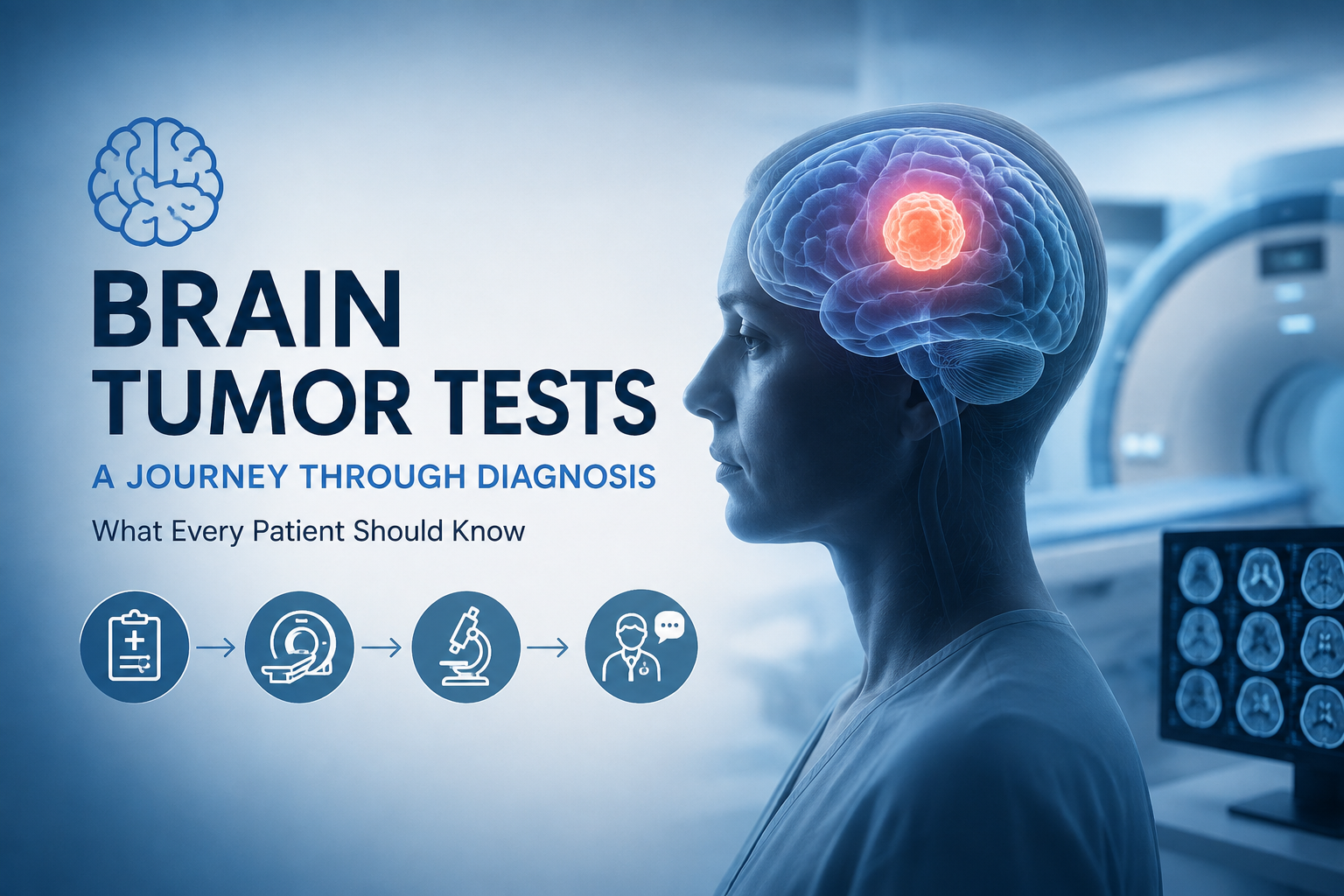
Introduction: When the Headaches Wouldn’t Stop Signs of a Brain Tumor
Ravi had always been a healthy 34-year-old software engineer. But for three weeks, something felt wrong. The headaches weren’t like the usual stress-induced ones after long work hours these were persistent, worse in the morning, and sometimes came with a strange wave of nausea. His vision blurred occasionally, and once, his right hand felt oddly numb while typing.
“It’s probably just stress,” he told himself. But when his wife noticed him stumbling slightly while walking to the kitchen one evening, she insisted he see a doctor.
That decision changed everything — and it started with a series of brain tumor tests that most people never think about until they need them.
Step 1: The Neurological Examination
Ravi’s first stop was a neurologist. Before ordering any scans, the doctor performed a neurological exam — checking his reflexes, muscle strength, coordination, eye movement, and memory. This simple, non-invasive test helps doctors understand which part of the brain might be affected based on the symptoms.
The doctor asked Ravi to walk in a straight line, touch his nose with his eyes closed, and answer a few memory-related questions. It seemed almost too simple for something so serious — but this test gives crucial clues about where to look next.
Step 2: MRI The Gold Standard for Brain Tumor Detection
The neurologist recommended an MRI (Magnetic Resonance Imaging) scan, often considered the most reliable imaging test for detecting brain tumors. Unlike a CT scan, an MRI uses magnetic fields instead of radiation, providing highly detailed images of soft tissue making it easier to spot even small abnormalities.
Ravi remembers lying still inside the machine for nearly 45 minutes, the rhythmic thumping sound echoing around him. Sometimes, doctors use a contrast dye injected into the bloodstream to make tumors more visible on the scan.
Within two days, the results came back: a small mass was visible in the frontal lobe of his brain.
Step 3: CT Scan A Quick Confirmation
In some cases, doctors also order a CT scan (Computed Tomography), especially in emergency situations or when an MRI isn’t immediately available. It’s faster than an MRI and useful for detecting bleeding, swelling, or calcification associated with tumors.
For Ravi, the CT scan was used as a secondary confirmation, helping his medical team plan the next steps with more precision.
Step 4: Biopsy Finding Out the Type
An MRI can show that something is there but not always what it is. That’s where a biopsy comes in. Doctors extracted a small tissue sample from the tumor, either through a needle (needle biopsy) or during surgery, to examine it under a microscope.
This test determines whether a tumor is benign (non-cancerous) or malignant (cancerous), and it also identifies the tumor’s grade a critical factor in deciding treatment options.
For Ravi, the wait for biopsy results felt like the longest week of his life. But it was this test that finally gave his doctors — and his family — real answers.
Step 5: Additional Tests
Depending on the case, doctors may also recommend:
- PET scan (Positron Emission Tomography): Helps detect how active the tumor cells are and whether cancer has spread.
- EEG (Electroencephalogram): Used if the patient experiences seizures, to measure electrical activity in the brain.
- Lumbar puncture (spinal tap): Occasionally used to check for cancer cells in the cerebrospinal fluid.
- Blood tests: To check overall health and rule out other conditions that mimic tumor symptoms.
The Emotional Side of Testing
Beyond the technical details, going through brain tumor tests is an emotional rollercoaster. Ravi described the days between his MRI and biopsy results as filled with anxiety, sleepless nights, and constant Google searches something doctors often advise against, as online information can be overwhelming and inaccurate.
His family became his biggest support system, accompanying him to every appointment and helping him stay calm. Support groups and counseling also played an important role in helping him process the diagnosis once it was confirmed.
Why Early Testing Matters
Ravi’s story had a hopeful turn his tumor was detected early and turned out to be a low-grade, treatable one. His doctors credit early detection through timely testing as the reason his treatment options were less invasive and his recovery smoother.
This is the core message experts want people to understand: persistent, unexplained neurological symptoms should never be ignored. Getting tested early, even if it turns out to be nothing serious, can make all the difference.
Conclusion
A brain tumor diagnosis begins long before treatment it starts with a series of careful, methodical tests: neurological exams, MRI, CT scans, biopsies, and sometimes additional specialized tests. While the process can feel daunting, understanding what each test does can help patients and families feel more in control during an incredibly stressful time.
If you or someone you know is experiencing persistent headaches, vision changes, seizures, or unexplained weakness, don’t wait consult a neurologist and ask about these tests. Early diagnosis saves lives.
Disclaimer: This blog post is based on a fictional patient story created for informational purposes. It is not a substitute for professional medical advice. Always consult a qualified doctor for diagnosis and treatment.
Learn more about our site archive2in.com
Contact us on contactarchive2in@gmail.com
Read out latest Blog on our site
Leave a Reply
You must be logged in to post a comment.