
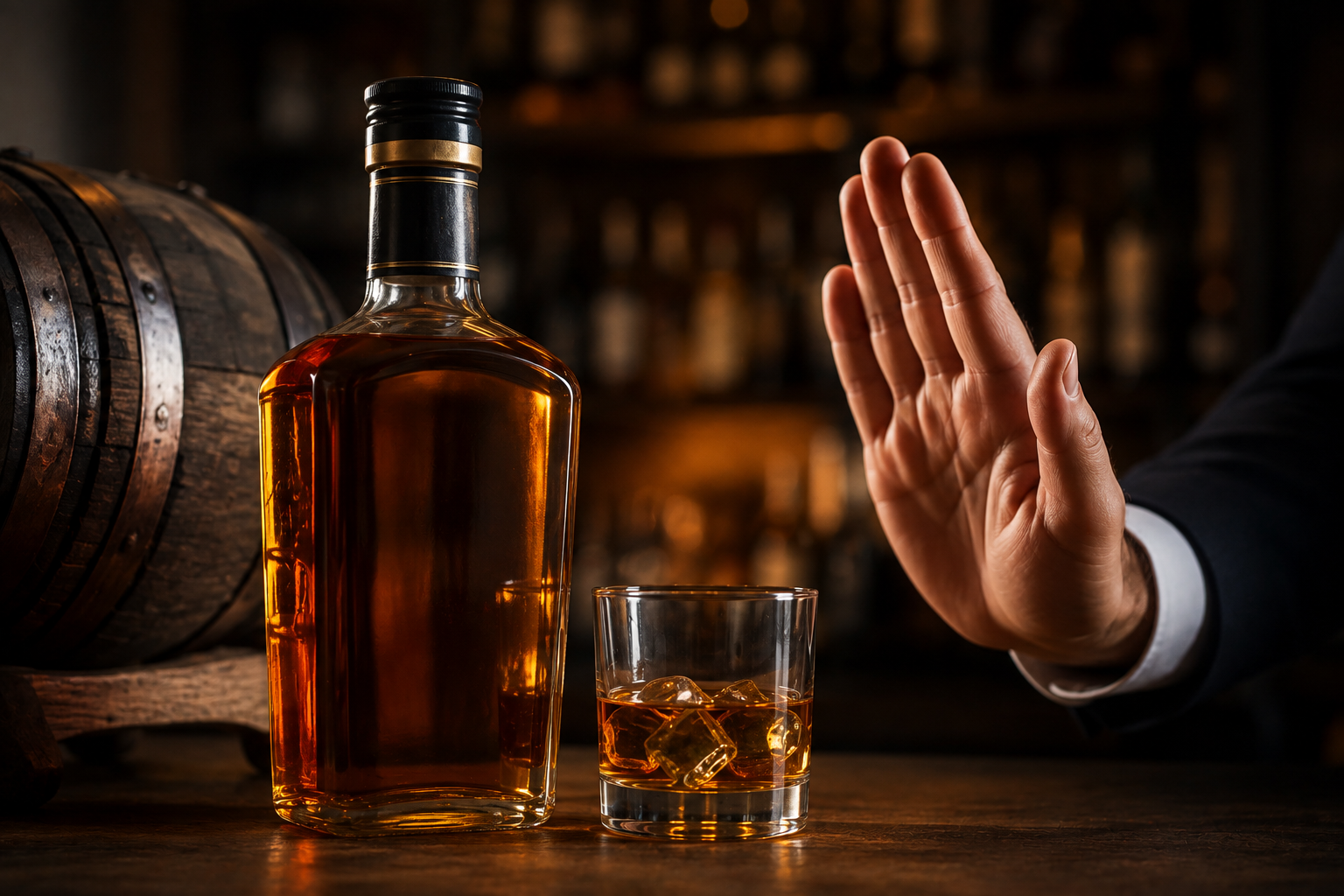
A whisky label that appears to highlight traditional barrel ageing has come under scrutiny in India after the country’s food safety regulator questioned whether the description accurately represents what is inside the bottle.
The Food Safety and Standards Authority of India (FSSAI) has warned Diageo that a label on its popular Royal Challenge Whisky claiming the product is “matured in American oak casks” could mislead consumers. According to a confidential notice dated July 20 and reviewed by Reuters, FSSAI said a major portion of the product was non-matured spirit.
The development comes as Indian authorities increase scrutiny of alcohol labelling, ingredients and manufacturing practices across the country’s large alcoholic-beverage market.
What did FSSAI object to?
The regulator’s concern centres on the wording used on the whisky label.
FSSAI reportedly told Diageo that the product’s ingredient composition includes grain neutral spirit as the second ingredient after demineralised water, while a major portion of the spirit was not matured.
The regulator’s position was that describing the whisky as matured in American oak casks could give consumers the impression that the entire alcohol component had undergone maturation in wooden casks.
This distinction is important because maturation is closely associated with whisky’s production process and can influence how consumers perceive a product’s quality, character and value.
What does the label actually say?
Diageo India’s own description of Royal Challenge says the brand is made using a blend of Scotch, Indian malts and grain spirits, and describes it as being matured in charred American oak casks.
The company’s 2024–25 annual report similarly describes Royal Challenge as a blend of Indian grain spirit and Scotch whiskies and refers to maturation in charred American oak casks.
FSSAI’s objection, however, focuses on whether the label’s maturation wording accurately describes the complete product rather than only some of its components.
That distinction could have wider implications for how blended alcoholic beverages communicate ageing and maturation to consumers.
What do India’s rules say about “matured” and “aged”?
FSSAI’s Food Safety and Standards (Alcoholic Beverages) Regulations, 2018 contain specific provisions concerning maturation and age claims.
Under the regulations, an alcoholic beverage labelled as “matured” must be matured for at least one year in oak or another suitable wood container, or through specified methods involving wooden material.
The regulations also state that when an age claim is made using the word “aged”, the age should refer to the youngest spirit in the blend.
This rule is significant because blended spirits can contain components of different ages. A label should therefore not create an impression that the youngest component is older than it actually is.
FSSAI’s current regulations page also lists the Alcoholic Beverages Regulations, 2018 among its regulatory frameworks.
Diageo says it is engaging with the regulator
Diageo India has said it remains committed to quality standards and is actively engaging with FSSAI over the regulator’s questions concerning labelling.
The company has not indicated that it expects a significant financial impact from the regulatory action.
The issue is nevertheless important for the company because Royal Challenge is one of its major Indian whisky brands. Diageo’s website says the brand sells more than 4.5 million cases annually, highlighting its significant presence in India’s whisky market.
Why does whisky maturation matter?
Maturation is one of the most closely watched parts of whisky production.
When spirits spend time in wooden casks, the interaction between the liquid and wood can influence flavour, aroma and colour. Oak can contribute characteristics such as vanilla, spice and woody notes, depending on factors including the type of oak, previous use of the barrel, charring and length of maturation.
This is why terms such as “aged”, “matured” and references to particular cask types can influence consumer expectations.
However, a blended whisky does not necessarily mean every component has undergone exactly the same maturation process.
That makes accurate labelling particularly important.
Part of a wider regulatory crackdown
The latest warning comes amid broader regulatory scrutiny of alcoholic beverages in India.
Earlier this month, FSSAI took action against certain whisky and rum products made by Diageo’s Indian unit, United Spirits, and Inbrew Beverages over alleged use of artificial or “nature-identical” flavourings. The regulator said such practices did not meet the standards it expected for products that should derive their characteristic flavour from appropriate ingredients and production processes.
The companies and industry representatives have disputed aspects of the regulatory interpretation, and some legal challenges are underway.
The developments indicate that India’s food regulator is paying closer attention not only to what goes into alcoholic beverages but also to how those products are described to consumers.
What does this mean for whisky buyers?
For consumers, the controversy highlights the importance of looking beyond marketing language.
Words such as “matured”, “aged”, “oak” and “cask” can provide useful information, but consumers should also consider the type of whisky, its ingredients, the blend and the applicable regulatory definitions.
It is also important to remember that FSSAI’s warning is a regulatory finding concerning labelling; it does not by itself establish that every bottle of Royal Challenge is unsafe.
Diageo has said it is cooperating with the regulator, while the matter remains part of an ongoing regulatory process.
The bigger question for India’s whisky industry
The dispute could ultimately have consequences beyond one brand.
As India’s whisky market becomes increasingly sophisticated, consumers are paying greater attention to maturation, cask types, provenance and production methods. Clear and accurate labelling will therefore become increasingly important.
For manufacturers, the challenge will be balancing attractive brand storytelling with precise descriptions that comply with food-safety and labelling requirements.
For consumers, the case offers a useful reminder: a sophisticated-sounding whisky label should accurately explain what the product contains and how it was made.
Disclaimer
This article is intended for general informational and educational purposes only. It is based on publicly reported regulatory information and statements available at the time of publication. The FSSAI concerns described above are part of an ongoing regulatory matter, and the findings or requirements may change following further review, clarification or legal proceedings. This article does not constitute legal advice, product-safety advice or an endorsement of any alcoholic beverage. Alcohol consumption carries health risks and should be avoided by individuals for whom drinking is prohibited or unsafe.
Learn more about our site on contactarchive2in.com
Contact us on our email id contactarchive2in@gmail.com
Leave a Reply
You must be logged in to post a comment.