
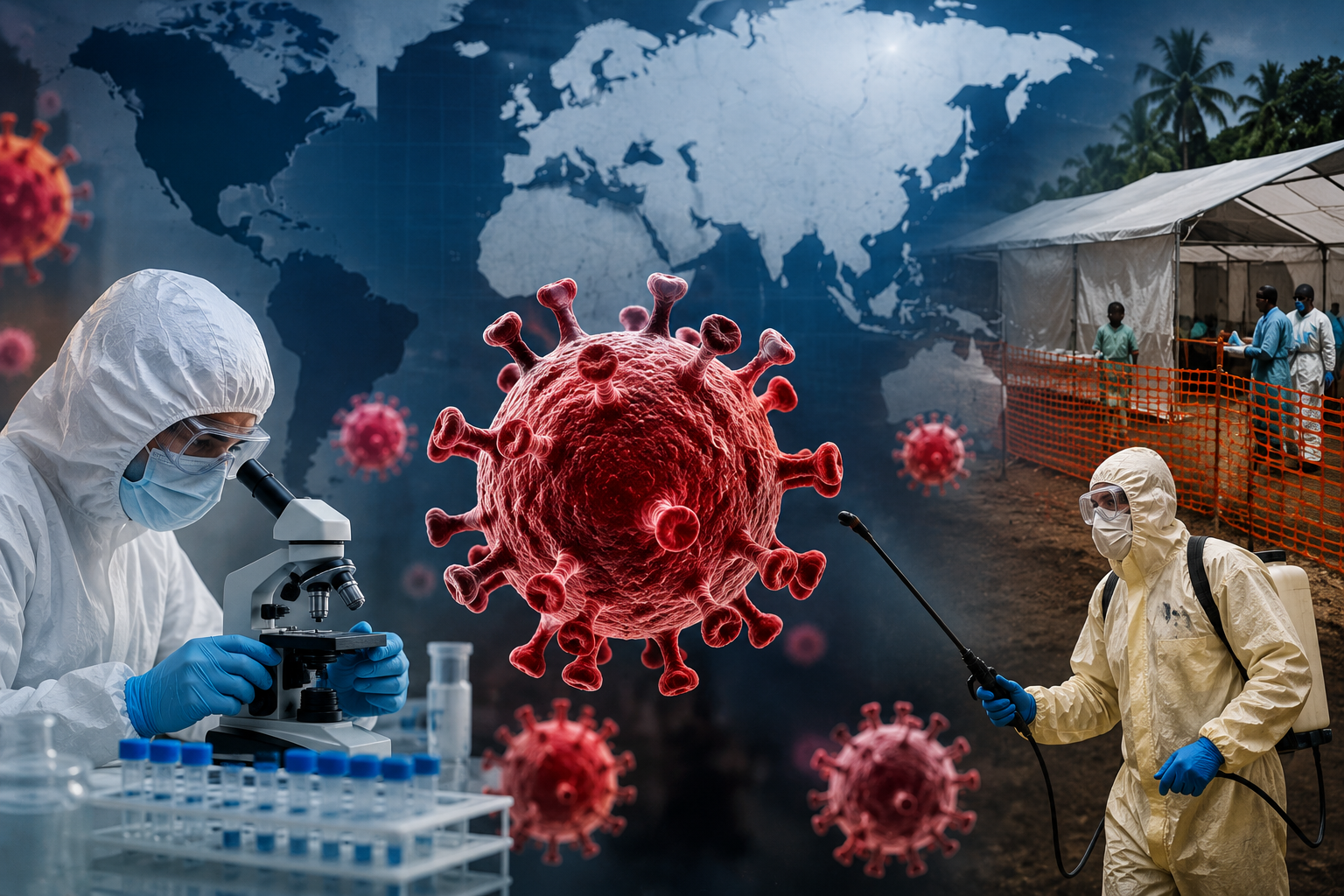
The 2026 Ebola outbreak has once again put global health authorities on high alert. The outbreak, centered in the Democratic Republic of the Congo (DRC) and affecting parts of Uganda, is caused by the Bundibugyo strain of the Ebola virus—a rare variant for which there is currently no approved vaccine. As of early July 2026, health officials have confirmed 1,561 cases and 506 deaths, making it one of the most serious Ebola outbreaks in recent years.
Although the outbreak remains largely confined to Central Africa, international organizations are working around the clock to contain its spread through surveillance, testing, treatment, and community awareness.
What Is Ebola?
Ebola is a severe viral disease that spreads through direct contact with the blood or bodily fluids of an infected person or contaminated objects. It is not spread through the air like the common cold or influenza.
Symptoms usually appear 2 to 21 days after exposure and can worsen rapidly if treatment is delayed.
Common Symptom
Early symptoms include:
- High fever
- Severe headache
- Muscle and joint pain
- Weakness and fatigue
- Sore throat
As the disease progresses, patients may develop:
- Vomiting and diarrhea
- Stomach pain
- Skin rash
- Internal and external bleeding
- Organ failure in severe cases
Early diagnosis and supportive medical care significantly improve survival rates.
Progress in the Global Response
Despite the seriousness of the outbreak, several encouraging developments have emerged.
The World Health Organization (WHO) has approved the first emergency-use diagnostic test specifically designed to detect the Bundibugyo strain quickly in affected regions. Faster diagnosis allows health workers to isolate infected patients sooner and reduce further transmission.
Researchers have also launched clinical trials of experimental treatments, including antiviral medicines and antibody therapies. While these treatments are still under evaluation, they offer hope for improving patient survival.
International agencies continue supporting local governments through laboratory testing, contact tracing, community education, protective equipment, and emergency medical teams.
Why the Outbreak Remains Dangerous
Although response efforts are expanding, major challenges remain.
Unlike the more common Zaire strain of Ebola, the Bundibugyo strain currently has no licensed vaccine, making prevention more difficult.
The outbreak is also spreading in regions affected by armed conflict, population displacement, and limited healthcare infrastructure. These conditions make contact tracing and patient isolation significantly more challenging.
Some treatment centers have reported shortages of protective equipment, while delayed salary payments have even led to temporary strikes by frontline health workers, slowing response efforts.
Community mistrust and misinformation have further complicated containment efforts in some affected areas.
How Can Ebola Be Prevented?
Prevention remains the most effective defense against Ebola.
Important preventive measures include:
- Avoid direct contact with infected individuals or bodily fluids.
- Follow proper hand hygiene and sanitation practices.
- Ensure healthcare workers use appropriate protective equipment.
- Report suspected symptoms promptly to health authorities.
- Follow guidance from WHO and local health agencies.
Rapid identification and isolation of cases remain essential to stopping transmission.
Is the World at Risk?
Health experts emphasize that the overall risk to the global public remains low.
Most confirmed cases are concentrated in eastern DRC, with a limited number linked to Uganda. Countries worldwide continue monitoring travelers, strengthening surveillance, and maintaining preparedness plans.
The WHO has not recommended broad international travel or trade restrictions, but travelers to affected areas should follow official public health guidance.
Conclusion
The Ebola Outbreak 2026 serves as a reminder that infectious diseases remain a global health challenge requiring rapid action and international cooperation.
While the rising number of cases and deaths is concerning, progress in diagnostics, experimental treatments, and coordinated response efforts provides hope that the outbreak can be brought under control.
Staying informed through reliable public health sources, supporting disease surveillance, and promoting accurate information are essential steps in protecting communities and preventing future outbreaks.
Disclaimer: This article is for educational and informational purposes only. Ebola outbreak data and public health guidance may change as new information becomes available. Refer to official health authorities for the latest updates.
Learn more about our site on contactarchive2in.com
Contact us on our email id contactarchive2in@gmail.com
Leave a Reply
You must be logged in to post a comment.