
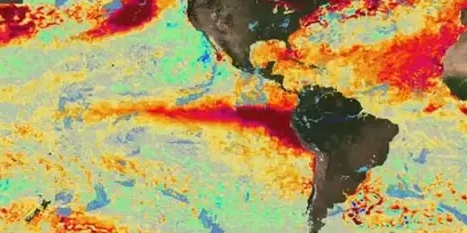
The World Meteorological Organization (WMO) has warned that El Niño is expected to strengthen between July and September 2026, raising concerns about its possible impact on India’s monsoon, agriculture, inflation, and financial markets. As one of the world’s fastest-growing economies, India depends heavily on a stable monsoon for food production, rural income, and overall economic stability.
Although it is a natural climate phenomenon, its effects can extend far beyond weather. Changes in rainfall patterns often influence agricultural output, consumer prices, business activity, and investor confidence. While the outlook presents several risks, it also creates opportunities for certain industries and highlights India’s growing economic resilience.
What Is El Niño?
El Niño occurs when sea surface temperatures in the central and eastern Pacific Ocean become warmer than normal. This shift disrupts global weather patterns and can lead to droughts, heatwaves, heavy rainfall, or floods in different parts of the world.
Historically, several years have been associated with below-average monsoon rainfall in India. However, every event is unique, and the actual impact depends on multiple atmospheric and oceanic conditions.
Positive Sentiment: Reasons for Optimism
Despite concerns, there are several factors that could help India manage its effects more effectively than in previous decades.
Stronger Economic Foundation
India’s economy is now more diversified than ever before. Sectors such as information technology, pharmaceuticals, manufacturing, digital services, telecommunications, and financial services contribute significantly to economic growth. This reduces the country’s dependence on agriculture compared to earlier decades.
Improved Agricultural Preparedness
Advances in irrigation, weather forecasting, satellite monitoring, and crop insurance have strengthened India’s ability to respond to changing weather conditions. Government agencies can now issue earlier warnings, helping farmers make better decisions regarding crop selection and water management.
Opportunities for Certain Industries
Some sectors may actually benefit from changing weather conditions. Companies involved in irrigation systems, water conservation technologies, agricultural equipment, renewable energy, weather forecasting services, and climate-smart farming solutions could experience increased demand.
Food processing companies with efficient supply chains and businesses focused on water management may also see new opportunities during periods of climate uncertainty.
Long-Term Investor Confidence
Indian markets have demonstrated resilience during previous global disruptions. Domestic investors continue to invest through mutual funds and Systematic Investment Plans (SIPs), providing stability even during periods of foreign investor volatility.
Negative Sentiment: Challenges Ahead
While India’s preparedness has improved, El Niño still presents several economic and financial risks.
Pressure on Agriculture
A weaker or delayed monsoon may reduce crop yields for rice, pulses, sugarcane, cotton, and other important agricultural products. Lower production can affect farmer incomes and increase dependence on irrigation.
Agriculture remains a major source of employment, making rural communities particularly vulnerable to prolonged weather disruptions.
Rising Food Inflation
Reduced agricultural output often leads to higher prices for vegetables, cereals, and other essential food items. Rising food inflation increases household expenses and can reduce consumer spending in other sectors of the economy.
Stock Market Volatility
Financial markets generally react quickly to uncertainty. Concerns about inflation, weaker agricultural output, and slower economic growth may trigger short-term volatility.
Sectors closely linked to rural demand—including fertilizers, agricultural businesses, consumer goods, and farm equipment manufacturers—could experience fluctuating investor sentiment.
Weather-related uncertainty may also encourage profit booking in broader equity markets.
Water and Energy Challenges
Lower rainfall can reduce reservoir levels, affecting hydroelectric power generation and increasing pressure on water resources. Industries dependent on consistent water supplies may face operational challenges if drought conditions persist.
Conclusion
The El Niño Alert 2026 serves as an important reminder that climate events can influence not only weather but also agriculture, inflation, economic growth, and stock market sentiment.
While the risks include weaker monsoon rainfall, rising food prices, and increased market volatility, India is considerably better prepared than in the past. Improved infrastructure, diversified industries, better forecasting systems, and stronger domestic investment provide important sources of resilience.
Rather than viewing this as only a threat, it can also encourage innovation, sustainable farming practices, smarter resource management, and investment in climate-resilient industries.
For businesses, policymakers, and investors alike, staying informed and focusing on long-term fundamentals will be far more valuable than reacting to short-term uncertainty. India’s ability to adapt and innovate will play a crucial role in determining how successfully the country navigates the challenges and opportunities presented by El Niño in 2026.
Disclaimer: This article is for educational and informational purposes only. It should not be considered financial, investment, or weather forecasting advice. Climate conditions and market performance are subject to change, and readers should consult official weather agencies and qualified financial advisors before making decisions.
Learn about our site on contactarchive2in.com
Contact on email id contactarchive2in@gmail.com
Leave a Reply
You must be logged in to post a comment.