
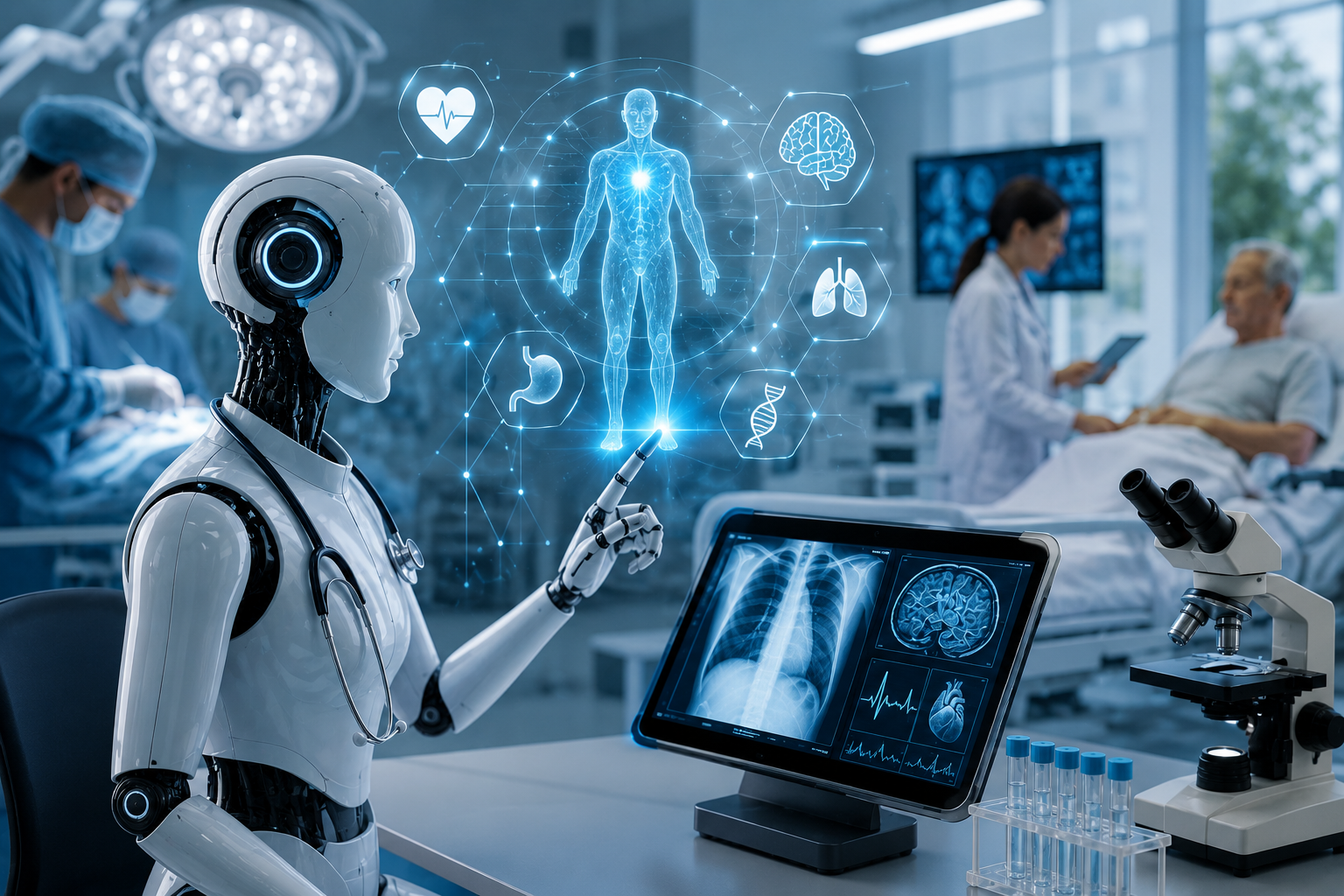
Artificial Intelligence is transforming healthcare faster than ever before. From detecting diseases earlier to helping doctors make faster decisions, AI is becoming an essential tool in modern medicine. Hospitals, research institutions, and healthcare companies around the world are using AI to improve patient care, reduce costs, and increase efficiency.
While Artificial intelligence cannot replace doctors, it can support healthcare professionals by analyzing large amounts of medical data in seconds and identifying patterns that may be difficult for humans to detect. Here’s how it is changing healthcare in 2026.
1. Faster and More Accurate Disease Diagnosis
AI-powered systems can analyze medical images such as X-rays, CT scans, MRIs, and mammograms to help identify diseases like cancer, pneumonia, fractures, and heart conditions. These tools assist radiologists by highlighting suspicious areas that may require closer examination.
2. Personalized Treatment Plans
Every patient is different, and Artificial intelligence helps doctors create personalized treatment plans based on a patient’s medical history, genetics, lifestyle, and test results. This personalized approach can improve treatment outcomes while reducing unnecessary procedures.
3. Early Detection of Diseases
Early diagnosis often leads to better treatment outcomes. Artificial intelligence can analyze health records and diagnostic tests to identify patients who may be at risk of conditions such as diabetes, heart disease, kidney disease, or certain cancers before symptoms become severe.
4. Drug Discovery and Development
Developing a new medicine traditionally takes many years. Artificial intelligence helps researchers analyze millions of chemical compounds, predict promising drug candidates, and identify potential side effects much faster than traditional methods. This can significantly reduce research time and cost
5. Virtual Health Assistants
AI-powered virtual assistants and chatbots can answer common health questions, remind patients to take medications, schedule appointments, and provide basic health information. These tools improve accessibility while allowing healthcare professionals to focus on more complex cases.
6. Robotic-Assisted Surgery
Robots assisted robotic systems help surgeons perform complex procedures with greater precision and control. These systems can reduce blood loss, minimize tissue damage, shorten hospital stays, and support faster recovery for many patients.
7. Better Hospital Management
Hospitals generate enormous amounts of data every day. It helps manage patient flow, optimize staff scheduling, predict hospital admissions, and improve resource allocation. This leads to shorter waiting times and more efficient healthcare services.
8. Remote Patient Monitoring
Wearable devices such as smartwatches and fitness trackers can collect real-time health data, including heart rate, blood oxygen levels, physical activity, and sleep patterns. It analyzes this information and alerts healthcare providers if unusual changes are detected, enabling earlier intervention.
9. Improving Medical Research
Medical researchers use Artificial intelligence to analyze large clinical datasets, identify disease patterns, and evaluate treatment effectiveness. AI accelerates scientific discoveries by processing information that would otherwise take researchers months or even years to analyze.
10. Supporting Doctors—Not Replacing Them
One of the biggest misconceptions is that AI will replace doctors. In reality, It is designed to support healthcare professionals by providing data-driven insights and reducing administrative workload. Final diagnosis and treatment decisions remain the responsibility of qualified medical professionals.
Benefits of AI in Healthcare
Artificial intelligence offers several important advantages:
- Faster diagnosis and treatment
- Improved accuracy in medical imaging
- Personalized patient care
- Reduced healthcare costs
- Better hospital efficiency
- Earlier disease detection
- Accelerated drug development
- Improved patient monitoring
Challenges and Ethical Concerns
Despite its potential, AI in healthcare also presents challenges.
- Protecting patient privacy and medical data.
- Preventing bias in algorithms.
- Ensuring transparency in AI-assisted decisions.
- Maintaining strong cybersecurity.
- Meeting regulatory and ethical standards.
Healthcare providers must use Artificial intelligence responsibly while keeping patient safety at the center of every decision.
Conclusion
Artificial Intelligence is reshaping healthcare by making diagnosis faster, treatments more personalized, hospitals more efficient, and research more innovative. While challenges such as privacy, ethics, and regulation remain, it has the potential to improve healthcare outcomes for millions of people worldwide.
As technology continues to evolve, the partnership between healthcare professionals and it will likely become even stronger, helping deliver safer, smarter, and more accessible care for patients everywhere.
Disclaimer
This article is for informational and educational purposes only. It should not be considered medical advice. Artificial Intelligence technologies are intended to assist healthcare professionals and should not replace consultation, diagnosis, or treatment by a qualified medical practitioner. Always seek professional medical advice regarding your health or any medical condition.
Learn more about our site on contactarchive2in.com
Contact us on our email id contactarchive2in@gmail.com
Leave a Reply
You must be logged in to post a comment.