
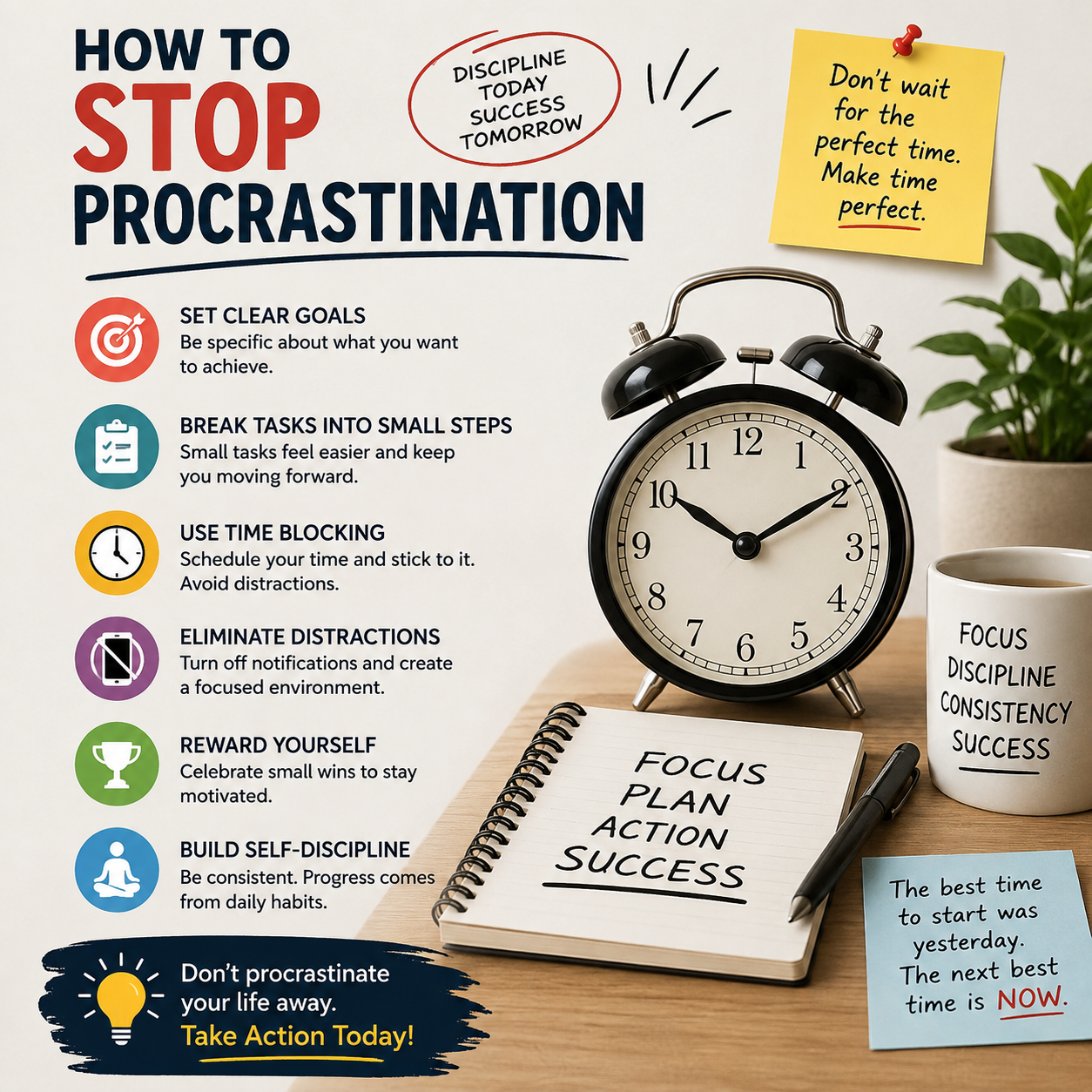
I used to think procrastination was a discipline problem. Turns out, it isn’t and figuring that out is what finally helped me stop putting things off.
For years, I had a “someday” folder in my head a business idea, a fitness goal, a book I kept meaning to write. Every night I’d promise myself: “Tomorrow, I start.” Tomorrow would come, and somehow I’d find myself scrolling Instagram at midnight instead, wondering where the day went. If that sounds familiar, you’re not lazy. You’re human. And there’s a way out.
Why We Actually start Procrastination (It’s Not Laziness)
Here’s the thing nobody tells you: procrastination isn’t about time management. It’s about emotion management. When a task feels boring, overwhelming, uncertain, or tied to a fear of failing, your brain looks for an escape and scrolling your phone is a much easier dopamine hit than opening that spreadsheet.
Once I understood this, I stopped beating myself up and started asking a better question: what am I actually avoiding feeling right now? That single shift changed everything.
1. Shrink the Task Until It’s Almost Embarrassing
The biggest myth is that motivation comes first. In reality, action comes first, and motivation follows. When a task feels huge, your brain treats it like a threat and stalls.
So make the first step ridiculously small. Not “write the report” just “open the document.” Not “clean the house” just “put five things away.” I started using this trick when I couldn’t bring myself to work out, and I told myself I only had to put my shoes on. Nine times out of ten, once the shoes were on, I ended up doing the whole workout anyway.
2. Use the Two-Minute Rule
If something takes less than two minutes, do it immediately instead of adding procrastination things it to a list. Replying to that email, washing the one dish, scheduling that appointment these tiny tasks pile up in the back of your mind and quietly drain your energy all day, even when you’re not actively thinking about them.
3. Remove Friction, Don’t Rely on Willpower
Willpower is unreliable it dips when you’re tired, stressed, or hungry. Environment design is far more reliable. I moved my phone charger out of my bedroom, and suddenly I wasn’t scrolling for the first hour of my morning anymore. I didn’t need more discipline. I just needed one less decision to fight.
Look at your environment and ask: what’s making the wrong choice easy, and the right choice hard? Then flip it.
4. Try “Temptation Bundling”
Pair something you’re avoiding with something you enjoy. I only let myself listen to my favorite podcast while doing admin work I dreaded. Suddenly, I was looking forward to it a little instead of dreading it.
5. Set a Timer for 10 Minutes, Not the Whole Task
Tell yourself you’ll work on it for just 10 minutes, then you’re allowed to stop. This lowers the emotional barrier to starting. Most of the time, once you’re in motion, you keep going this is sometimes called the Zeigarnik effect, where unfinished tasks stay mentally “open” and pull you back to complete them.
6. Forgive Yourself for Past Procrastination
This one surprised me the most. Research on self-compassion has found that people who forgive themselves for procrastination in the past are less likely to procrastination again guilt actually fuels the avoidance cycle, while self-forgiveness breaks it.
So if you missed a deadline last week, let it go. Guilt doesn’t make you more productive. It just makes starting today feel heavier.
7. Make Your “Why” Personal, Not Generic
“I should exercise” rarely works. “I want to have energy to play with my kids without getting winded” does. Connect the task to something that actually matters to you emotionally, not just logically. When I stopped telling myself I “should” write more and started remembering how much I actually loved having written something, sitting down got a lot easier.
A Simple Daily System That Actually Works
- Pick one important task the night before — deciding in the morning wastes willpower you need for doing.
- Do it first, before checking your phone — your discipline is highest right after waking up.
- Break it into a two-minute starting action.
- Set a 10-minute timer and just begin.
- Celebrate finishing, even the small stuff — this trains your brain to associate starting with reward, not dread.
The Real Takeaway
Stopping procrastination isn’t about becoming a different person with superhuman discipline. It’s about being a little kinder and a little smarter with the person you already are reducing friction, shrinking tasks, and forgiving yourself for fast procrastination faster.
You don’t need to fix everything today. You just need to open the document, put your shoes on, or wash the one dish. Start there. The rest tends to follow.
Learn more about our site archive2in.com
Contact us on our email id contactarchive2in@gmail.com
Read out our latest articles on BLOG section
Leave a Reply
You must be logged in to post a comment.