
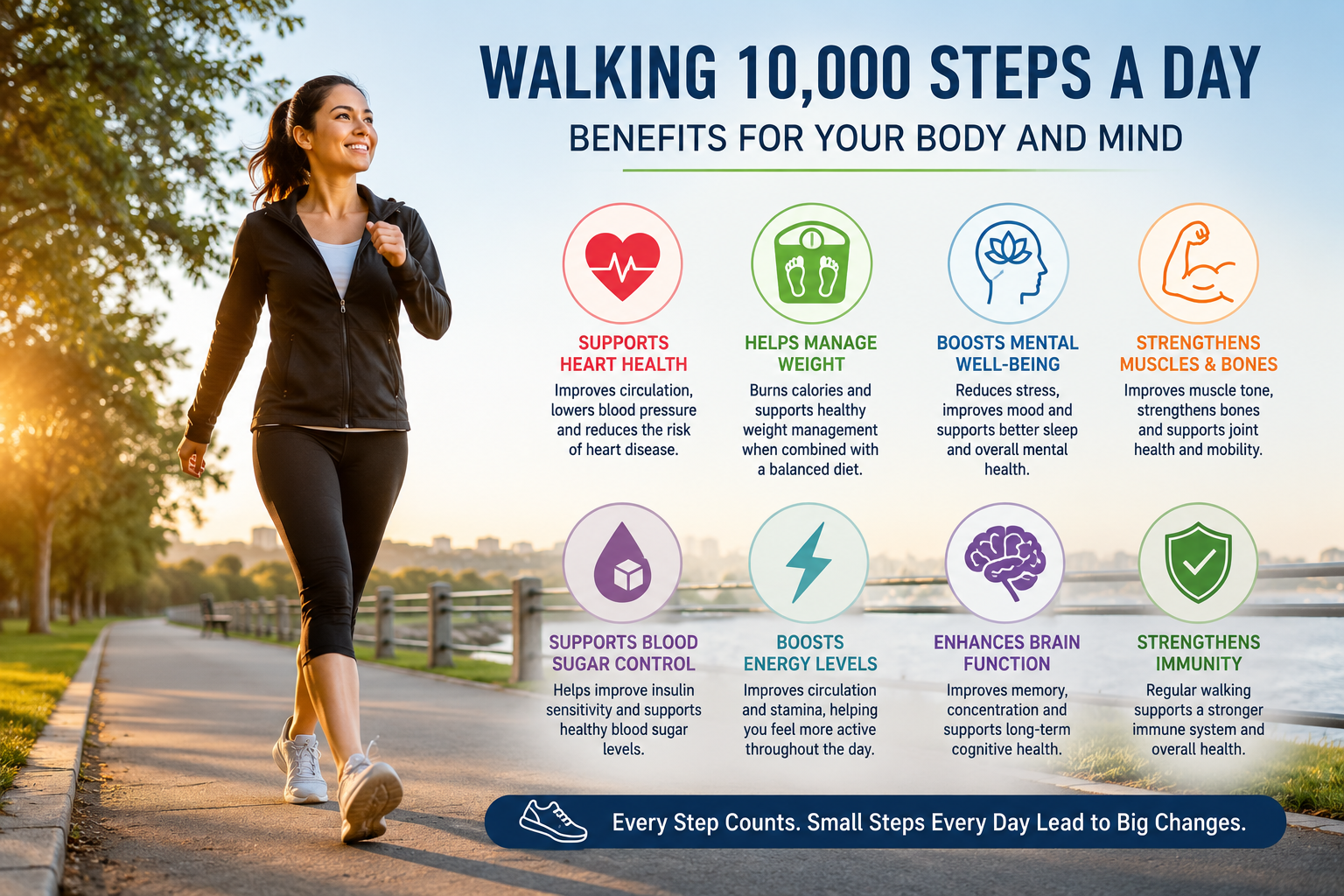
Walking is one of the easiest, safest, and most affordable forms of exercise. It requires no expensive equipment, gym membership, or advanced training—just a comfortable pair of shoes and the motivation to move. Over the years, the idea of walking 10,000 steps a day has become a popular fitness goal. But is this number truly important, and what happens to your body when you consistently reach it?
While the 10,000-step target originally gained popularity through a marketing campaign in Japan during the 1960s, modern research confirms that regular walking offers numerous health benefits. Whether you walk 6,000, 8,000, or 10,000 steps daily, increasing your physical activity can have a positive impact on your overall well-being.
Why Walking Matters
Walking is a low-impact aerobic exercise that improves cardiovascular fitness, strengthens muscles, and supports mental health. Unlike high-intensity workouts, is suitable for people of most ages and fitness levels.
Health experts generally recommend adults aim for at least 150 minutes of moderate-intensity physical activity per week and is one of the easiest ways to achieve this goal.
1. Supports Heart Health
One of the biggest benefits of daily walking is improved cardiovascular health.
Regular walking can help:
- Improve blood circulation.
- Lower blood pressure.
- Reduce LDL (“bad”) cholesterol levels.
- Improve HDL (“good”) cholesterol levels.
- Reduce the risk of heart disease and stroke.
A stronger heart pumps blood more efficiently, delivering oxygen and nutrients throughout the body.
2. Helps Manage Body Weight
Walking burns calories, making it an effective way to support weight management when combined with a balanced diet.
The number of calories burned depends on factors such as:
- Body weight
- Walking speed
- Distance
- Terrain
Consistent can help maintain a healthy weight and reduce body fat over time.
3. Improves Mental Health
Walking benefits not only your body but also your mind.
Research suggests regular physical activity can help:
- Reduce stress.
- Improve mood.
- Lower symptoms of anxiety.
- Support better sleep.
- Enhance overall emotional well-being.
Walking outdoors in parks or green spaces may provide additional mental health benefits for some people.
4. Strengthens Muscles and Bones
Walking engages multiple muscle groups, including the legs, hips, and core.
Over time, regular walking may help:
- Improve muscle endurance.
- Support joint mobility.
- Maintain bone health.
- Reduce age-related loss of muscle function.
Because it is weight-bearing exercise, it can contribute to maintaining healthy bones.
5. Supports Better Blood Sugar Control
Physical activity helps the body’s cells use glucose more effectively.
after meals may help reduce post-meal blood sugar spikes in some individuals. Regular activity also supports insulin sensitivity, which plays an important role in metabolic health.
People with diabetes or other medical conditions should follow personalized guidance from their healthcare provider.
6. Boosts Energy Levels
Although it may seem counterintuitive, regular often increases energy rather than causing fatigue.
Improved circulation and cardiovascular fitness help deliver oxygen throughout the body, making everyday activities feel easier.
Many people also report feeling more alert after a brisk walk.
7. Enhances Brain Function
Walking increases blood flow to the brain and may support cognitive health.
Studies suggest regular physical activity may contribute to:
- Better memory.
- Improved concentration.
- Faster learning.
- Healthy aging of the brain.
Researchers continue to study how exercise influences long-term brain health.
Is 10,000 Steps Really Necessary?
The 10,000-step goal is a useful motivational target, but it isn’t a medical requirement.
Research indicates that health benefits begin well below 10,000 steps for many people, especially those who were previously inactive. Gradually increasing daily movement is often more important than reaching a specific number.
If 10,000 steps feels overwhelming, start with your current activity level and increase it over time.
Tips to Reach Your Daily Step Goal
You can increase your daily steps by:
- Taking short walks after meals.
- Using stairs instead of elevators.
- Parking farther from entrances.
- Walking during phone calls.
- Taking breaks during work.
- Exploring local parks or walking trails.
- Walking with family or friends.
Small changes throughout the day can add up quickly.
Safety Tips
To enjoy walking safely:
- Wear supportive footwear.
- Stay hydrated.
- Walk in well-lit areas.
- Use reflective clothing if walking at night.
- Listen to your body and avoid overexertion.
- Consult a healthcare professional before beginning a new exercise routine if you have existing medical conditions.
Conclusion
Walking is one of the simplest ways to improve overall health. Whether your goal is to boost heart health, manage weight, reduce stress, or increase daily activity, regular can play an important role.
The 10,000-step target can be a helpful benchmark, but consistency matters more than perfection. Every additional step contributes to a healthier lifestyle. By making walking part of your daily routine, you can build a sustainable habit that benefits both your body and mind for years to come.
Disclaimer
This article is for informational and educational purposes only and should not be considered medical advice. Individual health needs and fitness levels vary. Consult a qualified healthcare professional before starting any new exercise program, especially if you have a medical condition, are pregnant, or have concerns about your physical activity level.
Learn more about our site on contactarchive2in.com
Contact us on our email id contactarchive2in@gmail.com
Leave a Reply
You must be logged in to post a comment.