
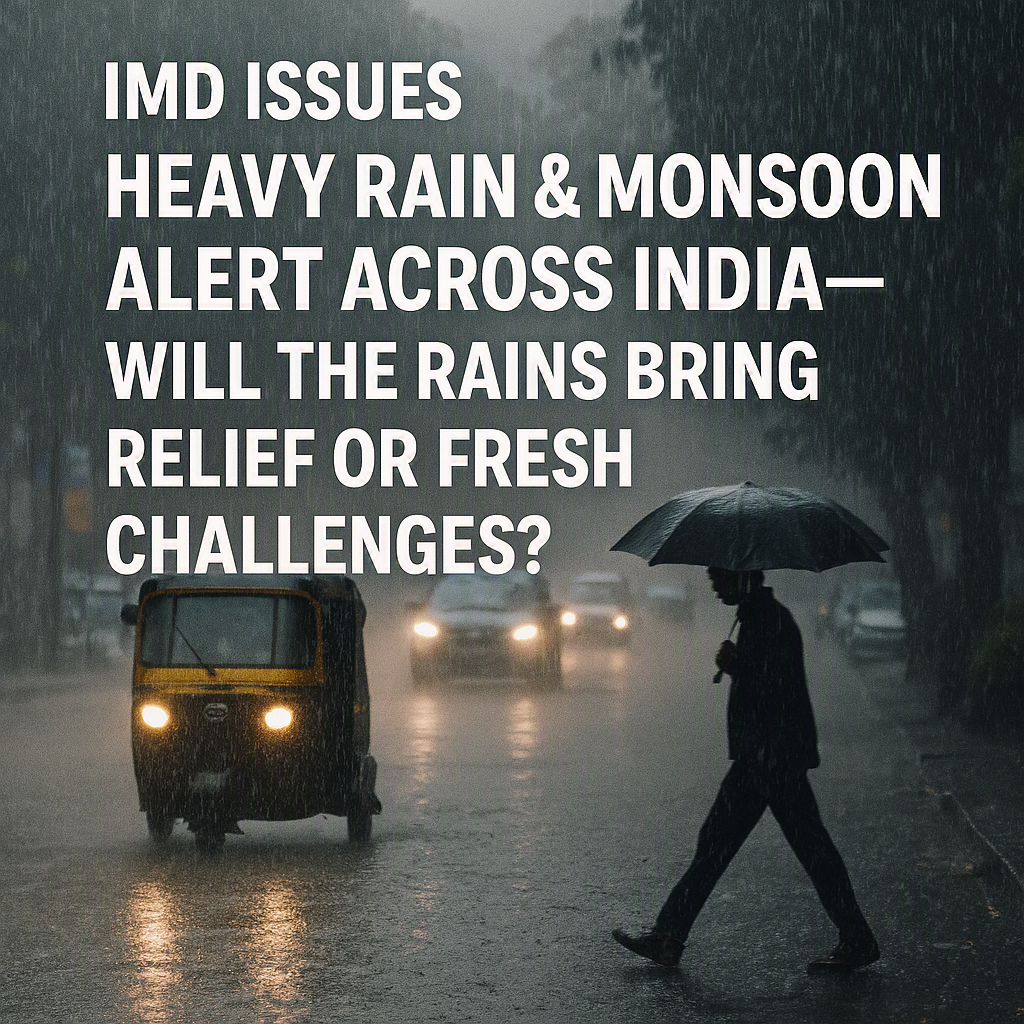
The India Meteorological Department (IMD) has issued fresh warnings for heavy to extremely heavy rainfall across several parts of the country as the southwest monsoon enters an active phase. States including Maharashtra, Gujarat, Odisha, Madhya Pradesh, Goa, Himachal Pradesh, and Uttarakhand are expected to receive intense rainfall, while thunderstorms and lightning are forecast for parts of Delhi, Rajasthan, Bihar, and Telangana. Authorities have advised residents in vulnerable areas to remain alert as waterlogging, flooding, and travel disruptions are possible.
According to IMD the latest weather update has created mixed emotions across India. For millions of farmers, strong monsoon rains are welcome after concerns about rainfall deficits earlier in the season. However, for urban areas and flood-prone regions, continuous heavy rainfall raises concerns about public safety, transport disruptions, and damage to infrastructure.
Positive Sentiment: A Boost for Agriculture and Water Resources
An active monsoon is good news for India’s agriculture sector, which depends heavily on seasonal rainfall. Adequate rain improves soil moisture, supports the sowing of crops such as rice, pulses, maize, and cotton, and helps farmers prepare for a productive harvest.
The IMD has noted that active monsoon conditions have already helped reduce the country’s cumulative rainfall deficit, improving prospects for the kharif crop season.
Heavy rainfall also helps replenish reservoirs, rivers, and groundwater levels. Better water availability supports drinking water supplies, hydroelectric power generation, and irrigation for both rural and urban communities.
A healthy monsoon can strengthen rural incomes, increase agricultural production, and contribute positively to India’s overall economic growth.
Negative Sentiment: Floods and Disruptions Remain a Major Concern
While abundant rainfall brings many benefits, excessive rain can quickly become dangerous.
The IMD has issued red and orange alerts for several regions, warning of possible flooding, waterlogging, landslides, and transport disruptions. Mumbai has already recorded exceptionally heavy rainfall, with authorities urging residents to avoid unnecessary travel due to flooding risks and high tides.
Heavy rainfall can damage roads, bridges, railway tracks, and power infrastructure. Schools, offices, and businesses may face temporary closures in severely affected areas.
In hilly states such as Himachal Pradesh and Uttarakhand, prolonged rainfall increases the likelihood of landslides, posing risks to residents and tourists.
Urban flooding also places pressure on drainage systems, emergency services, and disaster response teams.
Economic Impact of the Monsoon
The monsoon plays a crucial role in India’s economy.
A strong and well-distributed monsoon generally boosts agricultural output, supports rural demand, and helps stabilize food prices. Better harvests often benefit industries such as fertilizers, farm equipment, consumer goods, and banking.
However, excessive rainfall can interrupt supply chains, damage crops, delay transportation, and increase food inflation if agricultural losses become widespread.
Businesses in logistics, retail, tourism, and construction may also experience temporary setbacks when severe weather disrupts normal operations.
How Authorities Are Responding
State governments and disaster management agencies have increased preparedness following the latest IMD warnings.
Emergency teams have been deployed in vulnerable districts, while local authorities are monitoring river levels, flood-prone locations, and weather developments. Citizens are being advised to follow official weather updates, avoid flooded roads, and remain cautious during thunderstorms and periods of intense rainfall.
Conclusion
The latest IMD heavy rain and monsoon alert highlights both the opportunities and challenges of India’s rainy season.
For farmers and water resources, the active monsoon offers hope for better crop production and improved reservoir levels. At the same time, heavy rainfall reminds us of the importance of disaster preparedness, resilient infrastructure, and timely weather warnings.
As India continues through the peak monsoon season, staying informed and following official advisories will be essential. Whether the rains become a blessing or a challenge will depend on how effectively communities and authorities respond to rapidly changing weather conditions.
Disclaimer: This article is for informational purposes only. Weather forecasts may change. Follow official advisories from the India Meteorological Department (IMD) and local authorities for the latest updates.
Learn more about our site on contactarchive2in.com
Contact us on email id contactarchive2in@gmail.com
Leave a Reply
You must be logged in to post a comment.