
Introduction
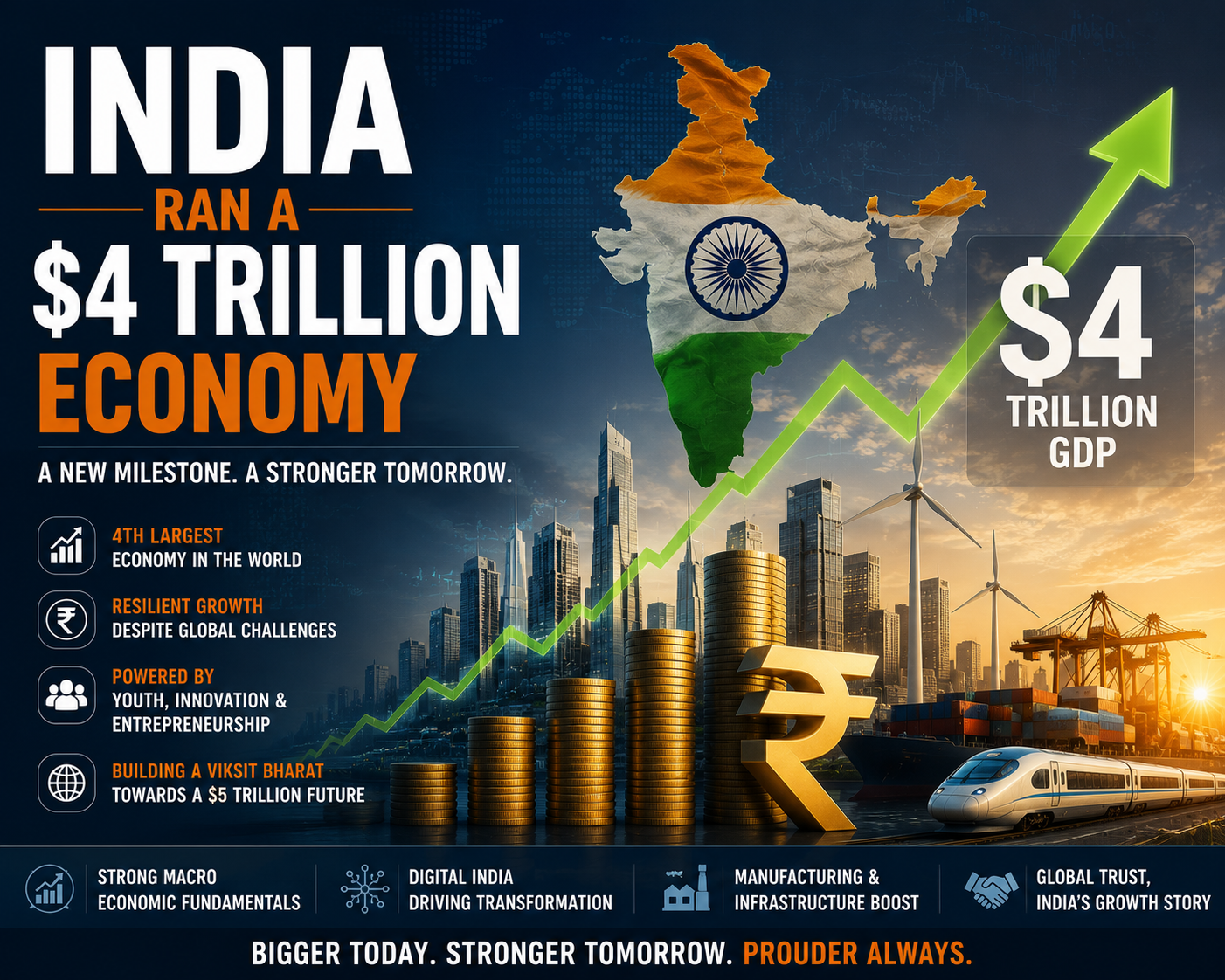
India is now the world’s fourth largest economy, valued at roughly”47-1″>$4.15 trillion in nominal terms as of 2026. Yet for years, the country has been making trillion-dollar decisions using economic data that experts and global institutions considered outdated and incomplete. In 2026, that finally changed. A sweeping overhaul of India’s statistical system, from GDP calculation methods to inflation tracking, has reshaped how the country measures its own economy. This post breaks down what changed, why it took so long, and what it means going forward.
The Problem: Old Data, New Economy
For over a decade, India’s national income accounts were based on 2011-12 as the reference year. The base year for the Consumer Price Index was similarly outdated, and the Index of Industrial Production also relied on baskets and weights that no longer reflected how the economy actually functioned. A country that had transformed through digital payments, e-commerce, gig work, and a fast-growing informal sector was still being measured using a framework built for a very different economic era.
This gap did not go unnoticed internationally.The International Monetary Fund rated India’s national accounts data with a ‘C’ grade in its Data Adequacy Assessment for two consecutive years, a rating that signals shortcomings serious enough to somewhat hamper effective economic surveillance
What Changed in 2026
The government responded with one of the most significant statistical modernization efforts in years.
1. A New GDP Base Year
The base year for GDP was shifted from 2011-12 to 2022-23, a change designed to let national income estimates better capture current production patterns, consumption behavior, and pricing structures.The Ministry of Statistics and Programme Implementation officially released the new series of Annual and Quarterly Estimates on February 27, 2026, selecting 2022-23 as the base year because it represented a stable, post-pandemic reference point with more robust and comprehensive data.
2. New and Richer Data Sources
Rather than relying only on traditional survey methods, the revised framework pulls from real economic activity happening across the country.New data sources, including GST filings, e-Vahan vehicle registration records, and the Public Financial Management System, are now being integrated into GDP estimation to improve accuracy and detail.
3. A Smarter Way to Calculate Real Output
India’s new national accounts also introduce double deflation methods across sectors, replacing the older system that relied on a single deflation mechanism, a change expected to produce more accurate and consistent results, particularly for industries with complex input and output pricing.
4. Updated Inflation and Industrial Output Tracking
Alongside GDP, the base year for the Consumer Price Index was updated to 2024, drawing on the Household Consumption Expenditure Survey of 2023-24 to refresh the consumption basket for both rural and urban households. The Index of Industrial Production was also rebased to 2022-23, incorporating revised product baskets and improved sector coverage.
5. Better Measurement of the Informal Economy
One of the toughest challenges in Indian economic data has always been capturing the country’s massive informal and services sectors.To close this gap, the National Statistical Office conducted a pilot Annual Survey of Service Sector Enterprises aimed specifically at improving data quality for the organized services segment.
The Numbers Behind the Shift
Under the new series, India’s real GDP growth for the third quarter of the current fiscal year came in at 7.8 percent, with real GDP growth for the full year 2025-26 estimated at 7.6 percent, compared to 7.1 percent in 2024-25
Interestingly, while the growth rate improved, the picture was more complicated on the nominal side. India’s nominal GDP for FY 2025-26 was recalculated from an estimated 357 lakh crore rupees under the old series to 345 lakh crore rupees under the new one, a mathematical contraction of roughly 3.3 percent, even as real growth was revised upward.This is a reminder that rebasing a national economy is not just a cosmetic exercise. It can shift how other figures, including fiscal deficit ratios calculated as a percentage of nominal GDP, are reported.
Why the Timing Matters
The overhaul was announced on January 8, 2026 and executed by February 27, a pace that available evidence suggests was accelerated significantly, in part due to international pressure to bring India’s statistical practices up to global standards.The IMF had already indicated that its data adequacy rating for India would be reassessed once the updated national accounts series was published, adding further weight to the timeline.
What Comes Next
The transition is not fully complete. Back series data linking the new methodology to historical records extending back to 1950-51 is expected to be released by December 2026, allowing analysts and policymakers to compare long term trends using the new frameworkThe revised Index of Industrial Production series is also slated for full release by May 28, 2026.
Why This Story Matters
- Better policy decisions. More accurate data means better informed fiscal and monetary policy choices for a $4 trillion economy.
- Global credibility. A stronger data adequacy rating from institutions like the IMF can influence investor confidence and India’s standing in global economic forums.
- A more honest picture of growth. Capturing the informal sector, gig economy, and digital transactions more accurately means growth figures better reflect how ordinary Indians actually earn and spend.
- Long overdue modernization.Experts have noted that a statistical system updated only once a decade struggles to keep pace with an economy going through rapid structural transformation, making this shift an important, if delayed, step forward.
Conclusion
For decades, India expanded into one of the world’s largest economies while measuring itself with tools that had not kept pace with its own transformation. The 2026 overhaul, from a new GDP base year to fresh data sources and improved deflation methods, marks a genuine attempt to close that gap. Whether this newly sharpened lens changes how India is perceived by global institutions, investors, and its own policymakers is a story still unfolding.
Learn more about or site archive2in.com
Contact us on our email id contactarchive2in@gmail.com
Read our latest articles on our blog section
Leave a Reply
You must be logged in to post a comment.