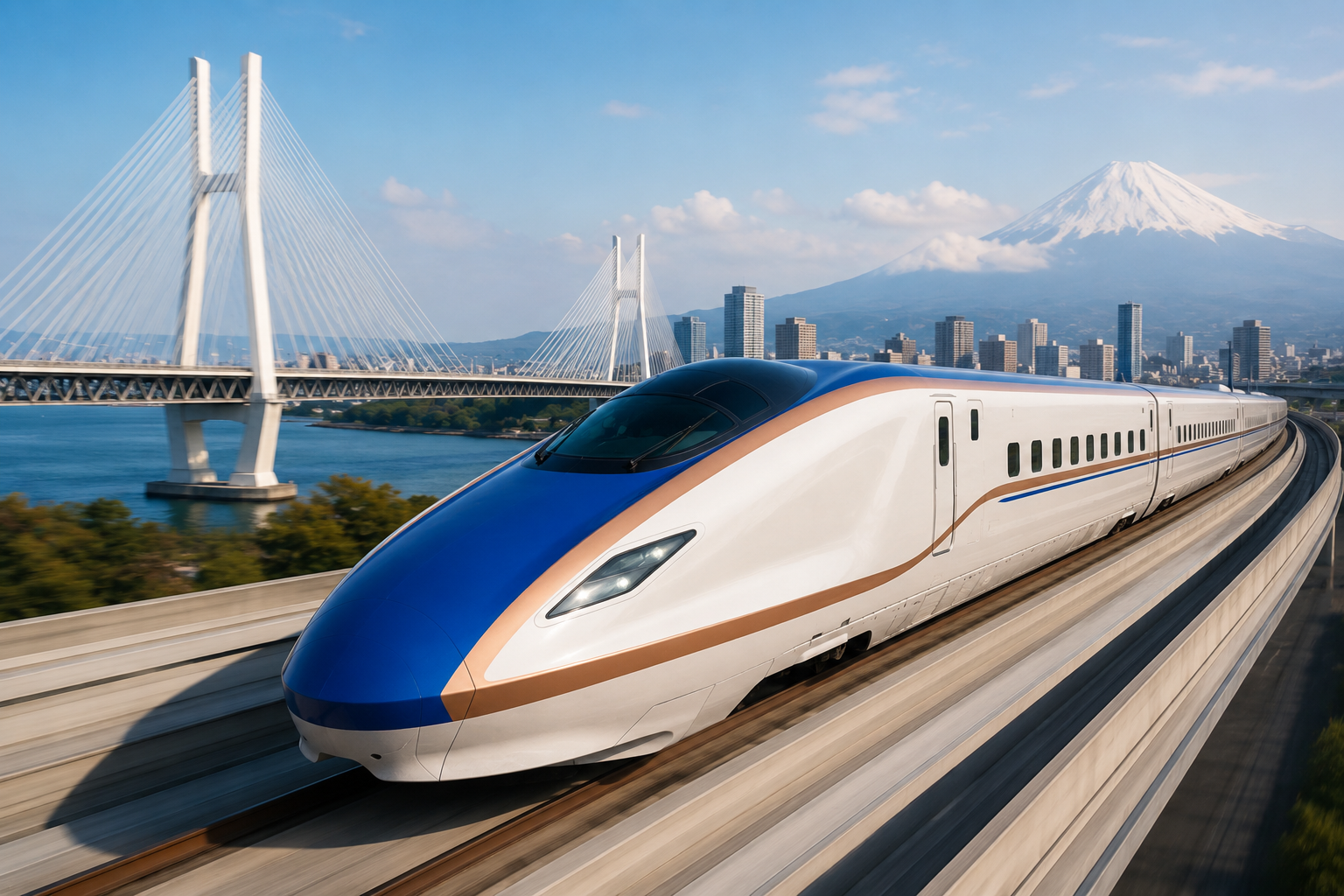
India’s ambitious high-speed rail vision has received another significant boost. The Ministry of External Affairs (MEA) has confirmed that discussions between India and Japan on the country’s first bullet train project are progressing well, with Japan’s next-generation E10 Shinkansen trains expected to be introduced in India during the 2030s.
The announcement highlights the strength of the India-Japan strategic partnership and reinforces both nations’ commitment to bringing world-class high-speed rail technology to India.
A Milestone in India-Japan Relations
The Mumbai-Ahmedabad High-Speed Rail (MAHSR) project has become one of the flagship infrastructure collaborations between India and Japan.
Japan has long been recognized as a global leader in high-speed rail, with its Shinkansen network earning an outstanding reputation for safety, punctuality, and technological innovation. Through this partnership, India aims to benefit from Japanese expertise in railway engineering, advanced signaling systems, and passenger safety.
The latest update from the MEA indicates that bilateral discussions continue to move forward positively, paving the way for the adoption of Japan’s future-generation high-speed trains.
What Is the E10 Shinkansen?
The E10 Shinkansen is Japan’s planned next-generation bullet train, designed to succeed earlier models with enhanced efficiency, passenger comfort, and environmental performance.
While final specifications are still under development, the E10 is expected to feature:
- Improved energy efficiency
- Advanced safety technologies
- Enhanced passenger comfort
- Better aerodynamics
- Modern digital monitoring systems
- Greater operational reliability
Its introduction into India’s high-speed rail network would represent a major technological leap for the country’s transportation infrastructure.
The Mumbai-Ahmedabad Bullet Train Project
The Mumbai-Ahmedabad High-Speed Rail corridor is India’s first dedicated bullet train project.
Once operational, it is expected to significantly reduce travel time between Mumbai and Ahmedabad while introducing international standards of rail travel.
Key objectives of the project include:
- Faster intercity transportation
- Reduced travel time
- Improved passenger safety
- Economic development along the corridor
- Job creation
- Technology transfer and skill development
The project also serves as a foundation for expanding high-speed rail to other regions of India in the future.
Why Japan Is India’s Preferred Partner
Japan’s Shinkansen system has operated for decades with an exceptional safety record and is widely regarded as one of the world’s most reliable high-speed rail networks.
India’s partnership with Japan extends beyond train technology and includes:
- Infrastructure financing
- Technical expertise
- Engineering support
- Workforce training
- Knowledge sharing
This collaboration is expected to strengthen India’s capabilities in designing, constructing, and maintaining future high-speed rail corridors.
Benefits for Indian Passengers
When operational, the bullet train network is expected to offer several advantages:
- Much shorter travel times
- High levels of passenger comfort
- Reliable schedules
- Advanced onboard safety systems
- Modern station infrastructure
- Reduced dependence on road transportation for intercity travel
High-speed rail may also help reduce congestion on existing transport networks while supporting sustainable mobility.
Economic Impact
Large infrastructure projects such as the bullet train corridor often generate broader economic benefits.
Potential long-term advantages include:
- Increased investment
- Employment opportunities
- Growth in manufacturing
- Urban development around stations
- Tourism promotion
- Improved business connectivity
The project may also encourage further investment in advanced transportation technologies across India.
Challenges Ahead
Despite steady progress, the project continues to face challenges, including:
- Land acquisition
- Construction timelines
- Cost management
- Complex engineering requirements
- Coordination among multiple stakeholders
Both governments have emphasized continued cooperation to address these challenges and ensure successful implementation.
Looking Toward the 2030s
The confirmation that Japan’s next-generation E10 Shinkansen trains are expected to arrive in India during the 2030s reflects the long-term vision shared by both countries.
Although several phases of construction and testing remain before commercial operations begin, the project represents a transformational investment in India’s transportation future.
If completed as planned, India’s first bullet train corridor could pave the way for additional high-speed rail routes connecting major cities across the country.
Conclusion
The continued progress in India-Japan bullet train discussions marks another important milestone in one of India’s most ambitious infrastructure projects. The planned introduction of Japan’s advanced E10 Shinkansen trains demonstrates the confidence both nations have in their long-term partnership.
As construction advances and technology cooperation deepens, the Mumbai-Ahmedabad High-Speed Rail project has the potential to redefine rail travel in India, bringing faster, safer, and more efficient transportation to millions of passengers while strengthening economic ties between India and Japan.
Disclaimer
This article is based on publicly available statements and official announcements available at the time of writing. Project timelines, train models, specifications, and implementation schedules may change as the India-Japan high-speed rail project progresses. Readers should refer to official government sources for the latest updates.
Learn more about our site contactarchive2in.com
Contact us on our email id contactarchive2in@gmail.com
Leave a Reply
You must be logged in to post a comment.