
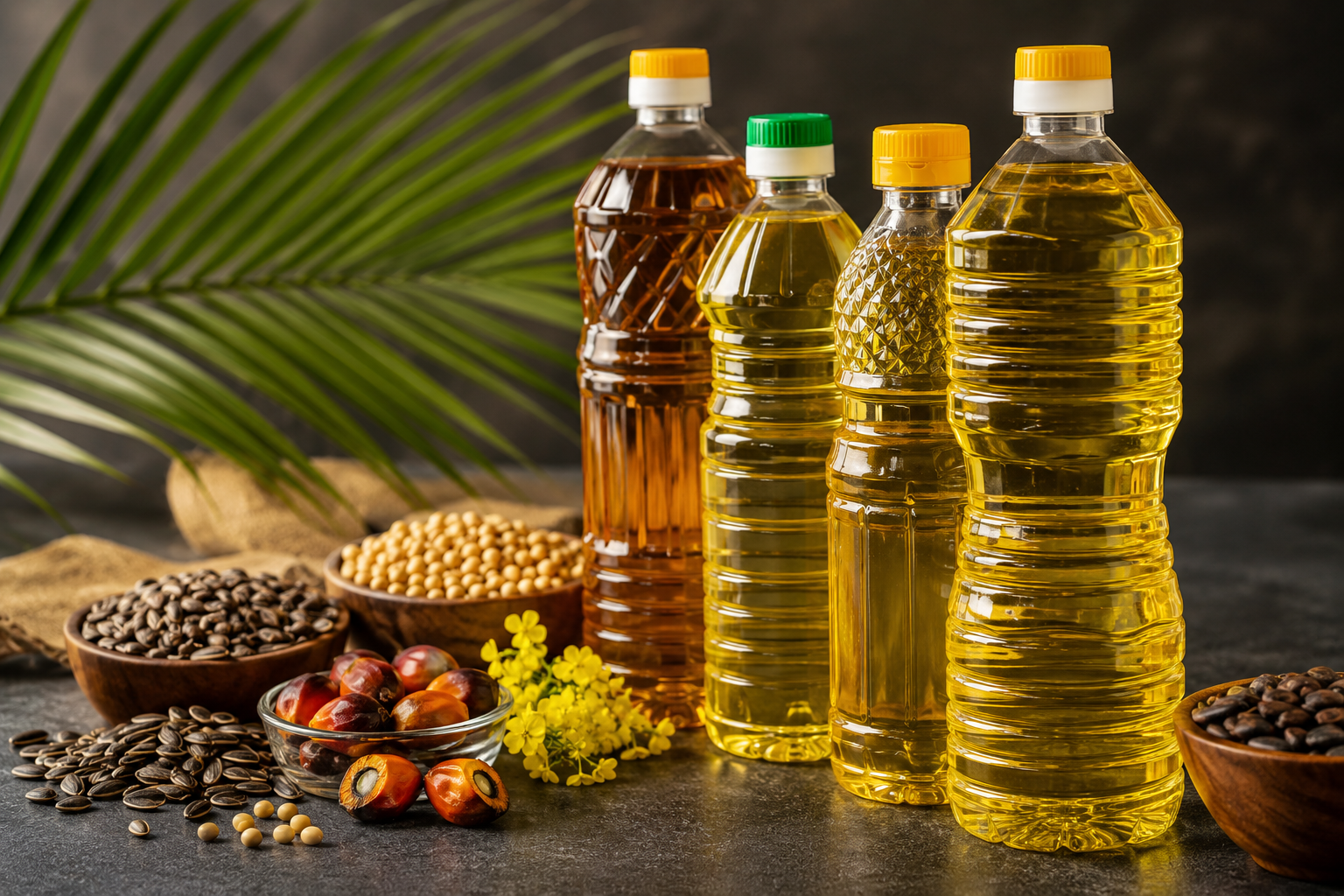
India’s edible oil market recorded a notable shift in July 2026, with imports falling 8% year-on-year to 14.81 lakh tonnes, compared with 16.16 lakh tonnes in July last year, according to the Solvent Extractors’ Association of India (SEA).
The decline comes at an interesting time for the country’s cooking-oil market. India remains heavily dependent on overseas supplies, while refiners and traders are preparing for stronger demand during the upcoming festive season.
So, what is behind the July decline, and could it affect cooking-oil prices in the months ahead?
July imports show a sharp year-on-year decline
India imported 14.81 lakh tonnes of edible oil in July, down from 16.16 lakh tonnes during the same month in 2025.
The broader vegetable-oil category, which includes both edible and non-edible oils, also declined. Imports fell 7% year-on-year to 15.25 lakh tonnes, compared with 16.48 lakh tonnes a year earlier.
However, the picture looks different when the entire oil year is considered.
During the first nine months of the 2025-26 oil year, from November 2025 through July 2026, total edible-oil imports actually increased 5% to 119.23 lakh tonnes, compared with 113.46 lakh tonnes during the corresponding period of the previous oil year.
That means July’s decline does not necessarily indicate a long-term fall in India’s dependence on imported edible oils.
Why does India import so much edible oil?
India is one of the world’s biggest consumers of edible oil, but domestic oilseed production does not fully meet the country’s requirements.
The country therefore imports large quantities of palm oil, soybean oil and sunflower oil.
Palm oil is particularly important because it is widely used in packaged foods, restaurants and household cooking. India sources much of its palm oil from major producers such as Indonesia and Malaysia.
Soybean and sunflower oil come from a wider range of international suppliers.
Reuters has reported that India meets around two-thirds of its edible-oil needs through imports, making international prices, shipping conditions and currency movements important factors for the domestic market.
July’s numbers need to be viewed in context
The headline 8% decline may sound significant, but monthly import figures can fluctuate considerably.
Importers and refiners adjust purchases according to inventory levels, international prices, domestic oilseed availability and expectations about future demand.
In fact, Reuters reported earlier that India’s edible-oil imports were expected to increase during the July-to-October period as refiners prepared for the festival season and domestic supplies remained relatively tight.
That expectation makes the July decline particularly interesting.
It could represent a temporary adjustment rather than the beginning of a sustained downward trend.
Festival demand could change the picture
India’s festive period typically brings higher demand for cooking oil.
Festivals often mean increased household cooking, sweets, snacks and restaurant activity. Food manufacturers and retailers may also build inventories ahead of periods when consumption rises.
This is why refiners frequently adjust their import plans several weeks or months before peak demand arrives.
Reuters reported that July imports reached a 10-month high in another set of trade estimates, with palm oil and soybean oil purchases increasing sharply from June.
The apparent difference between the estimates and the later SEA figures highlights an important point: preliminary market estimates can differ from finalized industry data.
The SEA’s latest figures provide the more relevant benchmark for the July import decline.
What about cooking-oil prices?
A fall in imports does not automatically mean that cooking-oil prices will rise.
Prices depend on several factors, including:
- Global palm and soybean oil prices
- The rupee’s exchange rate
- International freight costs
- Domestic oilseed production
- Refinery inventories
- Government import duties
- Festival-season demand
- Global supply disruptions
India’s exposure to international markets means that even a relatively small change in global commodity prices can influence domestic cooking-oil costs.
Recent geopolitical and shipping disruptions have also encouraged some major Indian refiners to maintain larger inventories.
Reuters reported in August that AWL Agri Business had increased its imported edible-oil inventory cover to around 40–45 days, compared with its usual 30–35 days, because of continuing supply-chain uncertainty.
India’s import bill remains a concern
Lower July volumes do not necessarily mean lower spending on imported oil.
The price paid per tonne can rise even when the quantity imported falls.
In July, the SEA had already warned that India’s edible-oil import bill for the current oil year could reach approximately ₹1.75 lakh crore, up from ₹1.61 lakh crore in the previous year. Factors including the weaker rupee and higher global costs were contributing to the increase.
This creates a challenge for India’s agricultural economy.
Reducing the country’s dependence on imported edible oil could help reduce the foreign-exchange burden while potentially creating stronger demand for domestic oilseed farmers.
What does this mean for consumers?
For households, the most important question is whether the import decline will make cooking oil more expensive.
There is no simple answer.
If domestic supplies remain adequate and global prices stay under control, consumers may see limited impact.
However, if international prices rise, the rupee weakens further or festival demand increases faster than expected, retailers could face higher procurement costs.
Consumers may therefore want to watch prices of popular oils such as palmolein, sunflower and soybean oil rather than focusing only on total import volumes.
The bigger picture
The 8% fall in India’s edible-oil imports during July is an important monthly development, but it should not be interpreted in isolation.
The bigger story is India’s continued dependence on international edible-oil supplies. While July imports fell to 14.81 lakh tonnes, imports during the first nine months of the oil year were still 5% higher than in the corresponding period a year earlier.
With India’s festive season approaching, demand could remain strong, potentially encouraging refiners to rebuild inventories.
At the same time, global commodity prices, shipping disruptions and domestic oilseed production will continue to influence the market.
For consumers, the coming months could therefore be important. The July numbers may represent only a temporary pause before importers step up purchases again to prepare for India’s peak cooking-oil demand season.
Disclaimer
This article is intended for general informational and educational purposes. Commodity prices and import figures can change as additional data becomes available. The article does not constitute financial, investment or trading advice. Readers should consult official industry and government data before making decisions based on edible-oil market conditions.
Learn more about our site on contactarchive2in.com
Contact us on our email id contactarchive2in@gmail.com
Leave a Reply
You must be logged in to post a comment.