
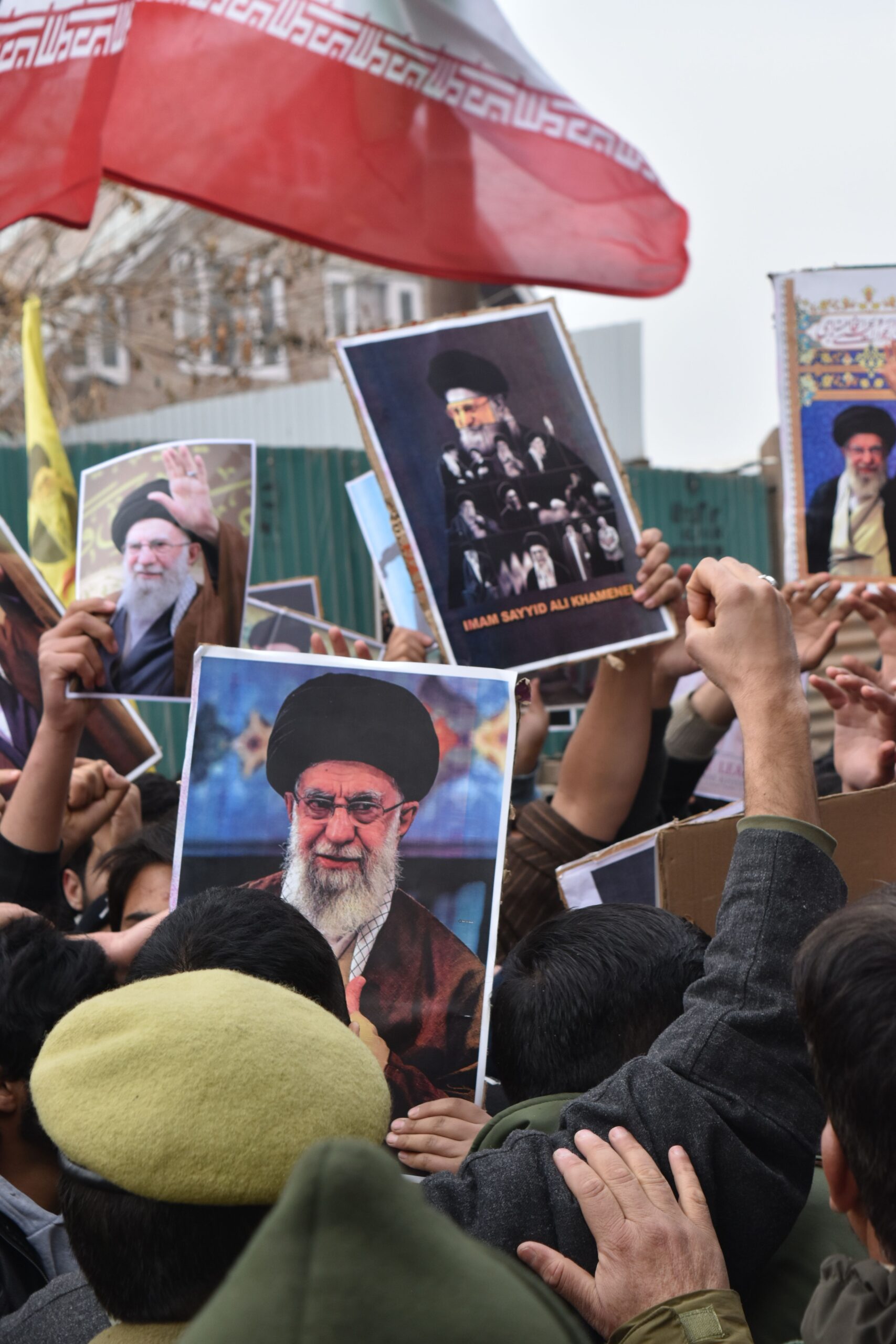
The Strait of Hormuz has always been the most dangerous chokepoint in global geopolitics a 33 kilometre gap through which roughly a fifth of the world’s oil supply must pass. In 2026, it became the fault line of an actual shooting war between the United States and Iran, one that has dragged on for months, survived (and broken) multiple ceasefires, and is still active as of this week. Here’s how it unfolded, and why the FIFA World Cup kept showing up in the middle of it.
How the Iran-US War Actually Started
The conflict escalated fast. On February 25, 2026, the US Treasury sanctioned more than 30 individuals, entities, and vessels tied to Iran’s oil-shipping network. Three days later, on February 28, Israel and the United States launched direct airstrikes on Iran, killing Supreme Leader Ayatollah Ali Khamenei along with several senior officials and destroying military and government infrastructure.
Iran hit back hard firing missiles and drones at Israel, at American bases across the region, and at US-allied countries, while also moving to shut down the Strait of Hormuz, choking off a critical share of the world’s crude and gas shipments almost overnight.
By early March, diplomacy had all but collapsed. Trump posted on Truth Social that there would be “no deal with Iran except unconditional surrender,” a line that effectively ended early attempts at a quiet off-ramp.
The Ceasefires That Kept Falling Apart
What followed was a pattern that has repeated itself for nearly five months: a ceasefire gets brokered, it holds for a few days or weeks, and then it collapses under fresh strikes.
- April 5: Pakistan proposed a 45-day, two-phase ceasefire framework. Iran rejected it and pushed its own 10-point peace plan instead.
- April 21: Trump extended the ceasefire indefinitely but violations from both sides continued almost immediately.
- Early July: The truce crumbled again after strikes hit commercial vessels in the Gulf, sending shipping traffic through Hormuz into another sharp decline. GPS spoofing around the strait used to throw off missile targeting — also resurfaced.
- July 10: Trump declared the ceasefire officially “over” on Truth Social, even as he said Washington would continue talking to Tehran. Iran’s chief negotiator, Mohammad Bagher Ghalibaf, said the country was ready for “all-out defense” and remained distrustful of the Americans.
- Mid-July: Mediators from Qatar and Pakistan scrambled to bring both sides back to the table, without much success.
Adding to the volatility, Khamenei’s son and successor, Mojtaba Khamenei, has barely appeared in public since taking over as Supreme Leader — and Israeli intelligence reportedly told the US that Tehran had developed a new plot targeting Trump’s life.
So, Did the FIFA World Cup Actually Delay Trump’s Decisions?
This is the part that’s genuinely split opinion. The 2026 FIFA World Cup co hosted by the US, Canada, and Mexico kicked off on June 11, with the tournament running alongside America’s 250th Independence Day celebrations on July 4. Commentators argued Trump had strong political incentive to wrap up the war before the tournament: disrupted travel routes through the Middle East, a blocked Hormuz strait, and rising fuel prices were all bad optics for an event he wanted to showcase as a triumph.
Iran’s own football federation even asked FIFA to shift Tehran’s group-stage matches out of the US and into Mexico over safety concerns a request FIFA rejected, with the schedule staying unchanged. Trump, for his part, brushed off questions about whether Iran would even show up, saying bluntly that he didn’t care either way.
But the White House has pushed back hard on the idea that the tournament shaped war strategy. Andrew Giuliani, who led the White House Task Force on the World Cup, told The Jerusalem Post directly that the tournament had no bearing on Trump’s national-security decisions regarding Iran.
Whatever the real internal calculus was, the optics told their own story. Trump attended the World Cup final in mid-July and within a day of returning to Washington, the Pentagon announced the ninth consecutive night of strikes against Iran, with US troop deaths climbing to 17. Trump himself said the administration felt “very badly” about the losses while insisting the campaign had left Iran “very, very badly damaged.”
Why Hormuz Is the Real Pressure Point
Everything about this conflict keeps circling back to one stretch of water of hormuz . Before the war, roughly 110 ships a day passed through the Strait of Hormuz. Traffic has swung wildly since dropping to a trickle during active strikes, recovering slightly during ceasefire windows, then collapsing again each time fighting resumes. At one low point in early July, only about a dozen vessels were transiting per day.
The economic ripple effects have been just as dramatic. Oil prices spiked to nearly $120 a barrel during the worst of the fighting before easing on ceasefire hopes, only to swing again with each new escalation. The UAE has reportedly started chartering its own tankers to move oil out of the strait despite the risk, and shipping analysts estimate around 200 million barrels moved through Hormuz during the brief three-week ceasefire window earlier this year a sign of just how much pent-up trade is waiting for a genuine, lasting truce.
Where Things Stand Right Now
As of this week, the war is very much active. Ceasefire talks are technically still alive on paper, with Qatari and Pakistani mediators shuttling between capitals, but neither side has shown signs of backing down. Iran’s negotiators say they won’t accept anything resembling surrender; Trump’s administration says the campaign continues until Iran’s nuclear and missile capabilities are degraded and Hormuz reopens fully to global shipping.
For Trump, the political stakes are steep a slim Republican majority in the House, midterm elections in November, and a war that runs directly against the “America First” platform he was elected on. For Iran’s new leadership under Mojtaba Khamenei, the calculation is just as high-stakes, with a battered economy, a fractured command structure, and a global spotlight it can’t control.
What to Watch Next
- Whether Qatar and Pakistan can broker a ceasefire that actually sticks this time
- Shipping and oil-price data out of the Strait of Hormuz as an early signal of de-escalation
- Any further reported threats against US or Israeli leadership
- How the unresolved war shapes the US midterm elections in November
FAQs
Why is the Strait of Hormuz so important? It’s the narrow sea passage between Iran and Oman through which around a fifth of the world’s oil and gas shipments travel. Any disruption there sends global energy prices swinging almost immediately.
Did the FIFA World Cup actually influence Trump’s Iran strategy? Analysts and commentators argued the tournament gave Trump strong incentive to wind the war down quickly, but the White House has explicitly denied that the World Cup shaped national-security decision-making.
Is there a ceasefire in place right now? Multiple ceasefires have been declared and broken since February 2026. As of mid-July, active strikes are ongoing and the most recent truce has collapsed.
How many US troops have died in the conflict? US officials confirmed the death toll had reached 17 service members as of mid-July 2026, with additional casualties reported in Iraq and Jordan.
Learn more about our site archive2in.com
Contact us on contactarchive2in@gmail.com
Read out latest articles BLOGS
Leave a Reply
You must be logged in to post a comment.