
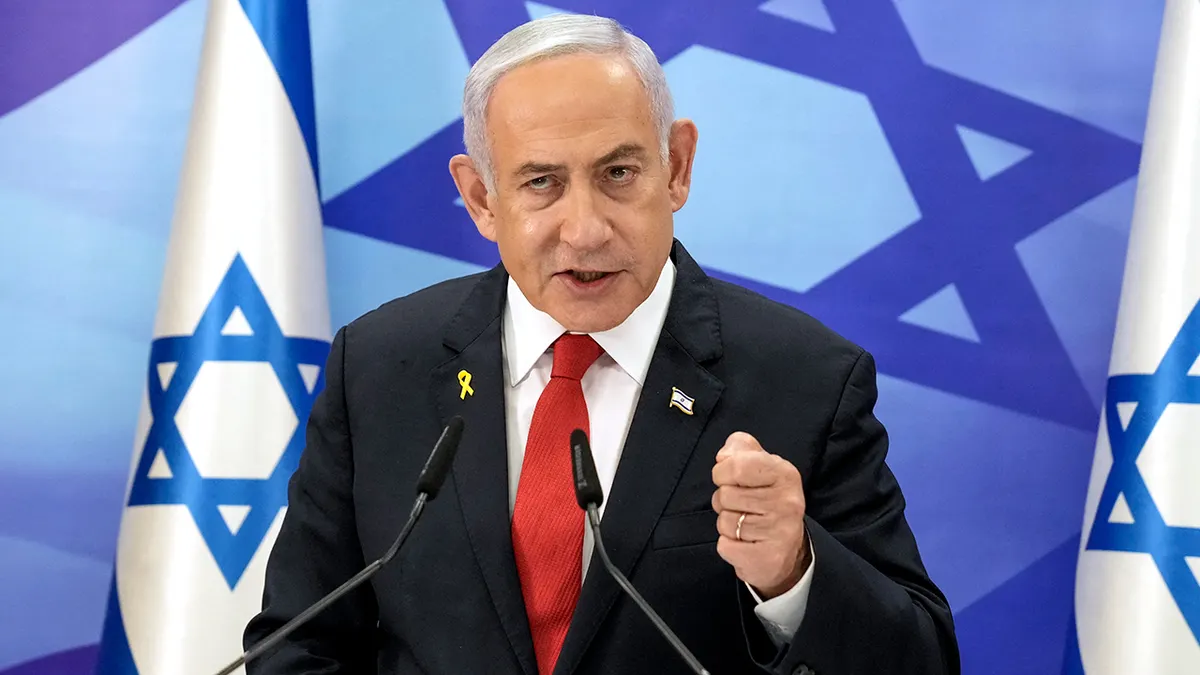
The fragile truce between the United States and Iran appears to be unraveling fast, with fresh rounds of strikes and counter-strikes rocking the Middle East this week. Israeli Prime Minister Benjamin Netanyahu added to the sense of alarm, declaring at an air force graduation ceremony that the conflict with Iran “has not ended” and that “new challenges” are emerging for the region.
What Triggered the Latest Escalation
Benjamin Netanyahu The current flare up traces back to a memorandum of understanding (MoU) signed in mid-June between Washington and Tehran, brokered with help from Pakistan and Qatar. That agreement had extended an earlier ceasefire, lifted a US naval blockade on Iran, netanyahu flag and opened the door to broader talks on Iran’s nuclear program and control of the Strait of Hormuz.
That fragile calm broke down after Iran attacked commercial tankers passing through the Strait of Hormuz, a vital corridor that carries roughly a quarter of the world’s seaborne oil trade. President Donald Trump, attending the NATO summit in Turkey at the time, reacted furiously, declaring the MoU “over” and warning that Iranian leaders would face consequences for endangering shipping in the strait.
Strikes and Counter-Strikes
What followed was a rapid tit-for-tat exchange. US Central Command confirmed it had struck around 80 to 90 military targets across Iran, including missile depots, drone launch sites, coastal radar systems, and dozens of vessels linked to Iran’s Revolutionary Guard Corps. Washington framed the strikes as necessary to protect freedom of navigation through the strait.
Iran netanyahu responded by launching drones and missiles at US-linked military installations in Kuwait, Bahrain, and Qatar, prompting air raid sirens across the Gulf. Iranian officials also fired ballistic missiles toward a base in Jordan, though most were intercepted. Tehran’s leadership vowed a “crushing response” to further American action, while its top nuclear negotiator warned that the Strait of Hormuz would remain open only “through Iranian arrangements,” not under pressure from Washington.
The renewed hostilities have also hit the global economy, with oil prices jumping sharply after news broke that the ceasefire had collapsed.
Netanyahu’s Warning
Speaking against this backdrop, Netanyahu told air force graduates that maintaining air superiority remains central to Israel’s national security strategy, describing it as essential for stability in a volatile region. Israel’s military chief echoed the sentiment, saying that further operations against Iran are already being planned, while Israel’s defense minister said the country’s forces stand ready to strike Iran again even a third time if threats resurface.
Where Things Stand Now
Despite the exchange of fire, both sides appear to be leaving room for diplomacy. Neither Washington nor Tehran has formally abandoned the broader negotiation track, and mediators including Pakistan, Qatar, and Oman are reportedly pushing both governments to return to the terms of the MoU. Still, the pattern of escalation strikes, retaliation, and renewed threats suggests the ceasefire’s future remains highly uncertain.
For now, the Gulf region remains on edge. Air defense systems in Kuwait and Bahrain continue intercepting incoming threats, shipping through the Strait of Hormuz remains disrupted, and world leaders are watching closely to see whether this becomes a full relapse into war or another temporary spike before talks resume.
The Bigger Picture
This latest episode is part of a broader conflict that began in February 2026, when a US-Israeli air campaign against Iran triggered months of fighting, a near total blockade of the Strait of Hormuz, and repeated attempts at ceasefires that have struggled to hold.
Learn more about our site archive2in.com
Contact us on contactarchive2in@gmail.com
Read out our latest article How the iran crisis taught asia a hard 3 lesson in energy security
Leave a Reply
You must be logged in to post a comment.