
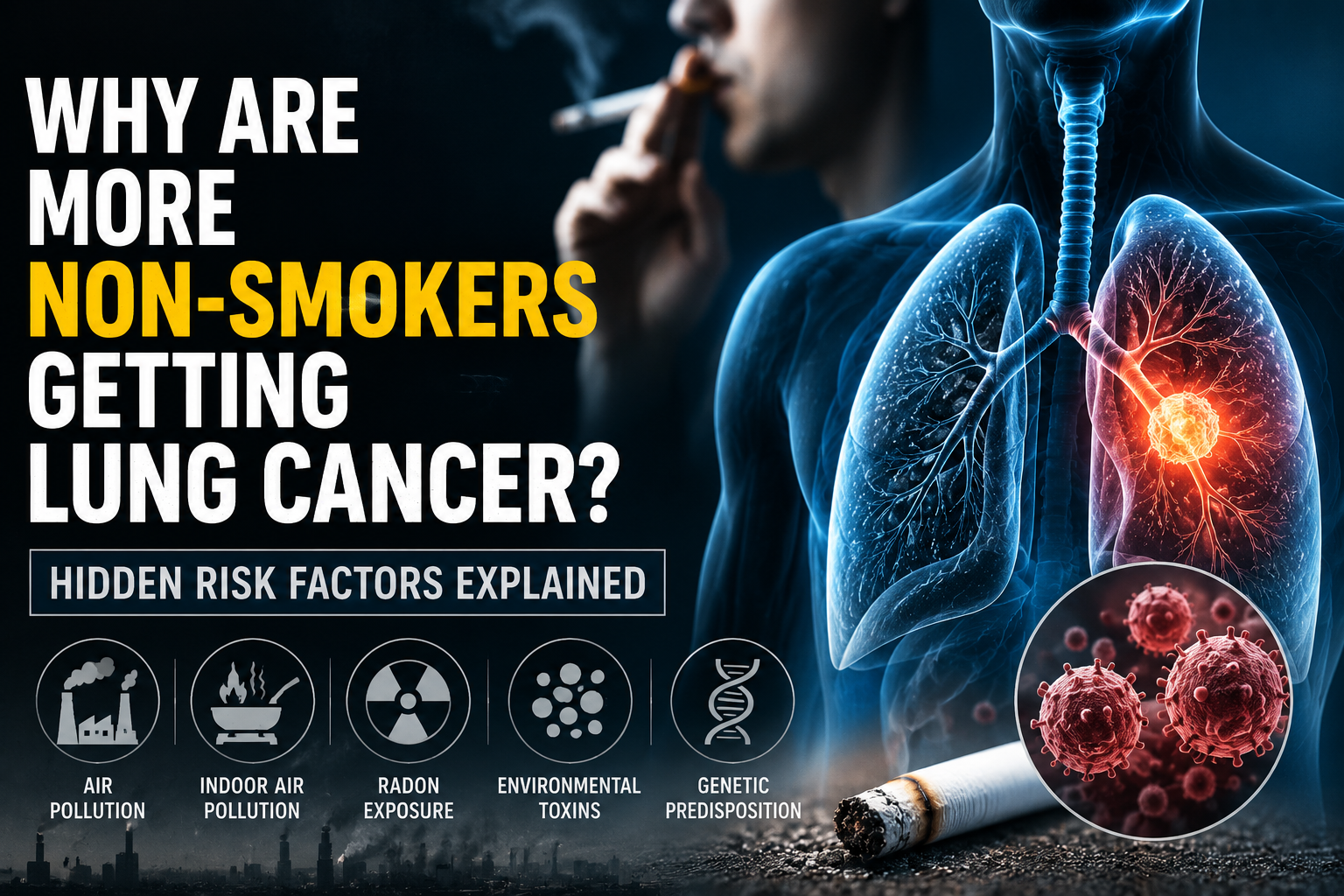
For decades, lung cancer has been thought of almost exclusively as a “smoker’s disease.” But over the last few years, pulmonologists have noticed a worrying shift a growing number of patients being diagnosed with lung cancer have never smoked a single cigarette in their lives. This isn’t just a local trend; it’s being observed across hospitals worldwide.
So what’s really going on? In this article, we break down the hidden risk factors that are putting even non-smokers at risk of lung cancer, along with the warning signs to watch for and steps you can take to protect yourself.
Is Lung Cancer in Non-Smokers Really on the Rise?
According to pulmonologists, a noticeably higher share of lung cancer patients seen in clinics today particularly women and younger adults have no smoking history at all. This shift has pushed doctors to look beyond tobacco and examine other everyday exposures and lifestyle factors that may be contributing to the disease.
Hidden Risk Factors for Lung Cancer in Non-Smokers
1. Air Pollution
In heavily polluted cities, fine particulate matter (PM2.5) is small enough to travel deep into the lungs. Long-term exposure to these pollutants can cause cellular and DNA damage over time, which may eventually lead to cancerous changes in lung tissue.
2. Second hand and Third hand Smoke
Even if you’ve never smoked, regular exposure to other people’s smoke at home or at work known as passive smoking carries real risk. Residue that settles into curtains, upholstery, and clothing (thirdhand smoke) can also contribute to long-term exposure.
3. Radon Gas Exposure
Radon is a colorless, odorless radioactive gas released naturally from soil and rock. It can accumulate in poorly ventilated homes and basements, and is recognized globally as one of the leading causes of lung cancer among non-smokers.
4. Cooking Fumes
Cooking over wood, coal, or certain oils in poorly ventilated kitchens releases fumes that, with prolonged exposure over years, have been linked to lung damage and increased cancer risk.
5. Genetic and Family History
A family history of lung cancer can raise your own risk, even without any smoking history. Certain gene mutations such as EGFR are more commonly found in non-smoking lung cancer patients, especially women.
6. Occupational and Industrial Exposure
Long-term exposure to asbestos, diesel exhaust, silica dust, and various industrial chemicals is a known risk factor for lung cancer, regardless of a person’s smoking status.
7. Chronic Lung Infections or Inflammation
Conditions like tuberculosis (TB) or chronic obstructive pulmonary disease (COPD) can cause prolonged inflammation in lung tissue, which over time may increase susceptibility to cancerous changes.
Early Warning Signs You Shouldn’t Ignore
Pulmonologists recommend seeking medical attention if any of the following symptoms persist:
- A persistent cough lasting more than 3 weeks
- Coughing up blood
- Shortness of breath or difficulty breathing
- Ongoing chest pain
- Unexplained weight loss
- Hoarseness or a change in voice
How to Reduce Your Risk
- Ensure good ventilation at home and in the workplace
- Use an air purifier, especially during high-pollution seasons
- Avoid prolonged exposure to secondhand smoke
- Use an exhaust fan or chimney while cooking
- Get regular screenings if you have a family history of lung cancer
- Don’t ignore the warning signs above get checked early
Conclusion
Lung cancer is no longer a disease that only affects smokers. Air pollution, passive smoking, radon exposure, genetic factors, and various occupational and lifestyle exposures are all playing a growing role. Staying informed, recognizing symptoms early, and consulting a pulmonologist when something feels off can make all the difference in early detection and treatment.
Learn more about our site archive2in.com
Contact us on contactarchive2in@gmail.com
Read out our latest articles on our BLOG section
Leave a Reply
You must be logged in to post a comment.