
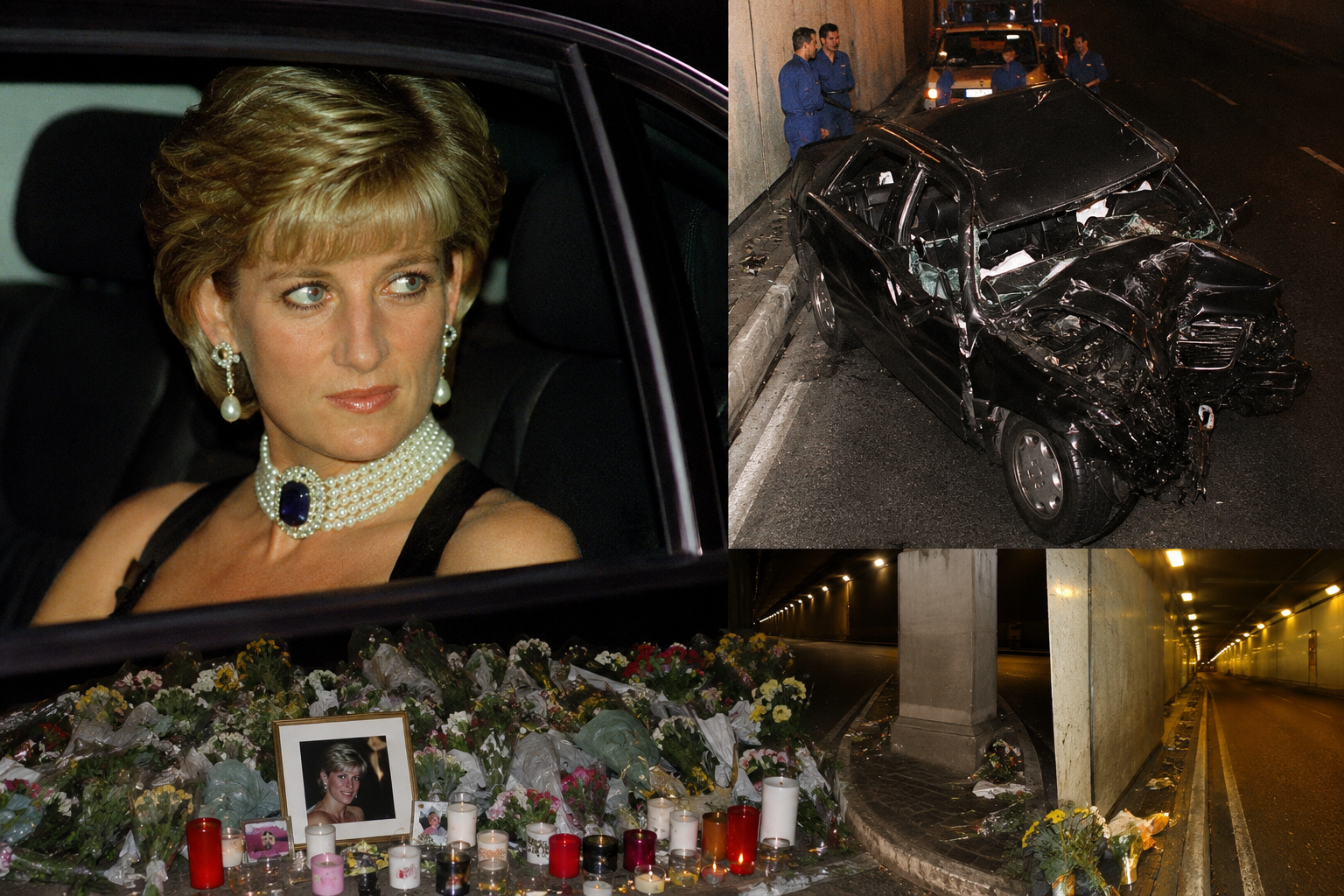
On the night of August 30, 1997, Paris was the setting for what appeared to be another private evening for Princess Diana and Dodi Fayed. Within hours, however, the world would be confronted with news that would trigger an unprecedented wave of grief.
Diana, Princess of Wales, was just 36 when she died following a car crash in Paris in the early hours of August 31. Her final hours have remained the subject of intense public interest for decades, partly because of her global fame and partly because questions surrounding the circumstances of the crash led to lengthy investigations.
The established timeline paints a tragic picture of a night that began with dinner and ended with a desperate emergency response.
Arriving in Paris
Diana and Dodi had arrived in Paris from Sardinia on August 30, 1997.
Their arrival did not go unnoticed. Photographers were already interested in the couple, and paparazzi followed their movements. Dodi, according to contemporary accounts, was concerned about the attention surrounding them.
The couple eventually went to the Ritz Paris, the hotel owned by Dodi’s father, Mohamed Al-Fayed.
The hotel would become one of the most important locations in the timeline of Diana’s final night.
The evening at the Ritz
Diana and Dodi spent part of the evening at the Ritz before deciding to leave.
Security arrangements were made for their departure. The plan was for them to travel to Dodi’s apartment in Paris.
Henri Paul, the Ritz’s deputy head of security, was driving the Mercedes-Benz carrying Diana and Dodi. Diana’s bodyguard, Trevor Rees-Jones, was also in the vehicle.
Outside the hotel, photographers were waiting.
The presence of paparazzi had become a familiar feature of Diana’s life. Her enormous international popularity meant that photographers frequently followed her, particularly when she was travelling with Dodi.
That night, however, the attempt to get away from the photographers would become part of the tragic sequence of events.
The final drive
Shortly after midnight on August 31, the Mercedes left the Ritz.
The vehicle travelled through Paris toward Dodi’s apartment. Photographers followed the car, and the journey quickly turned into a high-speed pursuit.
The Mercedes entered the Pont de l’Alma tunnel.
What happened next lasted only seconds.
The car crashed into a pillar inside the tunnel and then struck the tunnel wall. The collision caused devastating injuries.
Henri Paul and Dodi Fayed died at the scene. Diana was critically injured, while bodyguard Trevor Rees-Jones survived.
The crash immediately triggered a major emergency response.
The desperate attempt to save Diana
Emergency medical teams arrived at the scene and began treating Diana.
Her injuries were catastrophic. She was alive following the collision but required urgent medical intervention.
According to evidence later presented during the British inquest, emergency doctors faced enormous difficulties treating her at the crash site. Diana was seriously distressed and had suffered severe internal injuries.
She was eventually removed from the wreckage and transported toward Pitié-Salpêtrière Hospital.
The journey to the hospital was part of a desperate attempt to save her life.
Despite the efforts of emergency doctors and surgeons, Diana could not be saved.
She was pronounced dead in the early hours of August 31, 1997.
What caused the crash?
The circumstances surrounding the crash immediately generated intense speculation.
The presence of paparazzi, the speed of the Mercedes and the condition of driver Henri Paul all became central issues in the investigations that followed.
A French investigation concluded that Paul had been driving at excessive speed while under the influence of alcohol and prescription drugs.
The British investigation, known as Operation Paget, examined numerous allegations and conspiracy theories surrounding Diana’s death.
The 2008 British inquest ultimately returned a verdict of unlawful killing, finding that the grossly negligent driving of Henri Paul and the pursuing paparazzi contributed to the deaths.
The jury also concluded that Diana and Dodi’s failure to wear seat belts contributed to the tragedy.
These findings became the most significant conclusions of the British investigation.
Why did the tragedy create so many questions?
Diana’s death occurred at a time when the relationship between celebrities and the media was already under intense scrutiny.
She had spent years under relentless attention from photographers. Her photographs were among the most sought-after images in the world, and her private life attracted enormous international interest.
Because the crash happened during an attempt to escape photographers, questions about the role of the paparazzi quickly became central.
At the same time, Mohamed Al-Fayed repeatedly argued that Diana and his son had been deliberately killed as part of a conspiracy.
Those claims generated years of speculation.
However, extensive investigations failed to establish evidence supporting the assassination theories.
The French investigation and the later British inquiry instead focused on the combination of dangerous driving, the actions of pursuing photographers and other circumstances surrounding the crash.
A tragedy that changed the world
The news of Diana’s death stunned millions.
She had become one of the most recognizable people on the planet, known not only for her royal status but also for her charity work and highly visible campaigns involving humanitarian causes.
Her death sparked an extraordinary public reaction in Britain and around the world.
Flowers appeared outside royal residences, public buildings and memorial sites. Millions watched her funeral, while countless others followed the events through newspapers and television.
For many people, the shock came not simply from the death of a famous figure but from the sudden loss of someone who had remained a constant presence in international public life.
The final hours remain part of Diana’s story
More than two decades later, interest in Diana’s final night has not disappeared.
The fascination is partly understandable: the timeline moves from an ordinary evening in Paris to one of the most consequential events in modern British history within a matter of hours.
Yet the established evidence is important.
Diana left the Ritz with Dodi Fayed shortly after midnight. Their Mercedes crashed in the Pont de l’Alma tunnel. Dodi and Henri Paul died at the scene, while Diana was taken to hospital with catastrophic injuries. Despite extensive medical efforts, she died in the early hours of August 31.
Subsequent investigations examined the crash from multiple angles and addressed numerous theories about what happened.
The tragedy ultimately became a reminder of how quickly fame, media pressure, security decisions and human error can collide with devastating consequences.
Princess Diana’s final hours in Paris therefore remain more than a timeline of a celebrity’s last journey. They form the final chapter of the life of a woman whose influence, public image and humanitarian legacy continued long after that tragic night.
Disclaimer
This article is intended for historical and informational purposes. It is based on publicly reported timelines and findings from investigations into the 1997 Paris crash. Some aspects of Diana’s death have been the subject of conspiracy theories and disputed claims; these should not be presented as established facts without credible evidence. The conclusions described above reflect findings from the French investigation and the later British inquest.
Learn more about our site on contactarchive2in.com
Contact us on our email id contactarchive2in@gmail.com
Leave a Reply
You must be logged in to post a comment.