
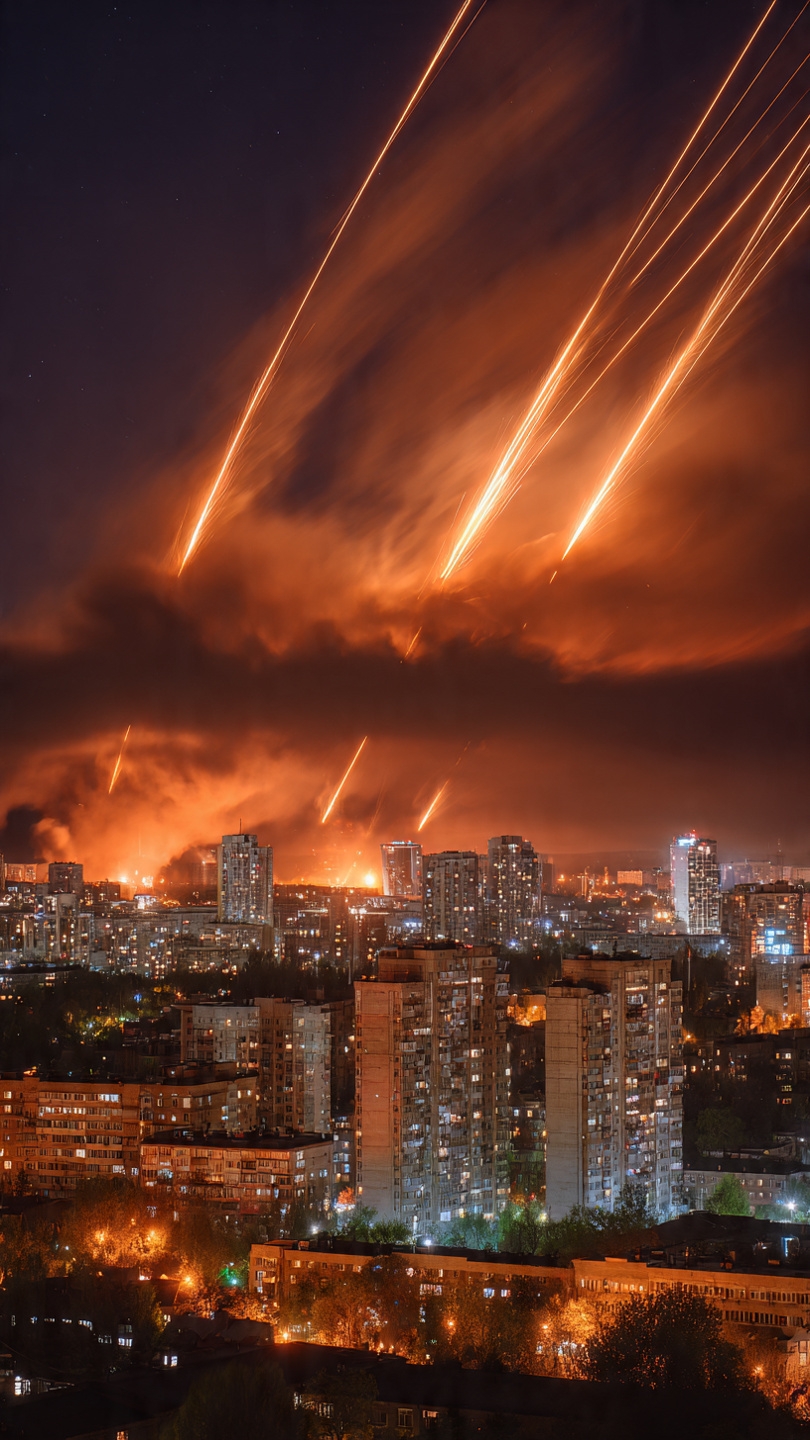
Kyiv woke up to one of the most intense nights of the war in the early hours of July 19, as Russia launched what officials are calling one of its largest ballistic missile attacks on the Ukrainian capital since the full-scale invasion began. What made this strike stand out wasn’t just the scale it was the mix of weapons involved, including Russia’s hypersonic Zircon missiles, a system that’s exceptionally difficult for Ukrainian air defences to intercept.
What Happened Overnight
Around 40 missiles — a combination of Iskander-M ballistic missiles and Zircon hypersonic cruise missiles — were fired at Kyiv and the surrounding region over a roughly five-hour raid. Air raid sirens sounded at around 1:30am, followed by waves of explosions across several districts of the city as air defences engaged the incoming barrage.
President Volodymyr Zelensky described the strike as one of Russia’s largest ballistic missile attacks on Kyiv to date. City officials confirmed at least one person was killed, with injury counts across different reports ranging from around 7 to 17 people, alongside damage to residential buildings and industrial sites.
One resident, 30-year-old Eleonora Belei, told the Kyiv Independent it had been the most frightening night she’d experienced, standing outside her damaged apartment building afterward.
Why the Zircon Missiles Matter
Russia has used long-range strikes on Kyiv regularly throughout the war, but the inclusion of Zircon hypersonic missiles in this attack is significant. Hypersonic weapons travel at speeds and trajectories that make them far harder to track and shoot down than conventional ballistic or cruise missiles, giving Ukrainian air defence crews a much smaller window to react.
Open-source military analysis puts the attack’s composition at roughly 38 Iskander ballistic missiles alongside 6 Zircon hypersonic cruise missiles a combination designed to overwhelm interceptor systems by mixing missile types and flight profiles in the same wave.
What Was Targeted
Several of the strikes appeared to focus on Ukraine’s defence-industrial base rather than purely civilian or infrastructure targets. Reported targets included:
- Radionics — involved in producing missile guidance systems
- Spetsoboronmash — a manufacturer of missile guidance components
- Meridian — producing airframe and guidance parts for missiles
- UKRTAC — a defence company producing body armor and related equipment
- The Amtel logistics complex, a large warehousing and distribution hub near Kyiv, reportedly spanning more than 100,000 square metres
Russia’s defence ministry said the strikes used a mix of precision air- and ground-launched weapons alongside attack drones.
A War of Depleting Resources
Part of what’s made this wave of attacks so damaging is timing. Ukraine’s stock of air-defence interceptors has reportedly been running low for months, a shortage made worse as some Western-supplied interceptor stocks were diverted toward countering separate missile threats in the Middle East. That’s left Ukrainian air defence crews stretched thin at exactly the moment Russia has escalated the frequency and complexity of its strikes on the capital.
Military analysts tracking the war note that despite the scale of recent damage to Ukraine’s defence industry, further sustained strikes would likely be needed to meaningfully degrade the country’s production capacity.
The Bigger Picture
This attack didn’t happen in isolation. It came against the backdrop of Ukraine’s own intensified drone campaign against Russian energy infrastructure, with Kyiv reportedly launching hundreds of drones toward Moscow and striking oil depots and targets in Russian-controlled territory around the same period. Both sides appear to be escalating their long-range strike campaigns simultaneously — Russia targeting Ukraine’s defence-production capacity, and Ukraine targeting Russia’s energy and logistics network.
For Kyiv residents, though, the strategic picture matters less in the moment than the practical one: another night of sirens, explosions, and uncertainty about what comes next.
FAQs
What missiles did Russia use in the attack on Kyiv? Reports indicate Russia used a combination of roughly 38-40 Iskander-M ballistic missiles and several Zircon hypersonic cruise missiles in the same wave.
How many people were killed or injured? At least one person was killed, with injury figures reported between approximately 7 and 17 people across different official updates.
Why are Zircon missiles considered significant? Zircon missiles are hypersonic weapons, meaning they travel at extremely high speeds along unpredictable flight paths, making them much harder for standard air-defence systems to intercept than conventional missiles.
What targets were hit in this attack? Reported targets included facilities linked to Ukraine’s missile-guidance and defence-manufacturing industry, along with a large logistics complex near Kyiv.
Why is Ukraine’s air defence struggling with these attacks? Ukraine has reportedly faced a shortage of air-defence interceptors, compounded by some Western interceptor stockpiles being redirected to address missile threats elsewhere, leaving fewer resources available to counter Russia’s escalating strikes.
Learn more about our site https://archive2in.com
Contact us on contactarchive2in@gmail.com
Read out our latest articles on BLOGS section
Leave a Reply
You must be logged in to post a comment.