
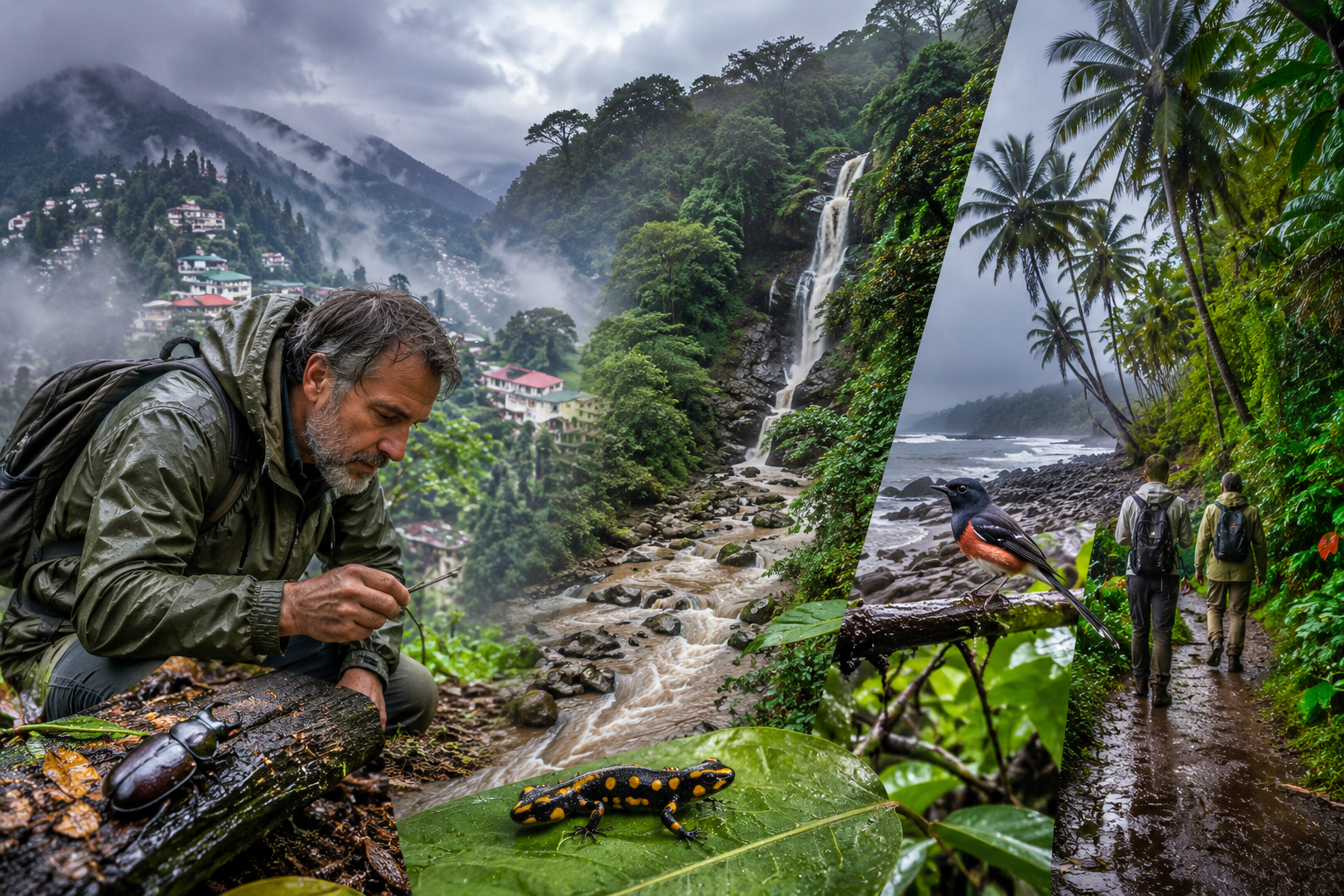
For many people, the arrival of the monsoon means traffic jams, flooded streets, and travel disruptions. But for renowned author and naturalist Stephen Alter, the rainy season is a time of discovery, reflection, and adventure. From searching for rare beetles in the misty hills of Mussoorie to wandering through the lush forests of Goa, Alter’s stories reveal a side of India’s monsoon that often goes unnoticed.
Known for his deep appreciation of nature, wildlife, and the Himalayas, Alter has spent decades observing the changing landscapes of India. His monsoon experiences remind readers that rain is more than a weather event—it’s a season that breathes life into forests, rivers, mountains, and countless living creatures.
Discovering Nature in Mussoorie
Nestled in the foothills of the Himalayas, Mussoorie transforms dramatically when the monsoon arrives. Thick clouds roll over the hills, waterfalls come alive, and forests become rich with biodiversity.
For Stephen Alter, this is the perfect time to explore hidden forest trails in search of insects, especially beetles that emerge after the first heavy rains. These tiny creatures, often overlooked, play an essential role in maintaining healthy ecosystems by recycling organic matter and supporting the food chain.
His fascination with beetles reflects a larger message: every living organism, no matter how small, contributes to the balance of nature.
Goa’s Monsoon Forests: A Different Kind of Paradise
While Goa is internationally known for its beaches and vibrant tourism, the state reveals another personality during the rainy season.
Monsoon showers transform Goa’s forests into dense green landscapes filled with waterfalls, flowering plants, birds, amphibians, and insects. Trails that appear dry during summer become thriving habitats bursting with life.
Alter describes these forests as places where every walk offers a new discovery—whether it’s a colorful butterfly, an unusual mushroom, or the chorus of frogs echoing through the rain.
For nature lovers, Goa’s monsoon season provides an opportunity to experience biodiversity that remains hidden during the drier months.
Why the Monsoon Inspires Writers
Rain has long inspired poets, artists, and storytellers across cultures. For Stephen Alter, the monsoon represents renewal and transformation.
The changing weather slows the pace of everyday life, encouraging careful observation of the natural world. Mist-covered hills, rain-soaked forests, and flowing rivers become reminders of nature’s constant cycle of change.
His writing often combines personal experiences with ecological observations, helping readers appreciate landscapes not just for their beauty but also for their environmental importance.
India’s Incredible Biodiversity During the Rainy Season
The monsoon is one of the most important seasons for India’s ecosystems.
During this time:
- Forests regenerate after months of dry weather.
- Rivers, lakes, and wetlands are replenished.
- Amphibians begin breeding.
- Countless insects emerge.
- Birds become more active.
- Plants flower and spread seeds.
Many species depend on seasonal rainfall for survival, making the monsoon essential for maintaining ecological balance.
Lessons from the Wilderness
Stephen Alter’s stories encourage readers to slow down and pay attention to the natural world.
Rather than viewing rain as an inconvenience, he sees it as an invitation to explore. A simple walk through a forest after rainfall can reveal extraordinary details—from colorful fungi growing on fallen logs to insects carrying out their vital roles within the ecosystem.
These experiences remind us that nature’s greatest wonders are often found in quiet moments of observation.
Conservation Matters
India’s forests face growing pressures from urban expansion, climate change, habitat fragmentation, and pollution.
By documenting the beauty of monsoon landscapes, writers like Stephen Alter help raise awareness about the importance of conservation. Protecting forests, rivers, and wildlife ensures that future generations can continue to experience these remarkable ecosystems.
Responsible tourism, sustainable development, and environmental education all play important roles in preserving India’s natural heritage.
Why Readers Connect with Stephen Alter
Stephen Alter’s writing stands out because it blends storytelling with careful observation. Instead of focusing only on famous landmarks or dramatic adventures, he highlights the everyday miracles of the natural world.
His descriptions of beetles, birds, forests, and rainfall encourage readers to appreciate the intricate relationships that sustain life.
Whether exploring Mussoorie’s mountain trails or Goa’s rain-soaked forests, Alter reminds us that curiosity and respect for nature can transform even an ordinary walk into an unforgettable journey.
Conclusion
From beetle hunts in Mussoorie to the vibrant forests of Goa, Stephen Alter’s monsoon stories celebrate India’s extraordinary biodiversity and the quiet beauty of the rainy season. His experiences invite readers to look beyond the obvious and discover the hidden wonders that emerge when the rains arrive.
In a fast-paced world, these stories serve as a gentle reminder that nature rewards those who slow down, observe carefully, and embrace every season with curiosity. As India’s monsoon continues to nourish its landscapes, it also inspires generations of writers, travelers, and conservationists to protect the remarkable ecosystems that make the country unique.
Disclaimer
This article is intended for informational and educational purposes. It is inspired by publicly available information about Stephen Alter’s writings and India’s monsoon ecosystems. Readers interested in exploring natural habitats should follow local regulations, respect wildlife, and practice responsible, eco-friendly travel.
Learn more about our site on contactarchive2in.com
Contact us on our email id contactarchive2in@gmail.com
Leave a Reply
You must be logged in to post a comment.