Introduction
Every year, a new crash diet promises to help you drop 10 kg in 10 days. And every year, most people who try it end up right back where they started or heavier. In 2026, the fitness and nutrition world has firmly shifted its focus from rapid, extreme weight loss to sustainable weight management. Here’s why that shift matters, and how you can apply it to your own goals.
What Are Crash Diets, Really?
Crash diets are extreme, short-term eating plans that drastically cut calories, eliminate entire food groups, or rely on gimmicks like detox teas and juice cleanses. They promise fast results, and technically, they deliver but most of that early weight loss is water and muscle, not fat.
Why Crash Diets Fail Long Term
- Metabolic slowdown: Severe calorie restriction signals your body to conserve energy, lowering your metabolic rate over time.
- Muscle loss: Without enough protein or resistance training, the body breaks down muscle tissue for energy making it harder to keep weight off later.
- Nutrient deficiencies: Cutting out entire food groups often means missing essential vitamins and minerals.
- The rebound effect: Once normal eating resumes, the body now running on a slower metabolism tends to regain weight quickly, often more than what was lost.
- Unsustainable psychology: Extreme restriction is hard to maintain, leading to burnout, guilt, and a cycle of yo-yo dieting.
What Sustainable Weight Management Looks Like
Sustainable weight management isn’t about a strict timeline it’s about building habits that last. Key principles include:
- A moderate calorie deficit (not extreme) that supports steady, gradual fat loss
- Adequate protein intake to preserve muscle mass during weight loss
- Strength training, which maintains metabolism and improves body composition & maintain sustainable weight
- Balanced nutrition with all food groups included in reasonable portions
- Consistency over perfection allowing flexibility for real life, not rigid rules
- Realistic goals, like losing 0.5-1 kg per week rather than aiming for drastic overnight change
Key Differences Between Crash Diets and Sustainable Weight Management
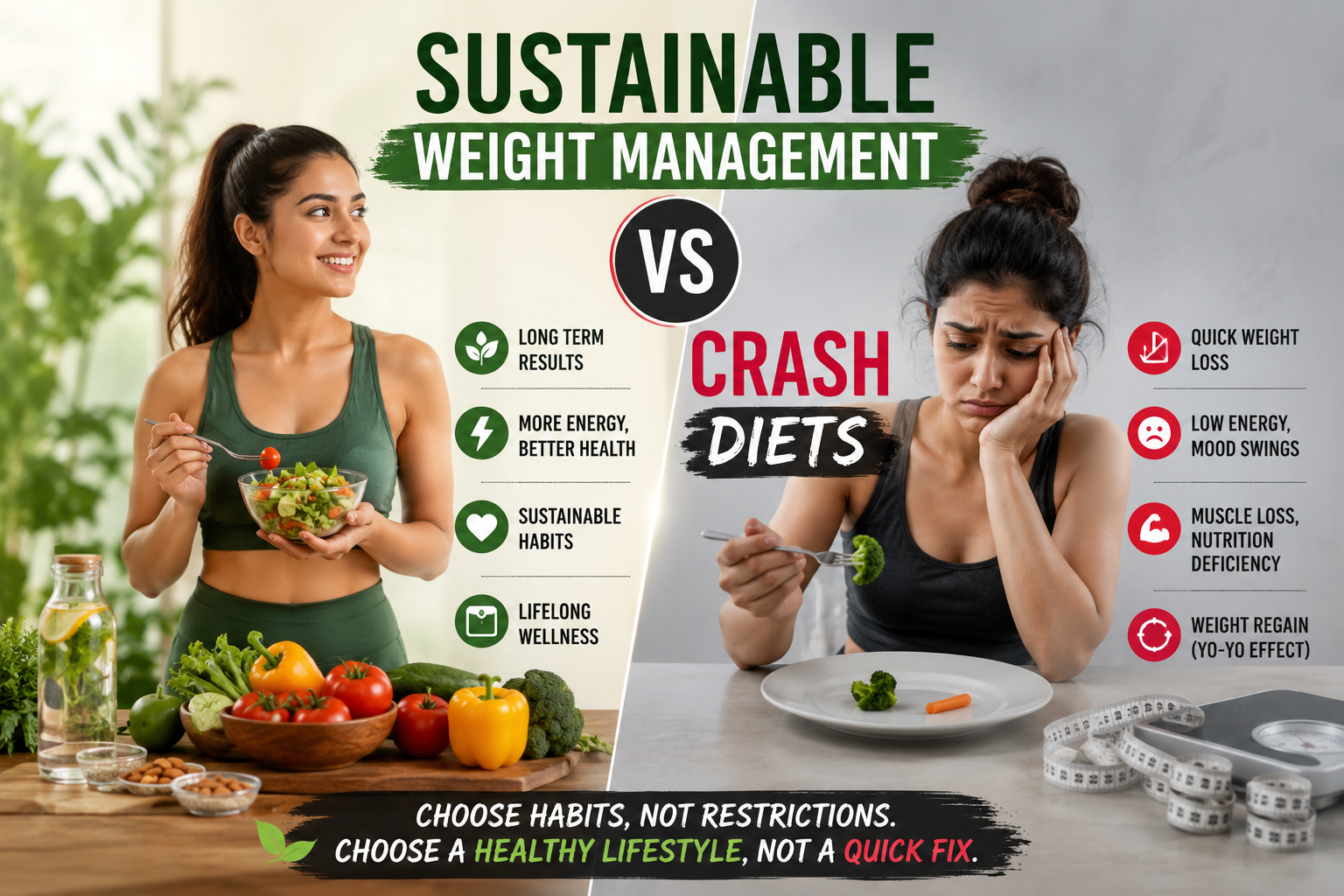
- Approach: Crash diets rely on extreme restriction and quick fixes, while sustainable weight management focuses on gradual, balanced changes.
- Results timeline: Crash diets show fast results in days; sustainable methods take weeks to months but last longer.
- What you lose: Crash diets often burn muscle along with fat; sustainable methods, paired with strength training, primarily target fat.
- Effect on metabolism: Crash diets slow down metabolism over time; sustainable approaches help maintain or even improve it.
- Food variety: Crash diets usually eliminate entire food groups; sustainable diets include balanced nutrition from all groups.
- Long-term outcome: Crash diets have a high chance of weight regain (yo-yo effect); sustainable methods build habits that support lasting results.
- Mental impact: Crash diets often cause stress, guilt, and burnout; sustainable methods allow flexibility and are easier to stick with mentally.
Crash Diet vs Sustainable Approach: Quick Comparison
| Factor | Crash Diet | Sustainable Approach |
|---|---|---|
| Speed of results | Very fast | Gradual and steady |
| Muscle loss | High | Minimal (with strength training) |
| Metabolic impact | Slows metabolism | Maintains/improves metabolism |
| Long-term success | Low (high rebound risk) | High |
| Mental sustainability | Difficult, restrictive | Flexible, realistic |
How to Make the Shift
If you’ve tried crash diets before, transitioning to a sustainable approach starts with small changes: eat enough protein at each meal, add 2-3 strength training sessions a week, and set a modest calorie deficit instead of a drastic one. Track progress through how you feel and perform, not just the number on the scale — sustainable results take longer to show, but they last.
Conclusion
Crash diets offer a quick fix, but sustainable weight management delivers results that actually stick. In 2026, the smartest approach to weight loss isn’t the fastest one it’s the one you can maintain for life.
Read out our latest article on GLP-1 MEDICATIONS & STRENGTH
Learn more about our site https://archive2in.com
Contact us on contactarchive2in@gmail.com
Leave a Reply
You must be logged in to post a comment.