
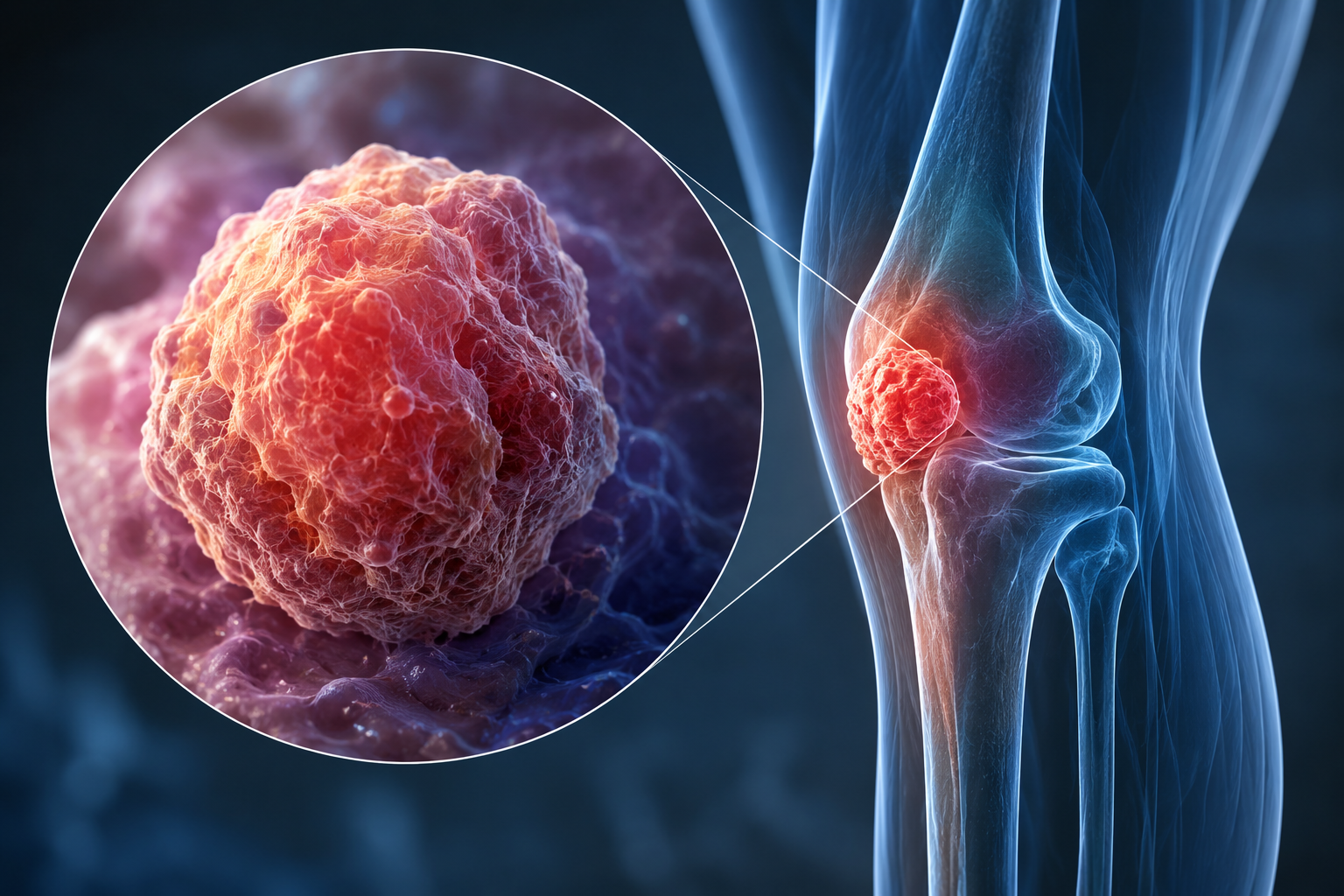
Reports of several cases of synovial sarcoma, a rare form of soft tissue cancer, in a California community have raised concerns among parents and local residents. While health authorities continue to investigate the situation, experts emphasize that there is currently no confirmed evidence linking the cases to a common environmental cause.
The reports have nevertheless drawn attention to a disease that many people have never heard of. Synovial sarcoma accounts for only a small percentage of all soft tissue sarcomas, making it a rare cancer. Understanding its symptoms, risk factors, diagnosis, and treatment can help patients and families recognize the importance of early medical evaluation.
What Is Synovial Sarcoma?
Synovial sarcoma is a rare type of soft tissue cancer that develops in the body’s connective tissues. Despite its name, it does not necessarily arise from the synovial tissue that lines joints. Instead, it can develop in soft tissues near joints, tendons, muscles, or ligaments.
The cancer most commonly affects:
- Arms
- Legs
- Feet
- Hands
- Knees
- Ankles
In rare cases, it may also occur in the chest, lungs, abdomen, neck, or other parts of the body.
Although it can occur at any age, synovial sarcoma is more frequently diagnosed in adolescents and young adults, though children and older adults can also be affected.
Why Is California in the News?
Recent reports have highlighted a number of synovial sarcoma cases involving young people in a California town, leading some parents to question whether there could be a shared environmental factor.
At this stage, public health officials have not established that the cases are connected or caused by a common exposure. Investigations into suspected cancer clusters are often complex and may take considerable time to determine whether the number of cases exceeds what would normally be expected by chance.
Health experts caution against drawing conclusions before scientific investigations are completed.
What Causes Synovial Sarcoma?
The exact cause of synovial sarcoma remains unknown.
Unlike many cancers, it is not generally considered hereditary, and researchers have not identified lifestyle factors that clearly cause it.
Most synovial sarcoma tumors contain a characteristic genetic change in which parts of two chromosomes swap places, creating an abnormal fusion gene. This mutation occurs in the tumor cells themselves and is not usually inherited from parents.
Researchers continue to study why this genetic alteration occurs.
Common Symptoms
Symptoms often develop gradually and may resemble those of less serious conditions.
Common signs include:
- A painless lump or swelling.
- Persistent pain near a joint or muscle.
- Limited movement in the affected area.
- Numbness or tingling if nearby nerves are compressed.
- Increasing size of a lump over time.
Because these symptoms can be mistaken for sports injuries or benign growths, medical evaluation is important if they persist or worsen.
How Is It Diagnosed?
Doctors typically use several tests to confirm the diagnosis.
These may include:
- Physical examination.
- MRI or CT scans.
- Ultrasound imaging.
- Biopsy to examine tissue under a microscope.
- Laboratory testing to identify the characteristic genetic fusion associated with synovial sarcoma.
Accurate diagnosis often requires evaluation by specialists experienced in treating sarcomas.
Treatment Options
Treatment depends on factors such as the tumor’s size, location, stage, and whether it has spread.
Common approaches include:
Surgery
Surgical removal of the tumor is usually the primary treatment whenever possible.
Radiation Therapy
Radiation may be used before or after surgery to reduce the risk of recurrence.
Chemotherapy
Some patients, particularly those with larger or advanced tumors, may receive chemotherapy as part of their treatment plan.
Targeted and Emerging Therapies
Researchers continue to study newer treatments, including targeted therapies and immunotherapy, although their use depends on individual clinical circumstances.
Treatment plans are typically developed by multidisciplinary teams that include surgeons, medical oncologists, radiation oncologists, and other specialists.
Can Synovial Sarcoma Be Prevented?
Currently, there is no known way to prevent synovial sarcoma because its exact cause has not been identified.
Maintaining a healthy lifestyle is important for overall well-being but has not been shown to specifically prevent this rare cancer.
The best approach is to seek prompt medical attention for any unexplained lump, persistent swelling, or ongoing pain.
Why Early Diagnosis Matters
Like many cancers, early detection may improve treatment options and outcomes.
Any lump that:
- Continues growing,
- Measures several centimeters in size,
- Causes persistent pain, or
- Does not resolve after several weeks,
should be evaluated by a qualified healthcare professional.
Not every lump is cancerous, but persistent symptoms should not be ignored.
What Experts Say About the California Cases
Medical experts stress that investigations into potential cancer clusters require careful scientific analysis.
Multiple cases occurring within one community do not automatically indicate a shared environmental cause. Public health agencies evaluate numerous factors, including population size, expected incidence rates, genetics, and environmental exposures before determining whether a true cancer cluster exists.
Until official findings are released, speculation should be avoided.
Conclusion
Synovial sarcoma is a rare but serious soft tissue cancer that deserves greater public awareness. While recent reports from California have understandably raised concerns among families, there is currently no confirmed evidence that the reported cases share a common cause.
Understanding the symptoms, seeking timely medical evaluation, and relying on information from healthcare professionals and public health authorities are the best ways to respond to concerns. As investigations continue, researchers hope to learn more about this uncommon cancer and improve treatment options for patients worldwide.
Medical Disclaimer
This article is intended for informational and educational purposes only and should not be considered medical advice. It does not diagnose, treat, or replace consultation with qualified healthcare professionals. If you or your child has persistent swelling, an unexplained lump, ongoing pain, or other concerning symptoms, seek prompt medical evaluation. Information regarding the California cases is based on publicly available reports at the time of writing, and official investigations are ongoing.
Learn more about our site on contactarchive2in.com
Contact us on our email id contactarchive2in@gmail.com
Leave a Reply
You must be logged in to post a comment.