
What if the answer to a common livestock problem was hiding in the stripes of a zebra?
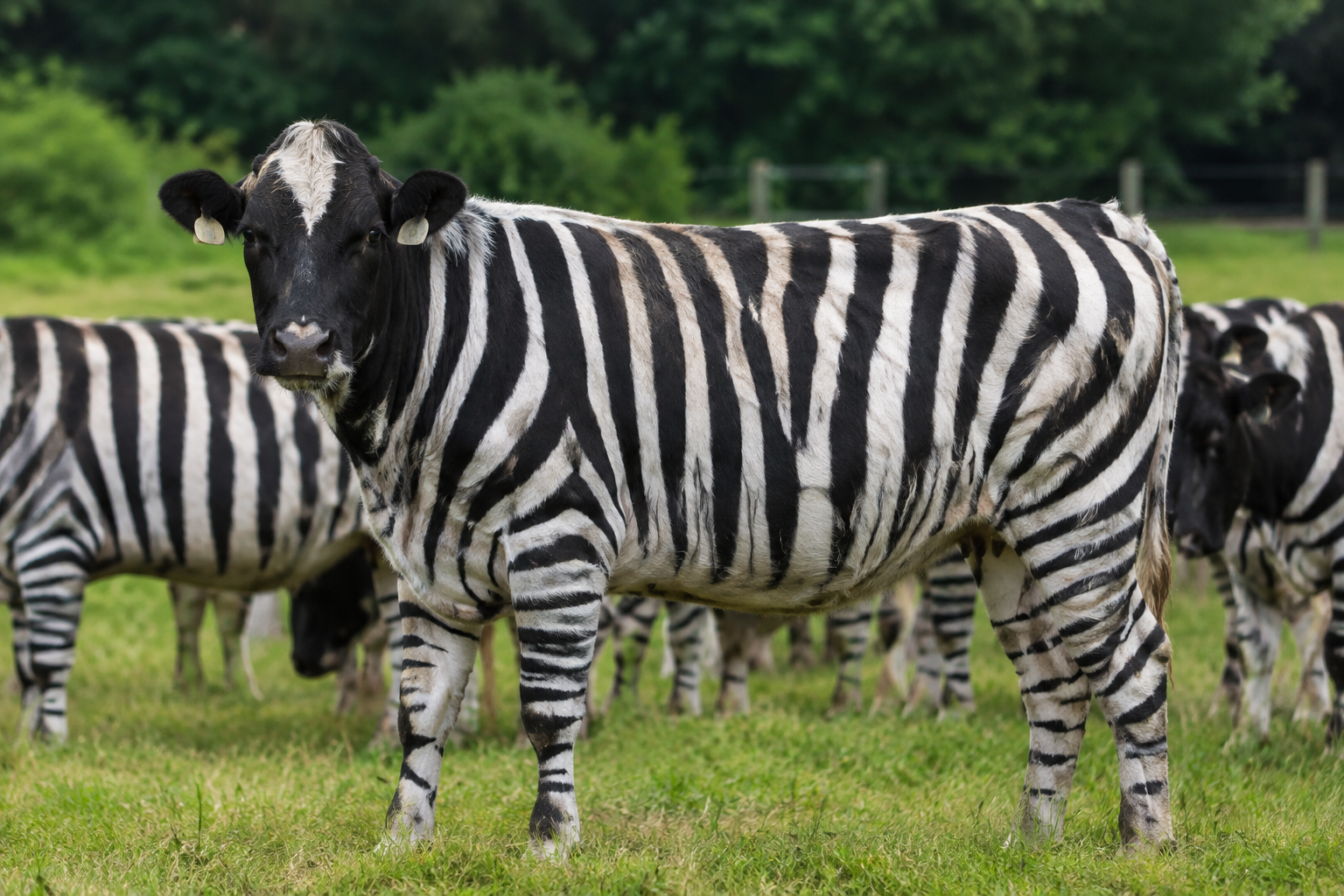
It sounds like an unusual question, but Japanese researchers decided to test it in the real world. Their experiment involved painting zebra-like black-and-white stripes on cows to see whether the unusual pattern could reduce attacks from biting flies.
The idea worked well enough to attract international attention. The research team behind the experiment received the 2025 Ig Nobel Prize in Biology, an award known for celebrating scientific research that initially makes people laugh but can also make them think.
But behind the amusing images of striped cattle is a serious question about livestock health, animal behaviour and whether visual patterns could offer an alternative to chemical pest control.
How did the zebra-cow experiment begin?
The research was based on an observation that has intrigued scientists for years: zebras appear to experience fewer attacks from certain biting flies than many other animals.
Researchers wanted to know whether the zebra’s distinctive stripes might have something to do with that.
In a study published in PLOS ONE in 2019, Japanese scientists tested the idea using six Japanese Black cows. The animals were assigned to different treatments: some were painted with black-and-white stripes, some received black stripes, while others were left unpainted.
The researchers then photographed the animals and counted biting flies on their bodies and legs.
The surprising result
The striped cows attracted significantly fewer biting flies than the unpainted cattle.
The researchers also observed the cows’ fly-repelling behaviours, including tail flicking, skin twitching, ear movements, leg stamping and head movements.
Interestingly, the cows painted with black-and-white stripes showed fewer of these defensive behaviors as well. That suggested they were being bothered by fewer flies in the first place.
Later descriptions of the research reported that the zebra-striped cattle attracted roughly half as many blood-feeding insects as unpainted cattle.
That is a striking result for something as simple as changing the animal’s appearance.
Why would stripes confuse flies?
Scientists are still investigating exactly why zebra stripes have this effect.
One leading explanation is that the contrasting pattern may interfere with the visual system of biting flies as they approach and attempt to land on an animal.
A fly needs to identify a suitable landing surface. High-contrast stripes could potentially make that process more difficult by creating confusing visual information.
Research on zebras has produced evidence that striped patterns can interfere with flies’ ability to approach and land effectively, although scientists continue to study the precise mechanisms involved.
In other words, the stripes may not actually repel flies in the way an insecticide does. Instead, they may make the cow a more difficult target to land on.
Why are biting flies a problem for cattle?
Biting flies are more than just an annoyance.
They can cause stress and irritation in livestock, leading animals to spend time stamping their legs, flicking their tails and moving their heads instead of feeding or resting.
Persistent insect attacks can also have economic consequences for livestock producers.
The original research noted that biting flies are important agricultural pests and can cause economic losses in animal production. That makes finding ways to reduce their impact an important livestock-management goal.
Could painted stripes replace pesticides?
This is where the strange experiment becomes potentially useful.
The researchers suggested that zebra-like striping could provide an alternative way of reducing biting-fly attacks without relying on pesticides.
Reducing pesticide use could have potential environmental and animal-health benefits, particularly where repeated insecticide treatments are required.
However, it would be premature to say that farmers should simply start painting every cow.
The original experiment involved a relatively small number of animals, and applying paint to large herds could create practical challenges. Questions about how long the paint lasts, how often it would need to be reapplied, how animals respond to the process and whether the effect works under different environmental conditions would all need to be considered.
Why did it win an Ig Nobel?
The experiment was recognised at the 2025 Ig Nobel Prize ceremony, where the Japanese team received the Biology award.
The Ig Nobel Prizes are deliberately unconventional. Their purpose is to celebrate research that can initially seem bizarre or funny while encouraging people to look more closely at the science behind it.
For the Japanese researchers, the award was also part of Japan’s remarkable run at the prizes: the country had researchers receive an Ig Nobel in every year for 19 consecutive years by 2025.
A funny experiment with a serious lesson
At first glance, painting cows to look like zebras sounds like something from a comedy sketch.
But the research demonstrates an important scientific principle: unusual questions can sometimes lead to practical discoveries.
Instead of developing another chemical treatment, the researchers looked at nature and asked why zebras have stripes—and whether that feature could be adapted for livestock.
The result doesn’t mean striped cows are a universal solution to fly problems. More research is needed to understand the effect and determine whether it can work on a large agricultural scale.
Still, the experiment offers an intriguing possibility: one of nature’s strangest-looking designs may also provide a clever form of pest protection.
And that is exactly the kind of research the Ig Nobel Prize is designed to celebrate—science that makes you laugh first, then stop and think.
Disclaimer
This article is intended for general informational and educational purposes only. The research discussed was conducted under experimental conditions and does not establish that painting livestock with stripes is suitable for every farm or animal. The effectiveness, safety and practicality of such methods may vary. Farmers and livestock owners should consult qualified veterinary or agricultural professionals before changing animal-management practices.
Learn more about our site on contactarchive2in.com
Contact us on our email id contactarchive2in@gmail.com
Leave a Reply
You must be logged in to post a comment.