
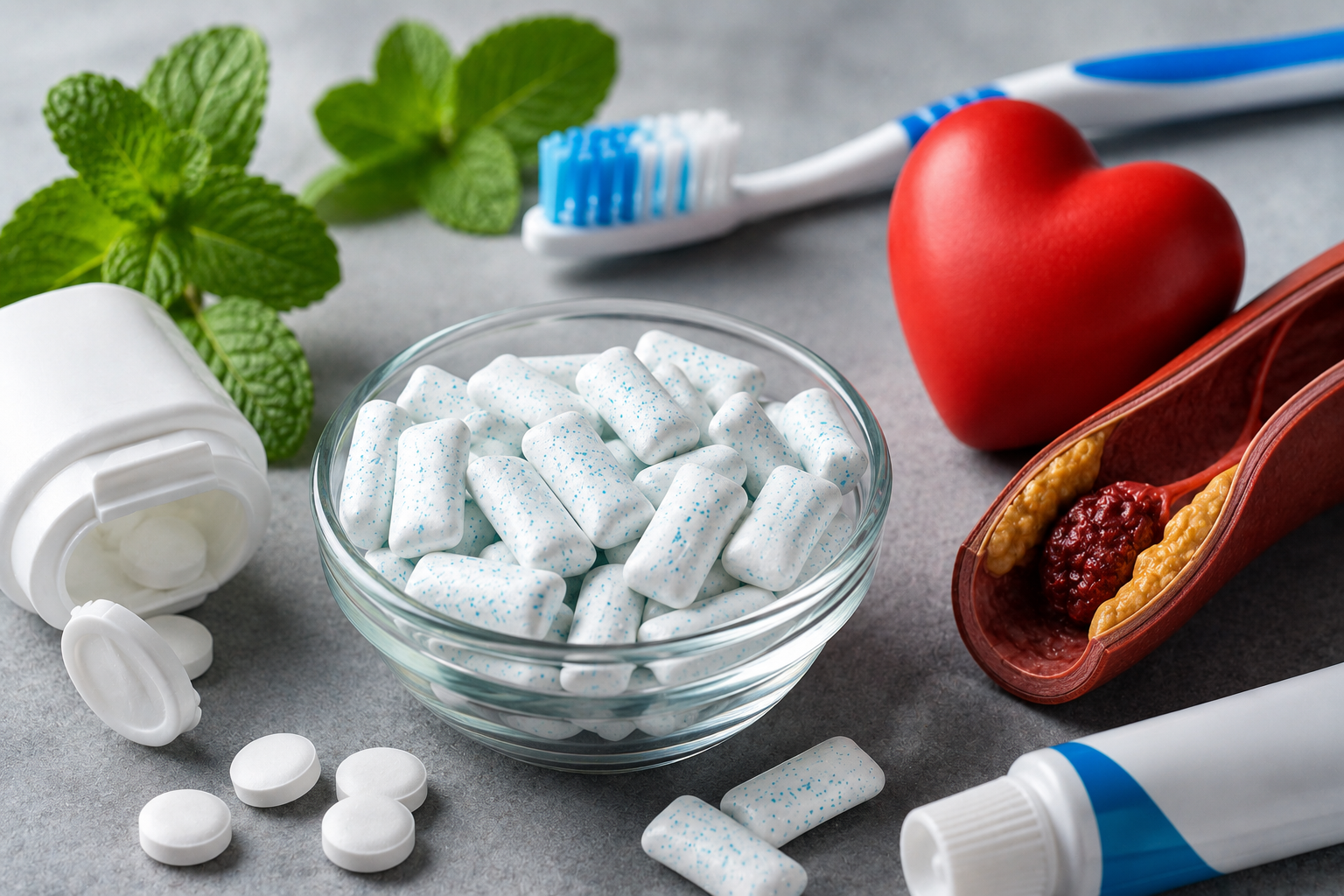
A common sugar substitute found in sugar-free chewing gum, mints, toothpaste and other products is once again raising questions about heart health.
A 2026 study involving nearly 18,000 people has found that individuals with the highest levels of xylitol circulating in their blood had a greater risk of major cardiovascular events, including heart attacks, strokes and cardiovascular death. The findings add to earlier research suggesting that xylitol may influence the blood’s tendency to form clots.
But there is an important distinction: the study found an association, not proof that xylitol causes heart attacks or strokes. Researchers and outside experts say more work is needed before drawing conclusions about the long-term safety of consuming xylitol.
What is xylitol?
Xylitol is a type of sugar alcohol, also known as a polyol. It tastes sweet but contains fewer calories than ordinary sugar and has become a popular ingredient in products marketed as sugar-free or reduced-sugar.
It can be found in products such as:
- Sugar-free chewing gum
- Breath mints
- Some candies
- Toothpaste and oral-care products
- Certain processed foods and drinks
Small amounts of xylitol also occur naturally in some foods, and the human body produces it during normal metabolism. However, concentrations can become much higher when xylitol is consumed as an added sweetener.
That widespread use is one reason scientists are interested in understanding whether regular exposure could have effects beyond blood sugar and dental health.
What did the 2026 study find?
Researchers examined data from 17,710 participants drawn from two large prospective studies: the Canadian Longitudinal Study on Aging (CLSA) and EPIC-Norfolk.
The participants had an average age of about 61 years. Researchers divided them according to their circulating xylitol levels and then examined cardiovascular outcomes.
In the Canadian cohort, participants with the highest xylitol levels had a 57% higher risk of a major adverse cardiovascular event compared with those in the lowest group after adjustments for established cardiovascular risk factors. The cardiovascular events included heart attack, stroke and death.
The researchers also examined longer-term data from EPIC-Norfolk. Over as much as 30 years of follow-up, people with the highest xylitol levels had an 18% higher risk of a major cardiovascular event compared with those with lower levels.
The findings were presented in connection with the European Society of Cardiology Congress 2026, rather than being treated as definitive proof of causation.
Does this mean xylitol causes heart attacks?
Not necessarily.
This is perhaps the most important point for consumers.
The 2026 research was observational. Researchers measured xylitol levels and looked at what happened to participants over time. Such studies can identify associations but cannot, by themselves, establish that the substance caused the subsequent cardiovascular events.
There may be other factors associated with elevated xylitol levels that contribute to cardiovascular risk.
The researchers therefore say additional studies are needed to determine whether xylitol itself contributes to cardiovascular disease and, if so, how much exposure might matter.
Why are scientists concerned about blood clotting?
The new findings build on earlier research published in the European Heart Journal in 2024.
That study examined smaller groups of participants and found that higher circulating xylitol levels were associated with an increased risk of major cardiovascular events. Researchers also conducted laboratory and animal experiments.
Those experiments suggested that xylitol could increase platelet reactivity and promote conditions associated with blood-clot formation. In a small intervention involving healthy volunteers, consuming a xylitol-sweetened drink substantially increased blood xylitol levels and was accompanied by changes in platelet responsiveness.
The mechanism is scientifically interesting because blood clots can block arteries supplying the heart or brain, potentially contributing to heart attacks and ischemic strokes.
However, laboratory and animal findings do not automatically demonstrate that normal dietary consumption of xylitol causes cardiovascular disease in humans.
Should you stop using xylitol?
The current evidence does not justify telling everyone to immediately eliminate every product containing xylitol.
For people who regularly use xylitol-containing gum, toothpaste or other products, the new findings may be a reason to pay attention to the amount and frequency of exposure, particularly if they already have cardiovascular concerns.
At the same time, completely avoiding xylitol may not be practical or necessary for everyone. Toothpaste, for example, contains many ingredients and is generally not consumed as a food.
The bigger lesson may be to avoid assuming that an ingredient is automatically risk-free simply because it is marketed as “natural,” “sugar-free” or “low-calorie.”
What should consumers do now?
Rather than reacting to one study with panic, experts generally emphasize the basics of cardiovascular prevention.
A heart-healthy lifestyle includes maintaining a healthy weight, exercising regularly, avoiding tobacco, managing blood pressure and cholesterol, eating a balanced diet and following medical advice when cardiovascular risk factors are present.
For people concerned about xylitol, checking ingredient labels can help reveal how frequently it appears in their diet.
It is also worth remembering that sugar substitutes are not all the same. Findings about xylitol cannot automatically be applied to every artificial sweetener or sugar alcohol.
The research is still developing
The 2026 findings are significant because they involve a much larger population and much longer follow-up than the earlier work. The fact that the association appeared across two major cohorts makes the question worthy of further investigation.
Still, scientists have not reached the final word on xylitol and cardiovascular health.
The research currently points to an important question rather than a definitive answer: Could long-term exposure to elevated xylitol levels contribute to cardiovascular risk?
Future clinical trials will be particularly important because they could help determine whether reducing xylitol consumption actually lowers cardiovascular events.
Until then, the most accurate interpretation is cautious. High blood levels of xylitol have been associated with greater cardiovascular risk, and laboratory research provides a possible biological explanation—but that is not the same as proving that eating xylitol causes heart attacks or strokes.
For consumers, the findings are a reminder that even familiar ingredients deserve continued scientific scrutiny as their use becomes more widespread.
Disclaimer
This article is for educational and informational purposes only and is not medical advice. The 2026 research described above found an association between higher blood xylitol levels and cardiovascular events; it does not establish that xylitol causes heart attacks, strokes or cardiovascular death. The long-term safety of xylitol remains an area of ongoing research. People with heart disease, diabetes, other medical conditions, or concerns about their diet should consult a qualified healthcare professional before making significant dietary changes. If you experience symptoms of a heart attack or stroke, seek emergency medical care immediately.
Learn more about our site on contactarchive2in.com
Contact us on our email id contactarchive2in@gmail.com
Leave a Reply
You must be logged in to post a comment.